How Noodle Reimagined Performance Management Without Sacrificing Rigor or ROI
A customer case study on modern performance practices with meaningful cost savings

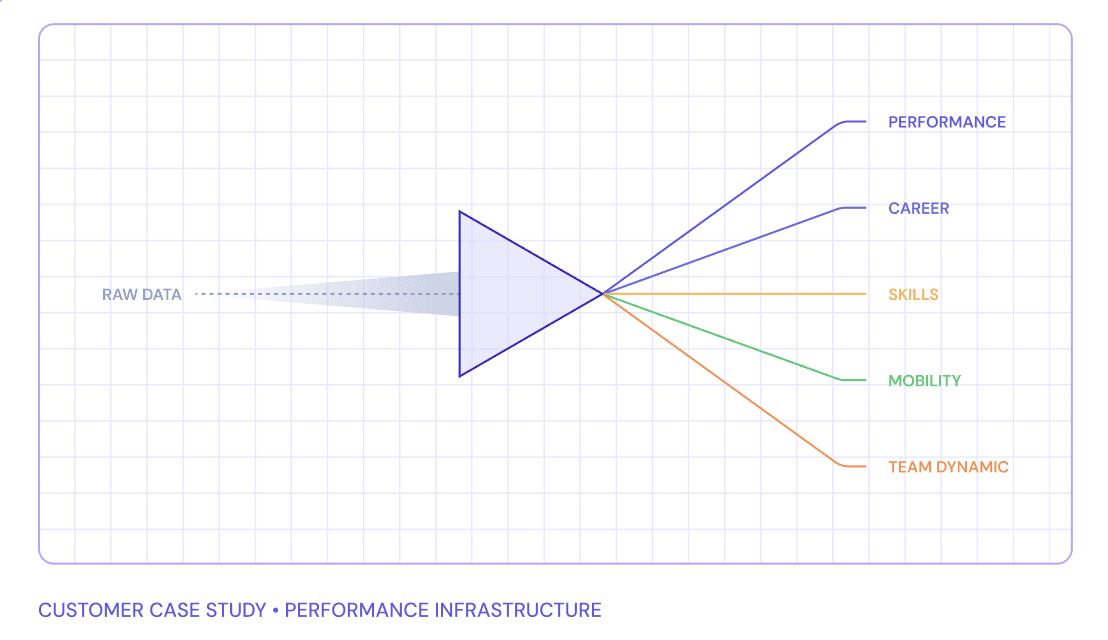
For too long, the systems we’ve relied on have undershot the quality of leadership organizations are trying to practice.
Not because growth or fairness aren’t priorities, but because performance tools are often expensive, operationally heavy, and hard to adapt as organizations evolve.
At Noodle, a 320-person EdTech company partnering with universities across the U.S. and globally, this tension had become more visible over time. Performance cycles were operationally sound, but engagement could be stronger, and leadership wanted clearer signal on whether their tooling investment was truly paying off.
That prompted a familiar question:
“Are we getting enough value to justify this investment for another year?”
This case study looks at how Noodle reassessed its performance management approach, not because anything was broken, but because their needs had changed, and how they redesigned their system with ROI, flexibility, and day-to-day usability in mind.
The Real Tension: Execution vs. ROI
At Noodle, two leaders were holding different sides of the same problem:
Katharine Hill, Senior Director of People Analytics & Organizational Development, owned the execution: running performance cycles, engagement surveys, and reporting. The reality was a steady operational load and tools that required a lot of coordination to drive meaningful participation.
Julie Leventhal, VP of People & Culture, owned the strategic case: budget, ROI, and whether performance tooling was delivering real value for the employee experience, or simply maintaining the status quo at a high cost.
Their goals were aligned: build a performance system that worked better for humans and was easier to justify to leadership.
The Inflection Point: Reassessing Fit
Noodle had been using Culture Amp and was able to run performance cycles and engagement surveys successfully. As the organization evolved, leadership revisited whether the level of investment still matched their priorities around efficiency, experience, and long-term ROI, particularly based on the product and pricing context at the time they were making the switch.
This wasn’t about replacing a platform that wasn’t working.
It was about reassessing fit as needs matured.
They began exploring options that could:
Preserve core performance functionality
Reduce operational drag
Improve the manager and employee experience
Support a clearer ROI narrative for leadership
That exploration led them to Zal.ai.
Why Noodle Chose Zal.ai
The decision came down to a few practical questions:
1. Could we preserve core performance workflows at a more sustainable cost?
At the time of Noodle’s evaluation, Zal.ai offered the performance review and survey capabilities Noodle needed at a price point that made it easier to justify the investment as the organization’s needs evolved.
2. Could AI meaningfully reduce friction in the review process?
Rather than adding novelty, Noodle focused on whether AI features reduced real work for managers:
Integrating peer feedback into reviews
Supporting managers with drafting and synthesis
Making goal-setting easier and more meaningful for employees
Surfacing themes in survey results true, and functionally, that would require so much manual analysis as to be untenable for most managers
The result: less administrative effort and clearer signal during review cycles.
3. Could the implementation model support customization without overburdening HR?
Noodle valued platforms that took survey design and setup seriously, given the implications of getting it wrong. Zal.ai’s modular and customizable implementation model, paired with a highly responsive support team, allowed Noodle to tailor their workflows without having to manage the technical configuration themselves.
What Changed in Practice
In practice, the shift showed up in a few concrete ways:
Performance cycles felt easier to run
Managers spent less time incorporating peer feedback into reviews
Employees created higher-quality, more measurable goals closely aligned with business direction
Engagement survey completion reached 96%, up from a previous high of 91% on Culture Amp
Leadership had a clearer ROI narrative tied to time saved and cost structure
Within a year, Noodle moved from trial to long-term commitment after seeing the system work in practice.
Julie Leventhal:
“I was able to demonstrate real cost savings while still supporting the critical performance management needs of the organization.”
Katharine Hill:
“Zal.ai gave us everything we needed from Culture Amp, plus new AI capabilities, at a price point that thrilled leadership. The product seamlessly integrates peer feedback into reviews and the dedicated support made the transition easy.”
The Bigger Takeaway
Noodle’s shift wasn’t really about switching platforms.
It was about recognizing that performance systems shape behavior.
They shape how much managers invest in feedback, how employees experience growth, and whether performance conversations feel like signal or bureaucracy.
The tools you choose don't define your performance strategy. They activate it.
Download the full Noodle × Zal.ai case study to explore the decision framework, ROI rationale, and implementation details behind Noodle’s approach.