Beyond the Bell Curve: How AI Can Help HR Finally Get Performance Management Right
HR Leader Eric Martin calls for a new approach to performance management, one that will redefine how HR supports workforce development and company culture itself.

At Zal.ai, we’re constantly pushing ourselves to understand the deeper meanings behind performance management: its purpose, strengths, weaknesses, and how we can help make it more holistic and more effective for everyone involved.
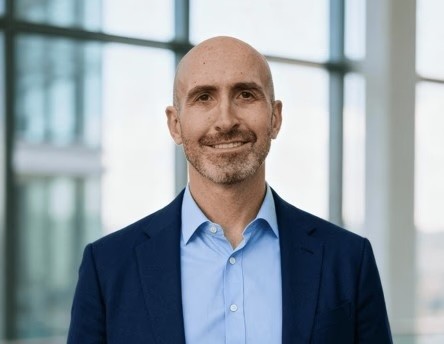
That’s why we sat down with Eric Martin, Executive Director of Blue Pinnacle Solutions. When Martin is hired by a company, he does more than simply advise the HR department, he reimagines how HR can function and drive growth in that context.
When we asked Mr. Martin about how we can improve the performance management model, he gave us an answer that went much further than performance: It was a call to action for all people leaders to help redesign the HR mindset.
How the Forced Distribution Fails Us
To Martin, most performance systems are heavily limiting because an individual’s performance is judged not by how they’ve met their job expectations, but rather in relation to how their colleagues performed the same tasks. He says “once an organization reaches a certain size or maturity, their general approach is to do an annual performance review where employees are ranked based on a forced distribution curve, with exceptional on one end, and not performing on the other.”
In this “forced distribution curve”, each employee’s performance is evaluated and placed on a standard bell curve. As Martin explains, “ In an ideal situation, this model is used to reward those that are performing well, and identify those that need some sort of help to perform highly.”
However, this fails in practice because an employee may be meeting their job expectations adequately, but if they are slightly below the company mean, they are still punished. The same is true for the opposite scenario as well: an employee might not be meeting their job expectations, but they can still be rewarded if they are slightly outperforming their peers.
Martin provides a straightforward example:
“Imagine if you are working in a role where you are expected to count 50,000 beans per day. At the end of the year, you’ve succeeded in counting 51,000 beans per day, passing the expectation threshold. However, it turns out that the average beans counted per day amongst your peers is 60,000. In a forced distribution, you would be punished even though you’ve exceeded the expectations you were given.”
Though you counted more beans on average than was asked, the forced curve model would still punish you for performing under your peers. Not only does this feel unfair, but it undermines the expectations that were given to you in the beginning of the year. For the next year, you will be unlikely to trust the goals that management gives you, and instead rely on outperforming your peers. This leads to a company culture where few are incentivized to work in accordance with the company’s mission and goals.
Martin says that in his experience, the forced distribution curve works as “a financial tool rather than a performance measure” in practice. The curve allows one to justify removing those at the bottom during a cost cutting period, and promote those at the top during times of growth. However, it does not focus on helping each individual improve and develop synergy as a team.
“This is the predominant model today in most workplaces. If you ask a manager or employee if this model is effective for truly managing performance or workforce development, of course the answer is no."
But the issue isn't the system, it's the model that enables the system. Even if the intention is there to manage performance, it's not effective because a bad model drives the system”, says Martin
Creating a Bespoke Model
So if the model is broken from the get go, how do we fix it? Martin comments that all models that truly develop performance outputs have one thing in common: they have ongoing mechanisms built into the system that facilitate ample and meaningful communication between managers and employees. The organization itself needs to find ways to enable these frequent feedback conversations that facilitate development.
So how can an organization implement this kind of performance model? Martin says:
“There is no single winning solution when it comes to organizational performance advancement. Every organization is unique in its own way, even between orgs in the same industry. While workflows might look similar, culture might be different, how employees achieve success might be different, and how managers interact with employees might be different. Employee needs might even be different based on level: a sales employee might require quarterly reviews, while someone in the field might require daily check-ins.”
Instead of a standardized model, Martin proposes that HR leaders work to understand the nuances of their organization and of each department’s work experience, and build a tailored, responsive system that encourages continuous goal-setting and communication.
Beyond Performance Evaluation
This framework of understanding the problem and then restructuring the model to incorporate a solution applies to more than just performance management. In Martin’s view, it should apply to everything that HR does in an organization.
By being willing to alter the model itself, HR leaders can be nimble culture drivers, proactive in solving issues as they arise rather than succumbing to these challenges by creating rigid and forced systems. Martin expands on this by commenting that a static model compounds on itself and becomes harder to replace.
“In my mind, HR is really good at identifying problems, but we often struggle to identify why those problems exist and/or produce solutions to them. The often seen result is a maze of complex processes, structures, and frictions. Once we’ve identified the problem, instead of addressing it deeply and applying meaningful changes, we will pull in new systems, process steps, and unnecessary governance requirements in the hopes that it will fix the issues.
Instead of rethinking the design of the workflow, or adjusting components of the operating model, we add another layer of approval or some other manual touch point, as an example. And as we encounter more problems, four or five layers of approvals might be added to the flow, creating more complexity and more friction for the people doing the work, which often lead to poor outcomes.”
Rigid models create large, clunky systems that are mired in bureaucracy and deferred accountability. If models are constantly being improved, they have the ability to be simple, quick, and effective. This philosophy applies across the board organizationally, and it is one that can help HR Leaders respond to their changing environment with rigor and precision.
Improving HR Models with AI
Martin says that proactive HR leaders must “unwind” these gnarled, rigid systems to uncover true issues and make the right structural changes. However, they are often so busy working within the system, and models are so often ingrained into the organizational operating system that they are difficult to disentangle.
This is where an AI transformation can enable a full-on structural audit and recomposition.
As the nature of work changes to meet new technological standards, work roles will demand to be questioned and remodeled. This gives HR leaders a unique opportunity to situate themselves as bastions of “strategic human thinking and judgement”. They will be able to harness AI to recreate their models into something tailored to their organization, responsive to their workforce, and aligned with company goals.
“The goal isn’t to use AI to keep the status quo of mediocre outcomes with a reduced headcount, it’s to use that extra technological capacity to reduce friction and to add to human capability, moving outcomes from mediocre to amazing” says Martin.