The 2026 Guide to Implementing a Continuous Feedback System at Scale
Annual reviews are outdated. This 2026 playbook shows HR leaders how to build a real-time feedback culture using the SBI framework and AI-aided coaching tools for scale.

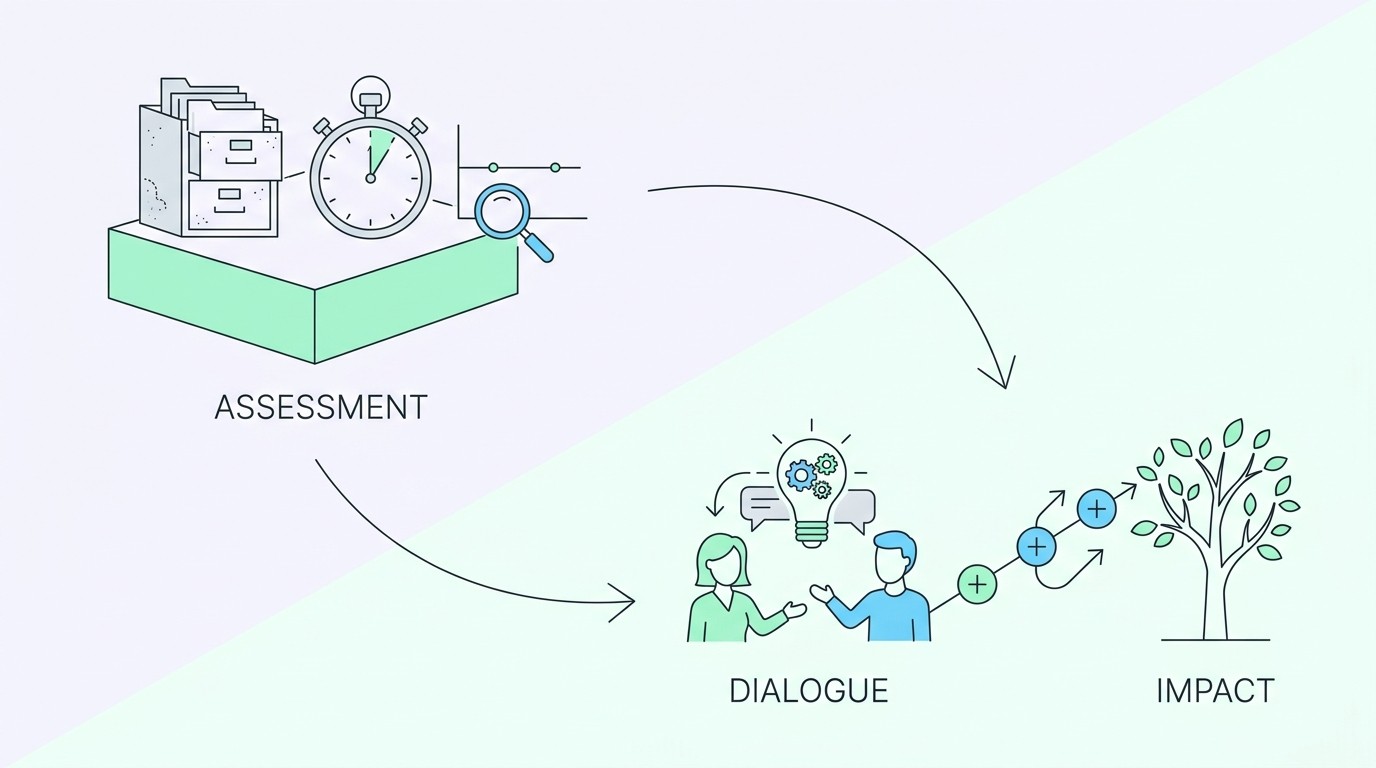
Your brain's threat response activates within 0.07 seconds of perceived criticism. By waiting months to deliver feedback, you ensure that every piece of guidance triggers a defensive wall rather than growth.
Growth requires real-time intervention, not a post-mortem. It is time to move toward a human-led, AI-aided loop that keeps teams in sync every single day.
The Plan
Implementing continuous feedback requires a deliberate shift in culture and technology. Here is the roadmap for modern HR leaders:
Phase 1: Audit. Identify bias patterns in previous appraisal data and secure executive buy-in for a cultural mandate.
Phase 2: Architecture. Define specific cadences like the 5-minute Momentum Check and 15-minute Weekly Performance Talk.
Phase 3: Enablement. Train managers in the SBI framework to move from a judge to a coaching mindset.
Phase 4: Scaling. Use AI-aided tools to centralize data and reduce the administrative burden of tracking real-time growth.
Why Continuous Feedback Is Non-Negotiable in 2026
The data from Gallup: Feedback and Engagement Research reveals a staggering gap between traditional and modern systems. Employees who receive daily feedback are 3.6x more motivated to do outstanding work than those who only hear from managers once a year.
This shift creates a measurable business impact. Companies adopting real-time feedback loops see an average performance improvement of 26% and a 14.5% boost in employee engagement.
Here's why your team wants this change:
77% of employees find continuous systems more motivating than traditional ones.
92% believe well-delivered constructive criticism effectively improves their performance.
14.5% increase in engagement for companies using continuous mechanisms.
Phase 1: Audit Your Readiness and Psychological Safety
Before you launch a new tool, you must understand the existing soil. A feedback audit helps you identify if your current culture is rooted in fear or growth.
Psychological safety is the prerequisite for any continuous system to function. Without it, frequent feedback can feel like constant surveillance rather than support.
Audit the last six months of appraisal data to identify recurring bias patterns.
Secure executive sponsorship to signal that feedback is a company-wide priority.
Assess organizational readiness on a 1-5 scale to determine training needs.
Identify high-turnover teams that may require higher feedback frequency.
Phase 2: Build Your Feedback Architecture and Cadence
You need a structured cadence that fits into the daily flow of work.

I recommend a three-tiered approach to communication. Decouple developmental coaching from high-stakes pay discussions to ensure honesty remains the priority.
The Momentum Check (5 mins): A daily touchpoint focused entirely on blockers and immediate direction.
The Weekly Performance Talk (15 mins): Connecting recent outcomes directly to company OKRs.
Quarterly Growth Reviews: High-level strategy and career development planning.
Ensure these check-ins are never canceled, only rescheduled. Consistency builds the trust necessary for high-growth environments.
Phase 3: Train Managers in the SBI Coaching Framework
Most managers fail at feedback because they use the 'sandwich method' of hiding a critique between two compliments. This confuses the recipient and dilutes the message.
Train your team to use the SBI framework: Situation, Behavior, and Impact. This model focuses on objective facts rather than personality traits, which lowers the employee’s threat response.
Example
Situation: "During the client presentation on Tuesday morning..."
Behavior: "...you interrupted the lead engineer three times before they finished their points."
Impact: "...this made the team appear uncoordinated and prevented us from answering the client's technical concerns."
Avoid 'Monologue Mode' where the manager talks for 80% of the session. A successful coaching conversation should be a two-way dialogue that ends with an agreed-upon action step.
Phase 4: Scaling with AI-Aided Performance Platforms
Scaling a system for 50 to 500 employees is impossible without technical leverage. Modern performance platforms like Zal.ai help centralize 360-degree reviews and goal tracking without the manual headache.
AI serves as an augmentative tool that helps managers summarize feedback patterns over time. This drastically reduces recency bias by surfacing a full history of performance data during review cycles.
Automate review triggers based on employee tenure or manager changes.
Use AI agents to guide self-assessments and draft actionable review content.
Centralize 1:1 meeting notes to create a continuous performance narrative.
Launch anonymous pulse surveys to catch sentiment shifts before they become turnover risks.
Moving from Judge to Coach
Lectures change compliance, but conversations change behavior. Moving your organization from a culture of judgment to one of coaching is the most significant competitive advantage you can build.
Continuous feedback is an opportunity to grow, not a threat to be feared. Start with one department, find your internal champions, and let the results speak for themselves. The future of performance is human-led and AI-aided.