Measuring the Business Impact: The ROI of Transitioning to Continuous Feedback
Traditional annual reviews are a lagging indicator that drains 210 hours per manager. This playbook provides the concrete ROI formulas to justify a shift to real-time, AI-aided feedback.

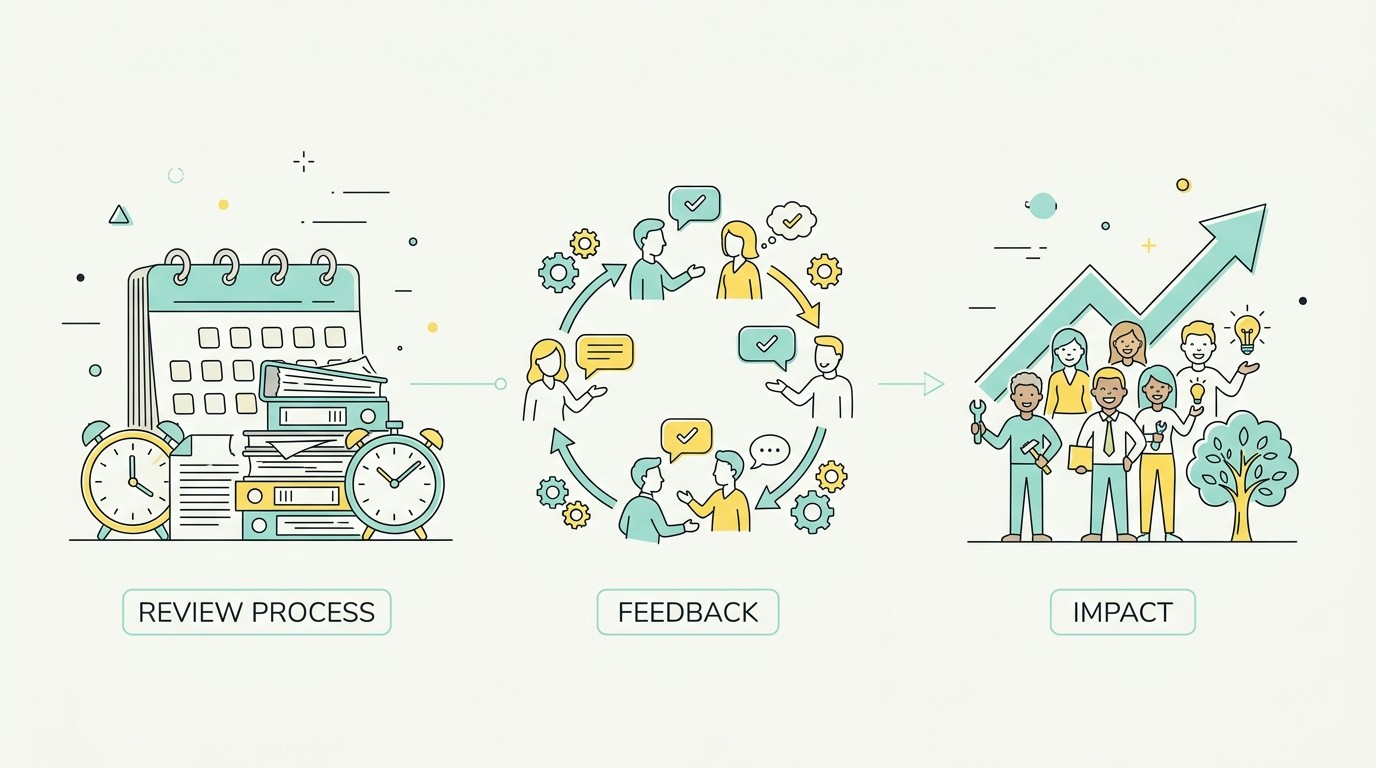
Managers typically lose 210 hours every year to this administrative ritual. This time is usually spent chasing signatures and drafting narratives that employees rarely find helpful.
Only 14% of employees believe traditional reviews actually inspire them to do better work. The rest view the process as a high-stress hurdle that focuses on past mistakes rather than future growth.
Backward-looking feedback cannot move the needle on this quarter's targets. It is a lagging indicator that arrives too late to fix failing projects or retain frustrated talent.
The ROI Of Continuous Feedback: At A Glance
14.9% Lower Turnover rate for employees receiving regular, strengths-based feedback.
3.6x Motivation Boost for employees with daily vs. annual feedback.
40% Engagement Increase for companies using continuous feedback models.
26% Performance Improvement in team outcomes linked to ongoing coaching.
Leverage AI To Reclaim Manager Time
Manual feedback is a burden that few managers have time to carry effectively. This is where AI moves can become a critical operational lever. AI-powered tools can handle the heavy lifting of gathering feedback and drafting actionable summaries. You can reduce the 210-hour management burden by 50% to 70% by automating these administrative steps.
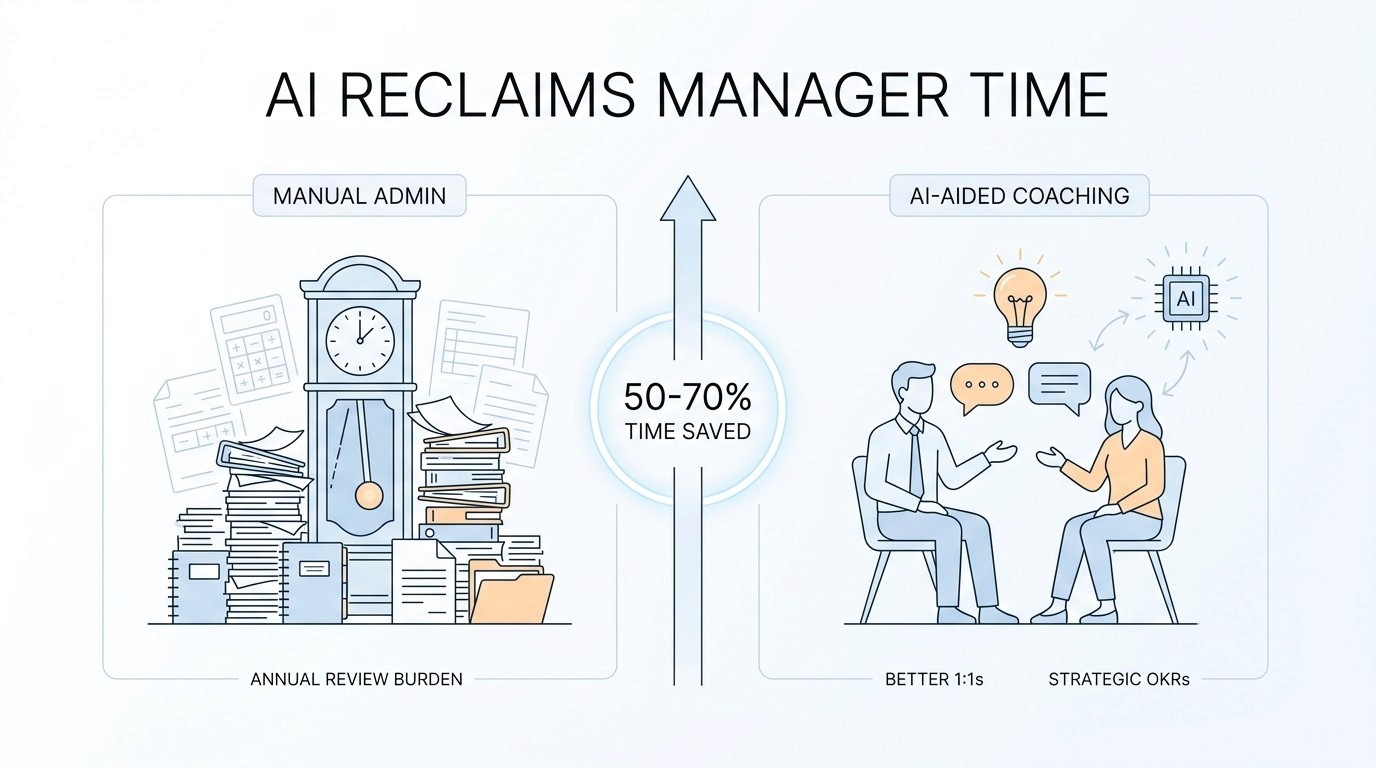
Zal.ai guides self-assessments and centralizes 1:1 meeting notes into a continuous narrative. This prevents the end-of-year scramble to remember what happened in February.
When managers spend less time on paperwork, they spend more time on strategy. Shifting from administration to coaching turns a cost center into a performance engine.
The 4 Core ROI Pillars To Track
Retention and Turnover Reduction
Reducing attrition is the most quantifiable ROI pillar for any HR leader. Companies with regular feedback loops see turnover rates drop by 14.9%.
How to Build It
Establish the current cost of a single resignation by adding hiring fees, training time, and lost revenue.
Implement a continuous feedback tool like Zal.ai to ensure managers are having weekly or bi-weekly check-ins.
Compare the turnover rates of teams with high feedback frequency against those with low frequency over a six-month period.
Operational Efficiency
Managers spend hundreds of hours on reviews because the data is scattered across emails, Slack, and memory. Centralizing this data creates immediate time savings.
How to Build It
Audit the hours managers currently spend on the annual review cycle including prep and meeting time.
Deploy AI-powered 360 reviews to automate the collection of peer feedback and self-assessments.
Track the reduction in total administrative time once the system is fully automated.
Performance ROI
Feedback is linked to a 26% improvement in overall team performance outcomes. According to Gallup, fast feedback is the engine of high performance.
How to Build It
Define clear OKRs or SMART goals within your performance platform.
Set up automated review cycles that trigger feedback every 90 days rather than every 12 months.
Correlate the frequency of goal updates and feedback sessions with the team's hit rate on their KPIs.
Cultural ROI
Culture is often called a soft metric, but it impacts your Employee engagement and daily motivation. Engaged employees are significantly more motivated to succeed.
How to Build It
Launch baseline engagement surveys to measure current sentiment and fairness perceptions.
Train managers to use continuous feedback tools for 1:1 meetings to ensure consistent support.
Check in with managers every quarter to track improvement.
Annual Reviews Vs. Continuous Feedback: The Business Case
Traditional systems are built for compliance and records rather than growth. The fairness gap alone justifies the transition, as perceived unfairness is a primary driver of top-performer attrition. Continuous models offer a 3.6x increase in motivation because they provide the map employees need to navigate their daily work.
Common Implementation Mistakes To Avoid
The biggest risk in moving to continuous feedback is over-engineering the process. If you force managers to fill out ten forms a week, you will create feedback fatigue.
Quality matters more than sheer frequency. High-frequency noise is just as damaging as an annual silence if the advice is not actionable.
Failing to train managers as coaches can turn continuous feedback into continuous micro-management, which kills morale.
Tie soft engagement metrics to hard business outcomes like attrition costs. If you only track 'happiness' without looking at retention or productivity, the C-suite will eventually pull the plug.
Ensure feedback is based on objective data rather than manager moods. Use a centralized platform to record evidence throughout the year so the narrative remains grounded in reality.
Building A More Human (And Profitable) Workplace
Moving to continuous feedback is a financial necessity in a competitive talent market. You are no longer just managing people, you are managing a massive portion of your company's balance sheet.
Feedback is not just a mirror that shows where you are. It is a map that shows where you can go if you have the right guidance. The question is no longer why move away from annual reviews, but how continuous feedback can measurably improve performance.
Organizations that prioritize human-led, AI-aided systems are 4.2x more likely to outperform their competition. The shift is not a matter of if, but how fast you can adapt.
Start with a small pilot team and measure the productivity gains. The numbers will eventually speak for themselves.