How to Build a Continuous Feedback Culture Rooted in Psychological Safety
Annual reviews are failing. Discover the 5-step playbook for creating a human-led, AI-aided feedback culture that drives motivation.

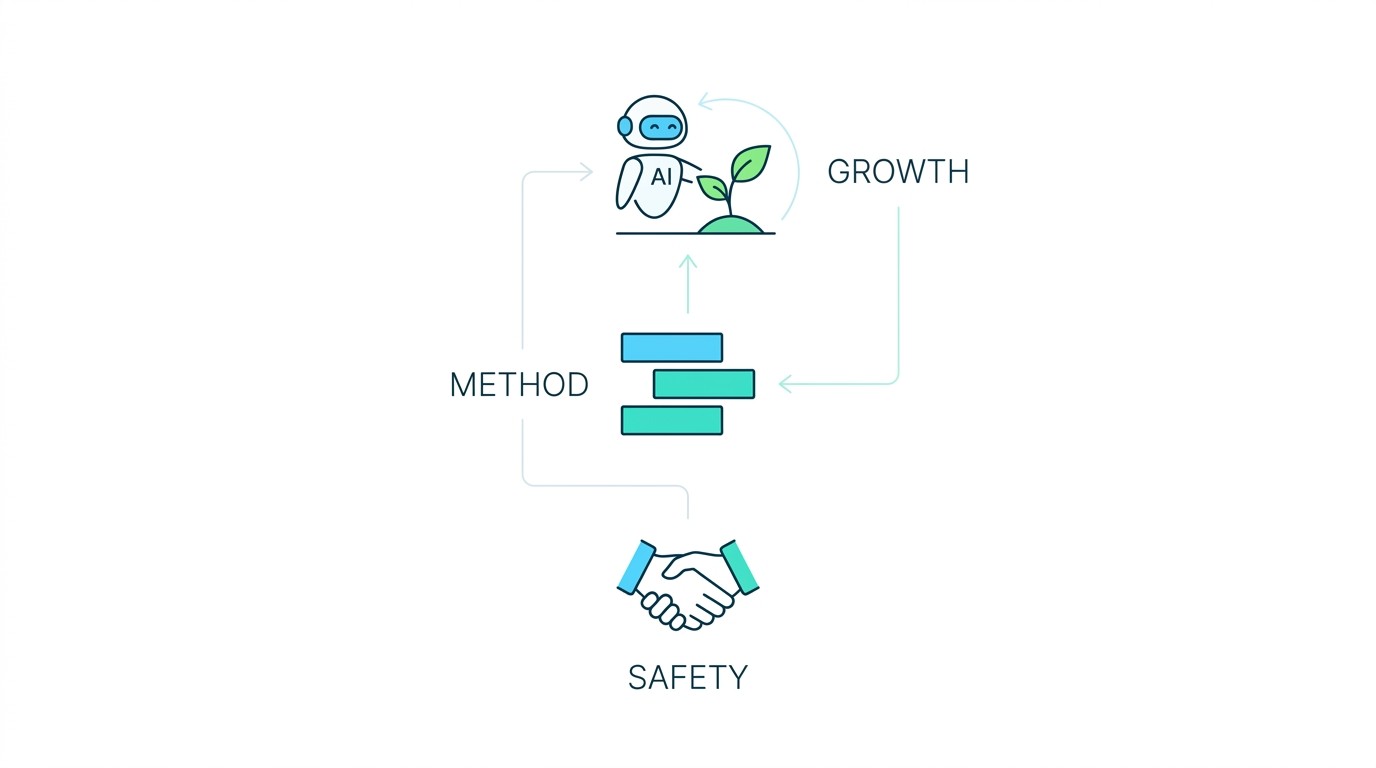
Old-school performance reviews act as a backward-looking autopsy rather than a growth engine: they focus on past failures that you can't change anymore.
Building a culture of continuous feedback is the only way to fix the lack of psychological safety in most systems. Without it, your employees will choose to protect themselves over being honest.
If your team feels they will be punished for every small slip, they will just stop sharing new ideas. Moving to a continuous model takes away the fear of the yearly cycle. It replaces that annual review with real-time coaching that actually works.
The Feedback Culture Blueprint
Psychological safety is the foundation for taking risks and coming up with new ideas.
Companies that use continuous feedback report 26% better overall organizational performance and keep their employees much longer.
Modern systems work best when you mix frequent check-ins with clear, evidence-based tracking.
What is Psychological Safety (and Why Feedback Fails Without It)?
Psychological safety is the shared belief that your team is a safe place for taking risks. It means people feel okay admitting mistakes or speaking up without being embarrassed. This unlocks a team that is already motivated. When fear is gone, performance naturally improves.
Many leaders falsely believe psychological safety means being polite, but it is really about providing honest challenges in a supportive way. According to The Fearless Organization (HBS), work is better when people don't waste energy trying to look perfect to appease managers. They spend that energy on solving problems instead.
Step 1: Audit Your Current Safety Levels
You cannot improve safety until you know exactly where your team stands now. Use the Psychological Safety Scale to get an objective look at the current environment. The best way to do this is to implement an anonymous survey asking employees about how safe they feel sharing their opinions and engaging in upward feedback. Also, audit any recent performance complaints from managers or employees. You should look for patterns where people feel mistakes are held against them.
Step 2: Normalize Vulnerability From the Top Down
Change starts with the leadership team doing the very things they want to see. If the leader never admits a mistake, no one else will either. Senior leaders must be vulnerable enough to share shortcomings and the specific lessons they learned from them. This signals that the company values learning over perfection. Reducing this power gap also allows junior staff to give feedback to bosses without fearing for their jobs. It makes room for better ideas.
Step 3: Standardize Clarity with SBI
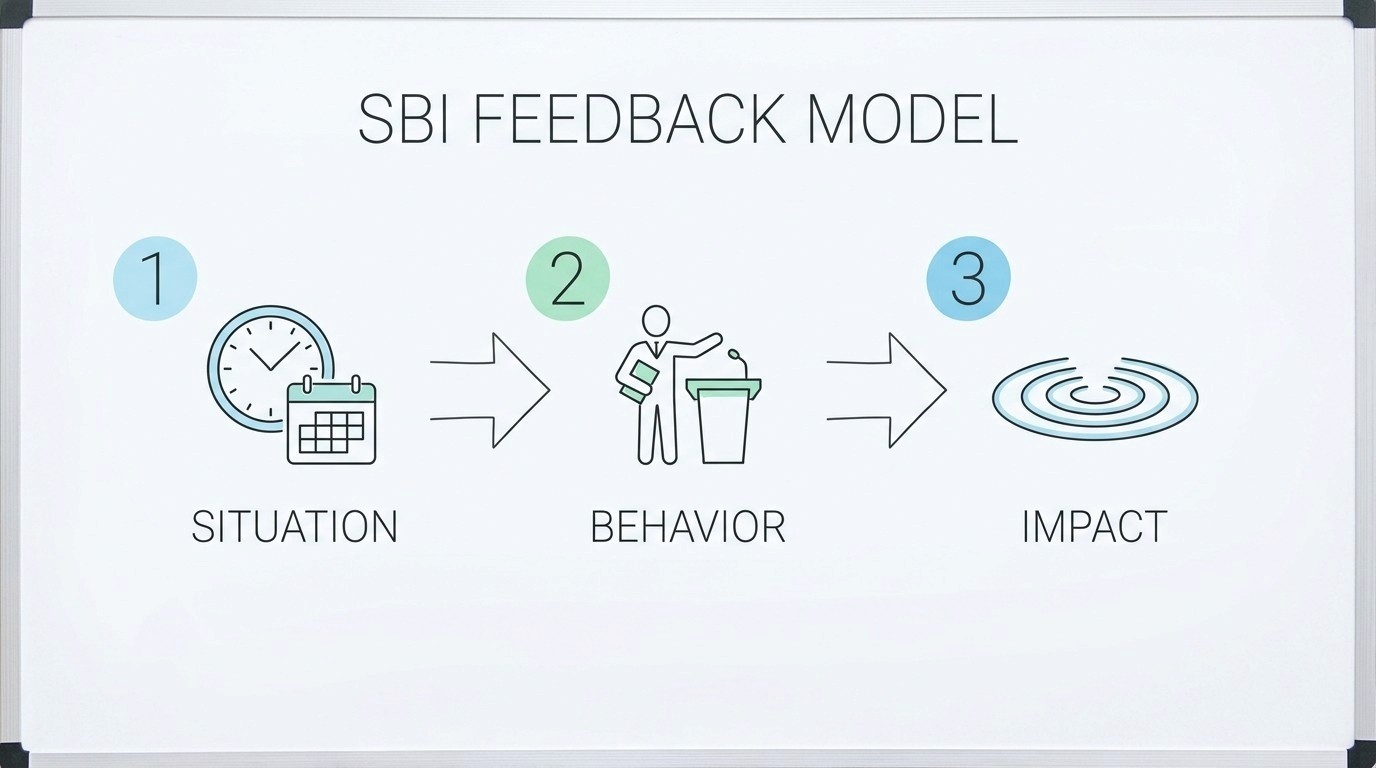
Vague feedback is useless feedback. To make coaching effective, you need a standard framework that removes personal bias and keeps the focus on actions. The Situation, Behavior, and Impact model ensures every piece of feedback is rooted in objective observations.
The SBI Script
Situation: "During the client presentation yesterday afternoon..."
Behavior: "...you interrupted the lead architect three times..."
Impact: "...which made the team look uncoordinated and frustrated the client."
This shift moves the manager from an evaluator to a coach. You are no longer just grading work; you are actively helping the employee build their career.
Step 4: Establish a High-Frequency Check-In Cadence
Motivation needs consistency. Waiting twelve months to tell someone they are off-track is a failure of leadership. Daily feedback makes employees 3.6 times more likely to be highly motivated according to research from the Gallup: Feedback & Motivation Study.
Set up a weekly check-in for every manager. These meetings should focus on two simple questions: What's working? and What's in the way?.
Closing the loop is the final step in building a high-frequency culture. You must share how the survey data is leading to actual changes in the company.
If you ask for feedback but never act on it, the team will stop giving it. Transparency is the only way to keep people interested over the long term.
Step 5: Scale the Human Touch with AI-Aided Coaching
Keeping a continuous feedback loop going by hand is nearly impossible for growing teams. You need one place to track notes and push for consistency without adding more paperwork.
Zal.ai provides a human-led, AI-aided platform designed to make performance management easy. It helps managers run better reviews by gathering evidence all year.
Use AI-Powered 360 Reviews to gather feedback and write up helpful notes automatically.
Use the SMART Goal Tool to keep performance aligned with company goals during 1:1s.
Start Automated Review Cycles based on hire dates or manager changes.
Tip: Use AI to draft the first feedback notes to save time, then add your own personal touch.
From Evaluation to Enablement
Building a feedback culture is a leadership duty rather than an HR project. It is the only way to make sure your team stays fast and motivated in a tough market.
When you put psychological safety first, you turn your company from a group of people into a high-performing unit. You stop managing by fear and start leading by helping.
Platforms like Zal.ai help companies move from know-it-alls to learn-it-alls. Start by checking your safety levels today.