Continuous Feedback Over Annual Reviews
Traditional annual reviews are failing 95% of managers. Explore how unified continuous feedback platforms drive 3.6x more employee motivation and 50% better financial outcomes.

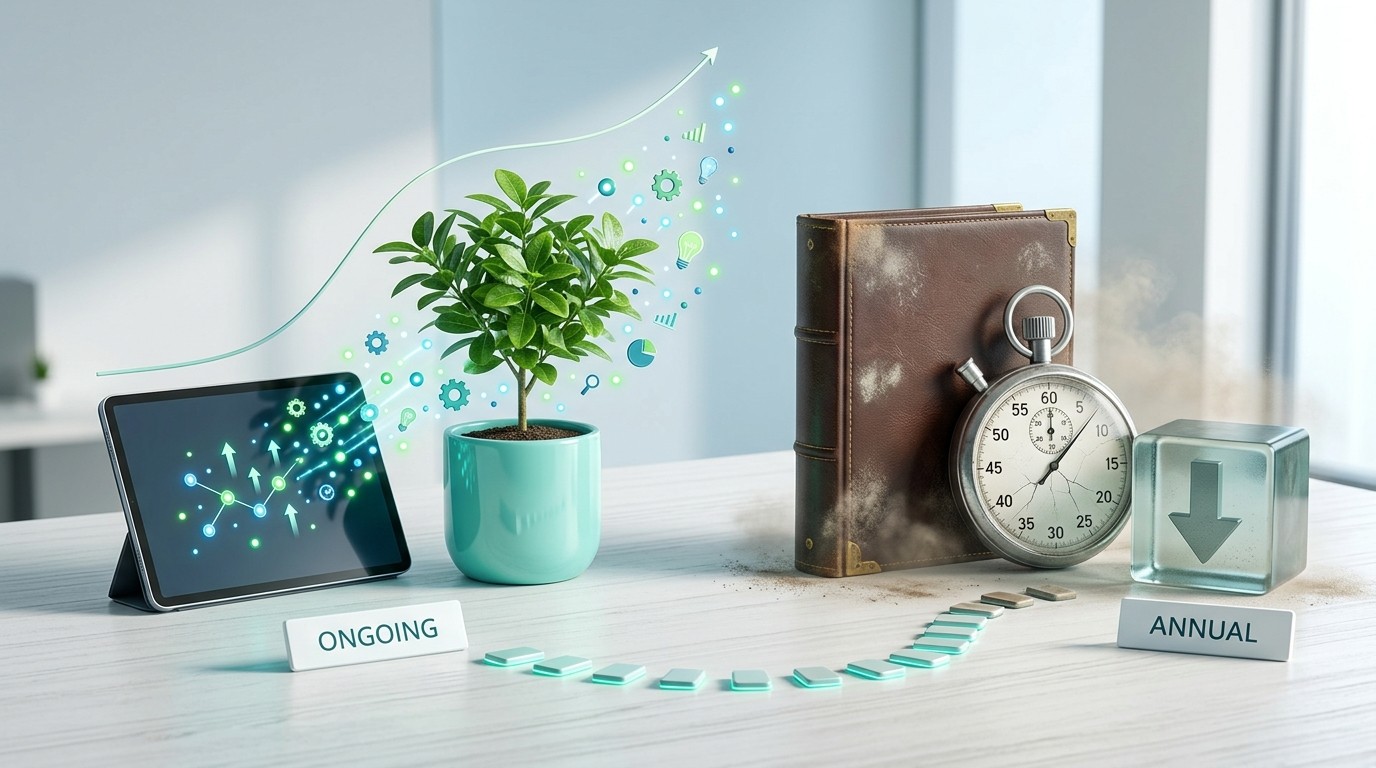
95% of managers admit they are completely dissatisfied with static, high-anxiety yearly performance review systems. They are reactive exercises that look backward rather than driving growth for the future. Traditional appraisals suffer from recency bias where managers only remember the last few weeks of an employee's work.
Employees often view these yearly sit-downs as a high-stakes trial. This atmosphere can feel unsafe and it prevents the honest dialogue needed for improvement. Continuous performance management replaces this stress with a cycle of regular check-ins and real-time adjustments.
The Bottom Line: Why High Frequency Feedback Works
Moving to a real-time model changes the financial trajectory of your business. Companies with continuous feedback are 50% more likely to exceed financial goals because they can pivot faster than their competitors. The data shows this is not just about employee happiness; it is about bottom-line results.
Employees receiving daily feedback are 3.6x more likely to be highly motivated.
Organizations with a strong feedback culture are 44% better at retaining top talent.
Real-time models report an average 26% improvement in overall performance outcomes.
Frequent 15-minute syncs are more effective than one 2-hour annual deep dive.
Frequency beats intensity every time in management. You cannot fix a year of mistakes in a single afternoon meeting. Building a culture of transparency ensures that every team member knows exactly where they stand at all times.
Side-By-Side: Annual Reviews vs. Continuous Feedback
Annual reviews and continuous feedback represent two entirely different philosophies of management. One is focused on evaluating past performance, while the other is focused on enriching the present and future relationship between colleagues.
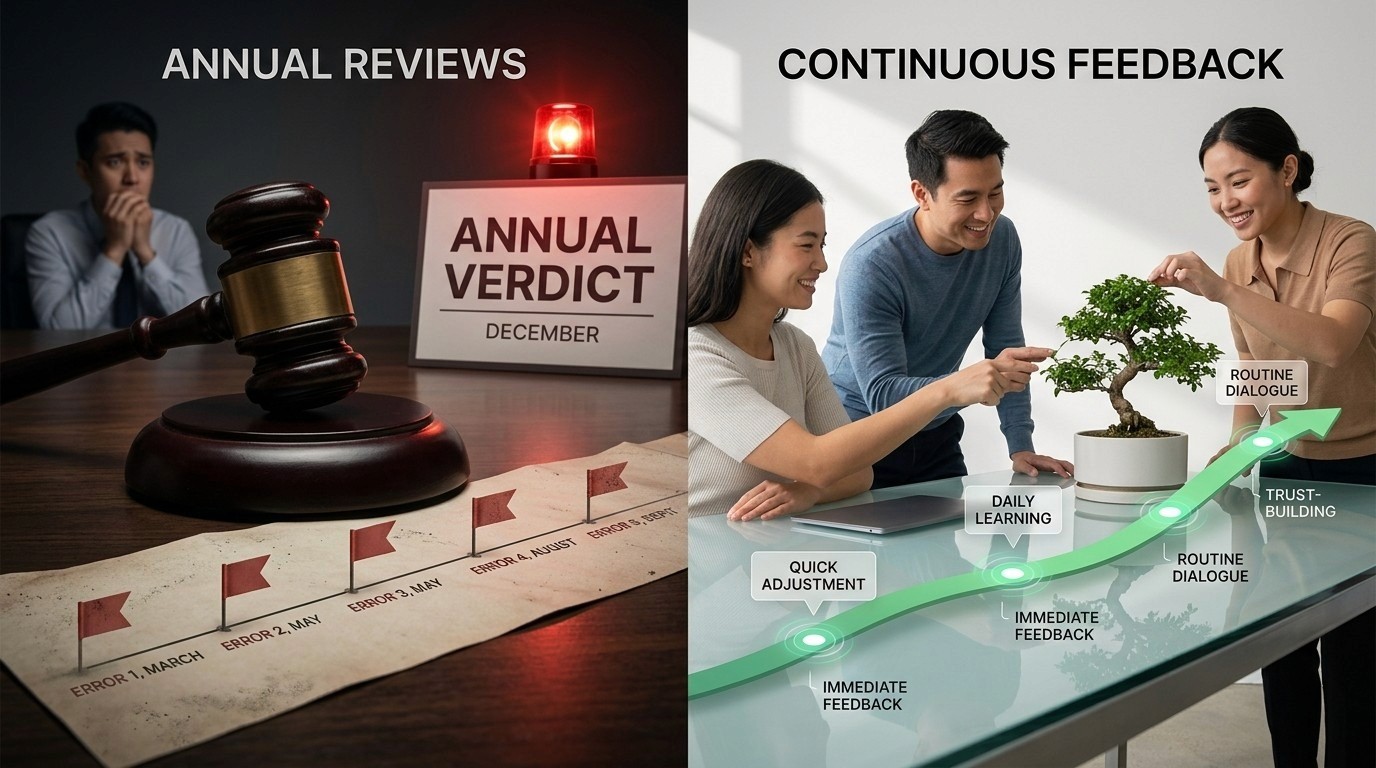
Waiting until the end of the year to address a performance issue is a recipe for talent loss. Continuous feedback allows for immediate course correction which keeps projects on track and prevents small errors from snowballing. Low-stakes, routine dialogue builds the trust necessary for high-performing teams to thrive.
5 Core Continuous Feedback Software Benefits For 2026
Elimination of Recency Bias
Software logs performance data year-round to ensure every achievement is counted. This prevents the common trap where only the most recent project determines an employee's bonus or promotion.
Unified Performance Data
Integrating your Objectives and Key Results (OKRs) with 1:1 meetings reduces the administrative burden on HR teams. Centralized data allows for better talent decisions based on actual output rather than gut feelings.
Increased Productivity
Real-time feedback loops lead to an average 26% improvement in performance outcomes. When people know what to fix immediately, they stop wasting time on the wrong priorities.
Scalable Coaching
Unified platforms provide templates that help managers transition from a judge to a coach. Future-focused feedback helps employees develop new skills instead of just rehashing old mistakes.
Implementation: Utilize Leapsome to connect specific performance feedback to personalized learning pathways for every employee.
Tip: Start by migrating one department to the new platform to gather internal success stories before a full company rollout.
The Roadmap: Transitioning To A Unified Platform
Transitioning to a unified platform requires more than just new software; it requires a culture shift toward transparency. You must move from a world of secrets and surprises to one of open, ongoing dialogue.
Secure Leadership Buy-in: Present ROI data on engagement and retention to show how continuous feedback drives revenue. Explain that companies using these systems are 50% more likely to exceed financial goals.
Complete Your Pre-Diagnostic: Author and HR visionary Ben Dattner has partnered with Zal.ai to make a prediagnostic tool to help companies assess their readiness for a new performance management platform.
Select Your Platform: Zal.ai adapts to your company's specific needs. It is an AI-assisted platform that puts HR and leadership in the driver’s seat of company culture.
Train Your Managers: Focus on teaching proactive feedback techniques and coaching skills.
Ritualize the Loop: Roll out 1:1 meeting templates to ensure that feedback sessions happen consistently. This turns performance management into a routine habit rather than an annual event.
Monitor the Health: Use HR dashboards to track participation rates and quality metrics. System health depends on consistent usage across all levels of the organization.
From Evaluation To Growth
The annual review must be replaced by a more agile and human-centric approach. Modern work moves too fast for a single yearly conversation to remain relevant. Frequency beats intensity every time in building a high-performance culture.
By moving to a unified platform, you shift the manager's role from a judge to a coach. This transparency gives visibility into the efforts that actually drive the business forward. Transparency and visibility drive performance behavior far more effectively than a formal rating system.
Stop looking at performance as a historical record to be audited. Start treating it as a living system that requires daily attention. Join the Zal.ai movement and start your transition today to ensure your team is ready for the demands of 2026.
.