10 Best Unified Performance Management Software Platforms for 2026
Performance management is no longer a yearly chore—it is a continuous enablement strategy. We rank the top 10 unified platforms that integrate AI coaching, OKRs, and HRIS data to drive elite results in 2026.

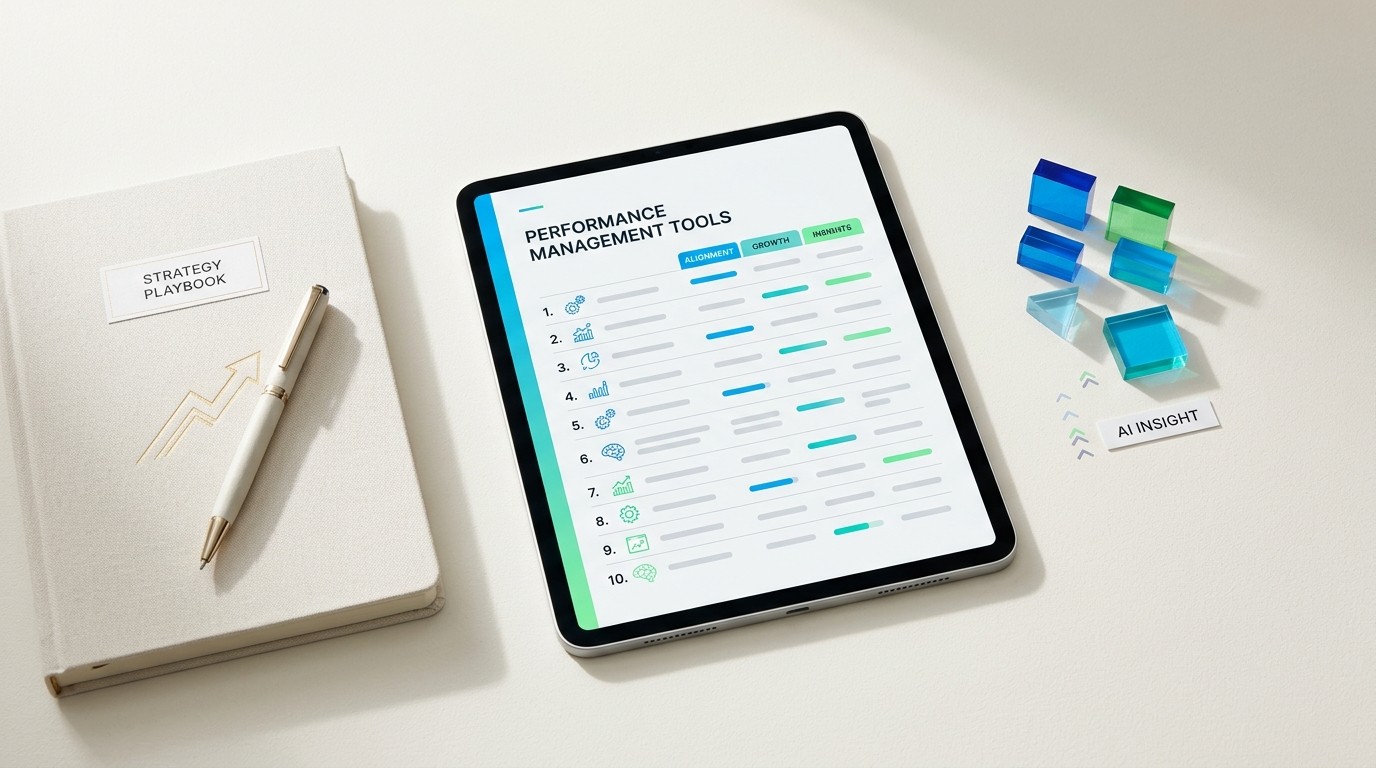
90% of HR leaders believe AI has fundamentally redefined high performance as we move into 2026. However, the reality on the ground is starkly different because only 14% of employees strongly agree their performance reviews inspire them to improve.
The performance clarity gap is a silent profit killer that leaves teams misaligned and unmotivated. While leadership expects AI-enhanced productivity, only 42% of organizations have actually updated their goal-setting processes to reflect these new standards.
This disconnect creates a culture of guesswork where employees do not understand how they are being evaluated. A unified system is no longer a luxury but a necessity to ensure every worker understands their role in the AI-driven economy.
The 2026 Unified Performance Playbook
A unified performance platform must act as the nervous system of your organization by connecting daily work to long-term strategy. In 2026, this requires moving beyond static annual forms toward continuous, AI-assisted enablement.
Modern success depends on real-time feedback rather than backward-looking documentation.
Deploy AI-native coaching agents to provide managers with real-time nudges and feedback suggestions.
Integrate performance workflows directly into Slack or Microsoft Teams to capture work where it happens.
Maintain 100% visibility of OKRs across all levels of the organization to ensure alignment.
Use data-driven insights to link performance directly to personalized learning and development paths.
1. Betterworks: The Enterprise AI-Native Powerhouse
The Betterworks 2026 State of Performance Enablement Report highlights that management visibility is the primary driver of engagement. Their NextGen platform solves this by turning passive data into active coaching moments through a centralized hub.
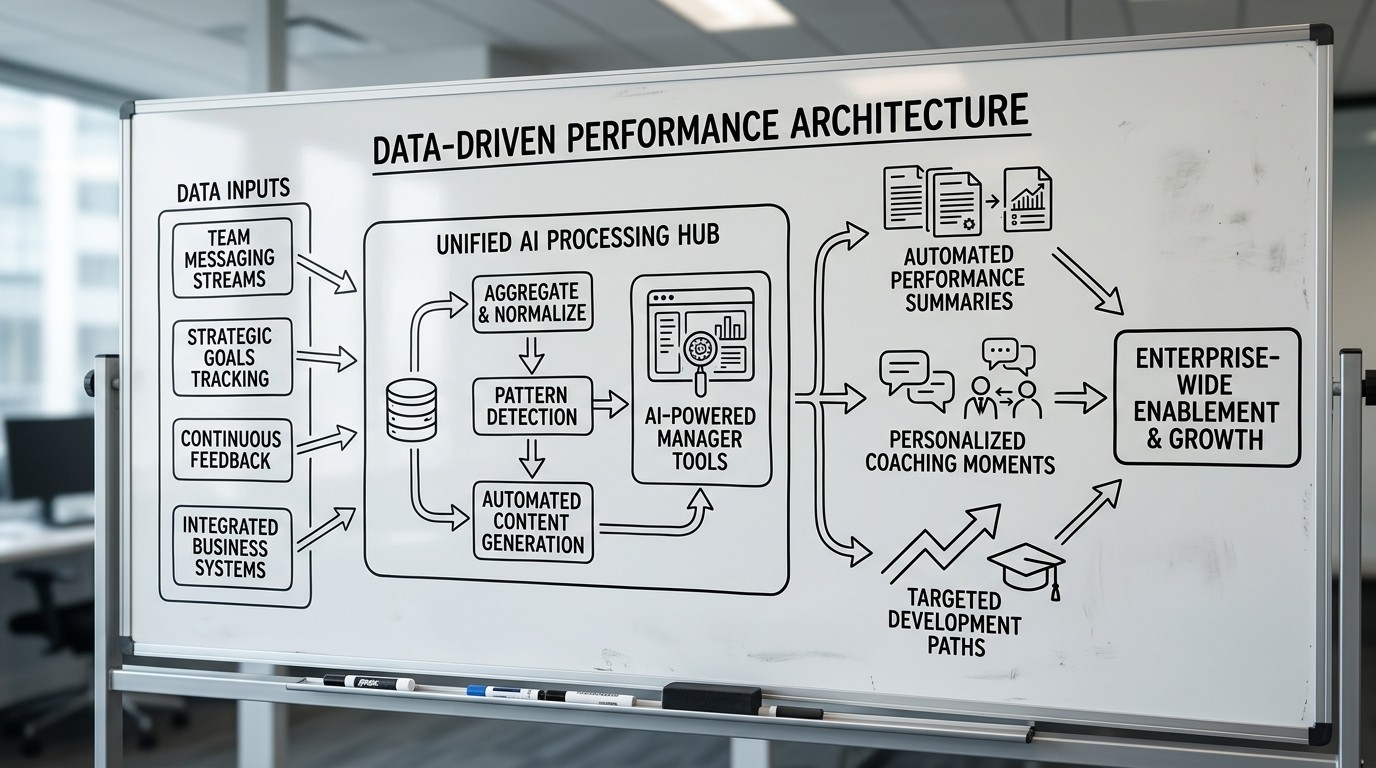
Key Features:
Manager Command Center for aggregate performance views
Automated AI performance summaries and coaching nudges
Real-time OKR alignment and strategic tracking
Deep integrations with Workday, SAP, and Slack/Teams
Implementation: Connect your HRIS and internal communication tools to allow the platform to begin synthesizing activity data into draft reviews immediately.
Betterworks is the best choice for enterprises that need to bridge the gap between high-level strategy and daily execution at scale.
Tradeoff: The sheer volume of features and customization options can overwhelm smaller teams that lack a dedicated HR operations department.
2. Lattice: Best for Building a High-Feedback Culture
Lattice focuses on the human element of performance by centralizing reviews, goals, and employee engagement into one intuitive interface. They prioritize the connection between a manager and their direct report to ensure no one feels like just another number in the system.
The Lattice AI Meeting Agent helps managers prepare for 1-on-1s by summarizing recent feedback and progress against goals automatically.
Key Features:
AI-powered meeting summaries and action item tracking
Integrated engagement surveys with sentiment analysis
Visual OKR tracking that connects individual tasks to company wins
Seamless mobile app experience for on-the-go feedback
Implementation: Roll out the Lattice AI features by first integrating your calendar to let the meeting agent assist with weekly check-ins.
Verdict: This platform is ideal for mid-market companies aiming to build a high-feedback culture without high administrative overhead.
Tradeoff: While powerful, the pricing can become steep for organizations with high headcount growth due to its per-seat model.
3. 15Five: The Manager-Centric Coaching Platform
15Five is built on the philosophy that managers are the most important lever for employee performance and retention. Their platform centers on a weekly ritual that forces a consistent dialogue between leaders and their teams.
The HR Outcomes Dashboard allows executives to see exactly how coaching interventions are impacting business results in real time.
Key Features:
High-impact weekly check-in format for continuous alignment
Evidence-based manager coaching and training modules
Career Hub for employee growth and succession planning
Transformative engagement surveys based on positive psychology
Implementation: Start with the weekly check-in feature to establish a rhythm before expanding into full performance reviews or career mapping.
Rule: Never treat a performance review as a surprise; use weekly check-ins to ensure 100% transparency at all times.
Tradeoff: Organizations that prefer quarterly or annual formal cycles may find the constant weekly cadence too demanding initially.
4. Leapsome: Best for Learning-Linked Performance
Leapsome is the go-to choice for companies that view performance as a continuous learning journey rather than a static evaluation. It is particularly popular in Europe due to its strict adherence to privacy standards and local regulations.
It links reviews directly to learning paths so that every feedback point becomes an opportunity for immediate skill development.
Key Features:
Personalized learning and development module linked to review outcomes
Competency frameworks that define what success looks like for every role
Automated onboarding and survey workflows
Fully GDPR-compliant data processing and hosting
Implementation: Map your internal competency framework into Leapsome first to ensure AI-driven learning recommendations are relevant to your specific needs.
Verdict: This is the best platform for tech-forward teams and organizations operating within the European Union.
Tradeoff: The learning management system features are robust but may be redundant if you already have a dedicated LMS in place.
5. Workday Performance: The Global HCM Suite Standard
Workday remains the gold standard for global enterprises that require a single, unshakeable source of truth for all people data. Performance management is not a standalone app here but a core component of the entire employee lifecycle.
Unified record keeping ensures data integrity across payroll, benefits, and talent management for thousands of employees globally.
Key Features:
End-to-end talent management within a single HCM ecosystem
Advanced workforce planning and analytics for large-scale organizations
Skill-based talent optimization to identify internal mobility opportunities
Global compliance and multi-language support as a native feature
Implementation: Work with a certified implementation partner to ensure your complex global hierarchies are correctly mapped before launching performance modules.
Verdict: Workday is the only logical choice for massive organizations that cannot risk the data silos created by third-party point solutions.
Tradeoff: The user interface is often described as complex and less intuitive compared to modern, dedicated performance platforms.
6. SAP SuccessFactors: Best for Multinational Compliance
SAP SuccessFactors provides the most comprehensive tools for multinationals that have to navigate different labor laws and performance standards across many countries. It uses intelligent automation to simplify the heavy lifting of global talent calibration.
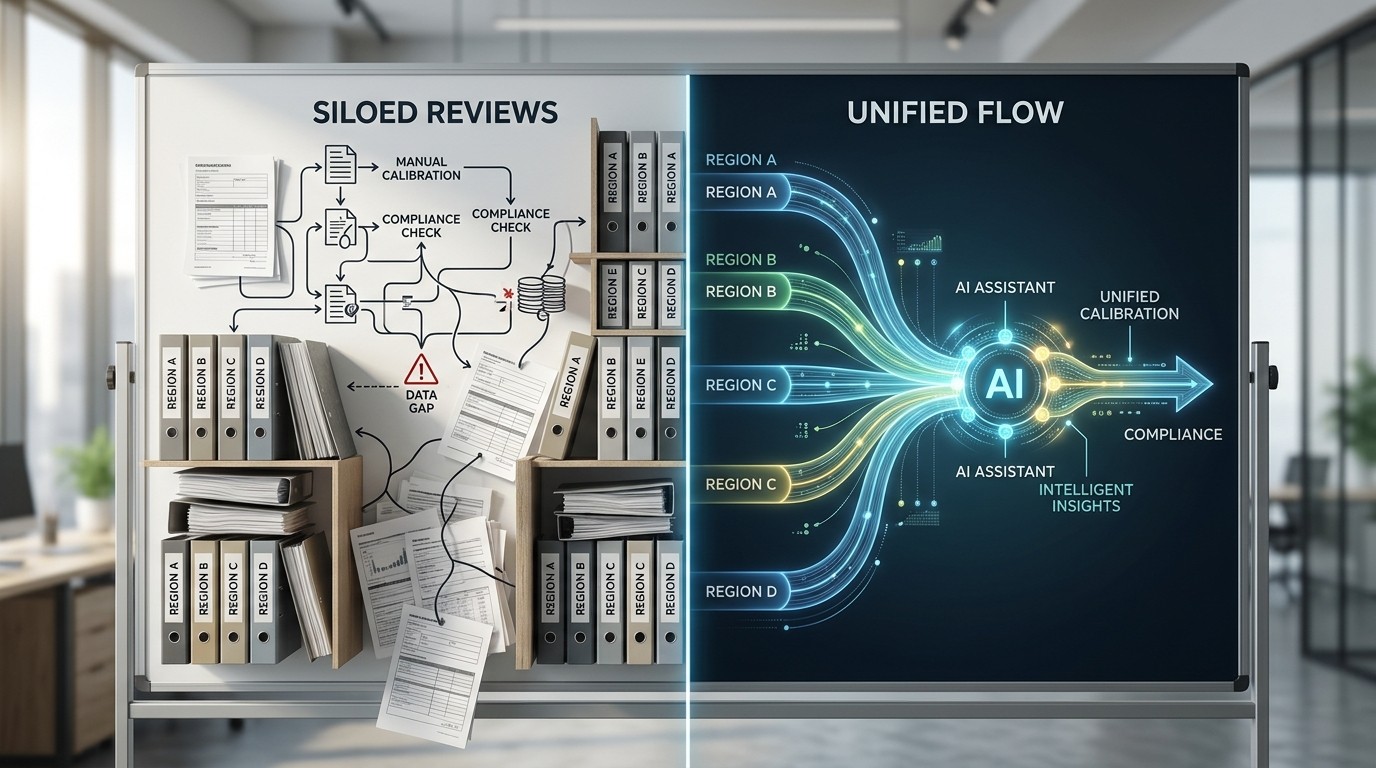
The SAP Joule AI assistant provides managers with intelligent insights into team performance and potential flight risks.
Key Features:
Complex multi-region calibration tools for fair evaluations globally
Integration with the broader SAP ERP ecosystem for financial alignment
Robust goal management that supports various regional standards
AI-driven talent development and succession planning
Implementation: Activate the Joule AI assistant within your existing SAP environment to begin pulling insights from your global data lake.
Verdict: Best for highly regulated industries and companies that already run their core business operations on SAP software.
Tradeoff: The platform requires significant technical expertise to manage and customize effectively.
7. Engagedly: Best for Gamified Employee Recognition
Engagedly uses social proof and gamification to make performance management feel less like a chore and more like a community effort. They leverage an agentic AI to keep the recognition loop active without manual intervention from HR.
Marissa AI acts as a virtual assistant that prompts employees to recognize peers and update their goals naturally.
Key Features:
Marissa AI agent for real-time employee assistance and data entry
Points-based gamification for peer-to-peer recognition and badges
Multidimensional 360-degree feedback with customizable templates
Cascading goal management to show how small wins impact the big picture
Implementation: Define your recognition badges and point values early to encourage high adoption rates during the first month of use.
Verdict: Ideal for organizations that want to boost employee engagement through social recognition and interactive features.
Tradeoff: The gamified approach might not align with the culture of more traditional or conservative corporate environments.
8. BambooHR: Best Simplified Solution for SMBs
BambooHR is designed specifically for small and medium-sized businesses that need a clean, simple way to manage their people without enterprise bloat. It provides a unified experience by combining core HRIS tasks with performance tracking.
Simplified goal tracking removes the complexity that often causes small teams to abandon performance management altogether.
Key Features:
All-in-one HRIS including time tracking, payroll, and performance
Simple, non-intimidating review forms that prioritize quality over quantity
Automated reminders to keep managers and employees on schedule
Centralized employee records for quick access to history and notes
Implementation: Import your employee list via CSV and set up basic review cycles to get your entire performance system running in a few hours.
Verdict: This is the best solution for teams of 10 to 500 people who want a software that just works without a manual.
Tradeoff: It lacks the deep AI coaching and complex OKR cascading features found in enterprise-grade platforms.
9. Profit.co: Best for OKR-First Organizations
Profit.co is built for the organization that lives and breathes strategy execution through the OKR framework. It is the only platform on this list that deeply integrates the Balanced Scorecard methodology into daily performance.
Aligning individual tasks to strategic pillars ensures that no effort is wasted on non-essential projects.
Key Features:
Deep OKR tracking with automated progress updates from data sources
Balanced Scorecard methodology support for comprehensive strategy views
Performance reviews that pull directly from goal achievement data
Strategy maps to visualize the path to organizational success
Implementation: Use the strategy map builder to visualize your top-level goals before cascading them down to individual departments and teams.
Verdict: Best for high-growth companies and data-driven teams that prioritize objective results above all else.
Tradeoff: The focus on metrics can sometimes overshadow the qualitative aspects of employee development and soft skills.
10. OrangeHRM: Best Value Open-Source HRMS
OrangeHRM offers a unique value proposition for companies that want a fully integrated HRMS without being locked into expensive per-seat licensing. As an open-source-based platform, it provides extreme flexibility for customization.
No per-seat licensing for core modules makes this an incredibly cost-effective choice for large workforces on a budget.
Key Features:
Open-source flexibility for deep customization of the performance module
Integrated modules for recruitment, leave management, and performance
Comprehensive reporting and analytics for mid-market HR teams
Flexible deployment options including cloud or on-premise hosting
Implementation: Identify the specific performance workflows you need to customize and work with their support team to configure the open-source architecture.
Verdict: The best value for mid-market companies that have internal IT resources and a need for a bespoke HR system.
Tradeoff: The user interface is more functional than beautiful and may require more training for non-technical users.
The 2026 Feature Showdown
Selecting a platform in 2026 requires looking past the marketing and into the actual AI capabilities and integration depth.
Tool | Best For | AI Depth | Target Size |
|---|---|---|---|
Betterworks | Enterprise Enablement | High (Agentic) | 1,000+ |
Lattice | Feedback Culture | High (Assistant) | 100-2,000 |
15Five | Manager Coaching | Medium (Insights) | 50-1,000 |
Leapsome | Learning Focus | Medium | 50-1,000 |
Workday | Global HCM | Low (Internal) | 5,000+ |
SAP | Compliance | Medium (Joule) | 5,000+ |
Engagedly | Gamification | High (Marissa) | 100-2,000 |
BambooHR | SMB Core HR | Low | 10-500 |
Profit.co | OKR Strategy | Medium | 50-2,000 |
OrangeHRM | Open Source Value | Low | 100-1,000 |
How to Select the Right Platform for Your Workforce
Choosing the right platform is more about your organizational culture than a feature checklist. In 2026, the primary failure point is the AI clarity gap, where tools collect data that employees do not understand.
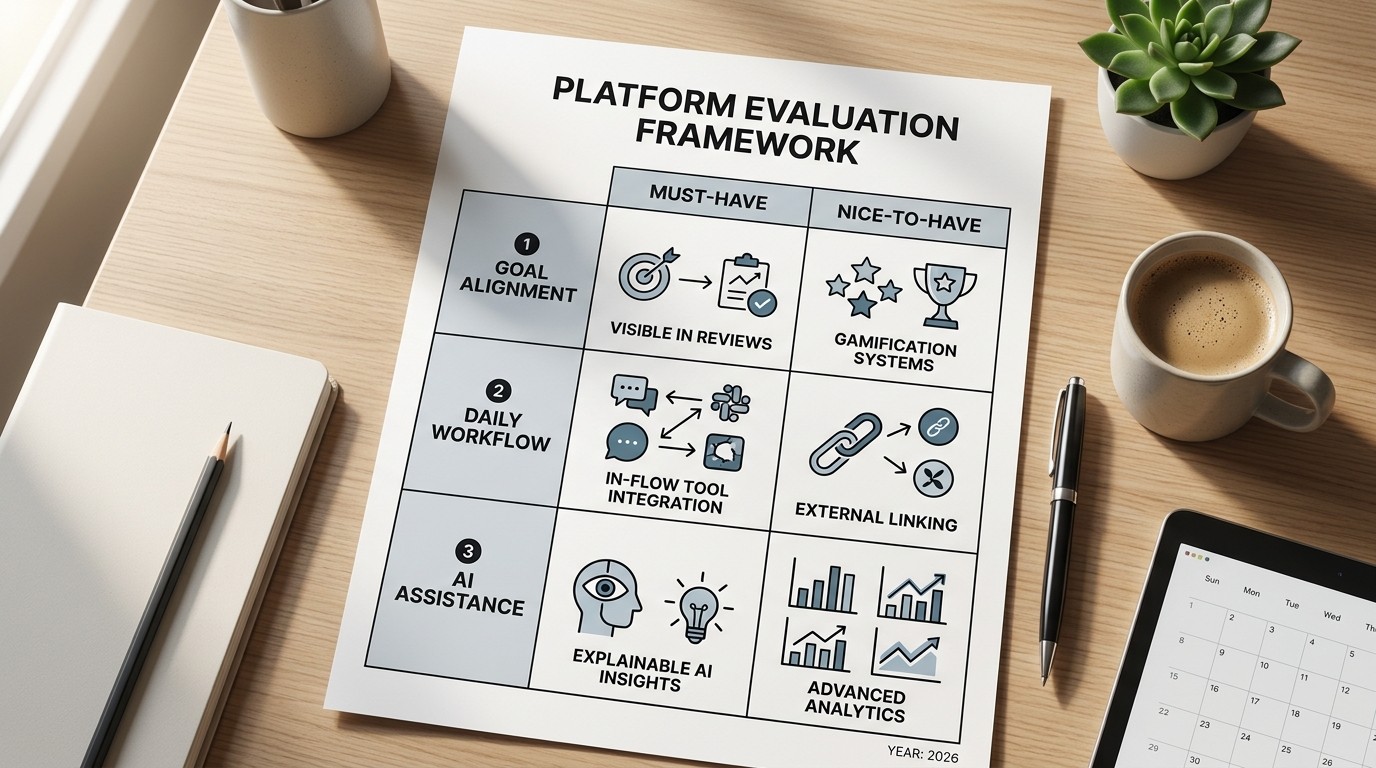
Audit your tech stack to see where your employees actually spend their time. If your team lives in Slack, a platform that requires them to log into a separate portal every day will fail.
Define your AI philosophy before you buy. Decide if you want AI to draft reviews, suggest coaching tips, or simply analyze sentiment. Clarity on AI usage prevents employee resentment and builds trust in the system.
Prioritize 'In-Flow' integration over standalone features. Performance management should feel like a natural part of a conversation, not an administrative task that stops work once a quarter.
If your workforce is mostly remote, then prioritize video-integrated check-in tools.
If you are in a highly regulated industry, then prioritize platforms with robust audit logs and calibration tools.
If you have high turnover in entry-level roles, then prioritize learning-linked performance paths.
Pitfall: Avoid disconnected goal tools that are not visible to employees during their actual performance reviews. If the goal tracking and the review are in two different places, the review becomes a documentation exercise rather than a development tool.
Unified Performance Management FAQ
What is the AI clarity gap in performance management?
The AI clarity gap occurs when employees do not understand how AI models are analyzing their work data or influencing their performance ratings. To solve this, companies must choose transparent platforms that explain exactly which data points are being used for AI-generated summaries.
Why are annual review cycles failing in 2026?
Workflows and skill requirements change too quickly for a yearly conversation to be relevant. In 2026, performance must be a continuous loop of feedback and adjustment to keep up with the pace of AI-driven business changes.
How does unified performance software improve ROI?
Highly engaged employees are associated with a 23% increase in profitability. Unified software drives this by ensuring every employee is aligned with top-level goals and receives the coaching they need to stay productive.
Do I need a full HRIS to have unified performance management?
Not necessarily, but the performance tool must have a deep, real-time integration with your existing HRIS. Without a unified data source, you risk making talent decisions based on outdated or incomplete information.
Moving From Measurement to Enablement
The shift from annual measurement to daily enablement is the most significant change in management history. Organizations that continue to treat performance as a backward-looking administrative task will continue to see low engagement and high turnover.
Engaged employees drive 23% more profitability because they understand their value and their direction. The tools listed here are designed to bridge that gap and turn every manager into a coach.
Start by evaluating your current feedback frequency. If your team only discusses performance once a quarter, your first step is to implement a continuous check-in ritual.
Choose a platform that fits your culture and commit to the process.