Ben Dattner Case Study thing
Executive Coach Dr. Ben Dattner explains why most companies struggle with ineffective performance management systems, and provides a tool to align the design of the system with both human capital strategy and organizational culture

Are You Incurring Performance Management Debt?
Ask any CHRO, implementing a performance management system is not an easy process.
Most companies find reputable vendors to roll out tested review processes and evaluation systems, but more often than not, they just don’t work effectively. One or two years after implementation, company-wide adoption might still be low and managers and employees alike can grow skeptical, even resentful, of the process. In these situations, HR chases people to use the system and/or fields endless user complaints, and the system itself is blamed for being irrevocably flawed. All parties involved grow disillusioned, and performance management becomes a mostly fruitless, “check the box” exercise.
In these situations, most executives think that if the company had just chosen a different vendor, with a different system, they might have been successful. Dr. Ben Dattner, organizational psychologist and Founding Principal of Dattner Consulting LLC, has another idea.
He says that the vendors and their systems aren't the problem, the problem is that most organizations don’t recognize and actively make the necessary design decisions that they, not their vendors, need to make before rolling the system out.
Performance Management Debt
When a performance management framework is prematurely applied, the company accrues what Dr. Dattner calls “performance management debt.” Just like tech debt, performance management debt is about how shortcuts taken early in the process lead to compounding costs later on. Low adoption and participation, disillusioned managers and employees, incorrect or incomplete performance data, and company-wide goal misalignment can all be a product of decisions made early or neglected early in the design process.
Instead, Dr. Dattner suggests that process owners and stakeholders should take the time to understand their values, goals, and needs for a performance evaluation process. Cookie-cutter processes will only accumulate performance debt that will become much more tedious and problematic to address down the road. Successful performance management is about tailoring the process to truly suit your business objectives and your workforce.
For any performance management implementation process, the first goal should be strategic consensus, and Dattner Consulting helps businesses across industries get there.
"The easier a project is at the beginning, the harder it can be at the end. And the harder it is at the beginning — when you really work through everything with all the stakeholders — the easier it can be to successfully roll out." — Ben Dattner
Dattner Consulting’s Diagnostic Pre-Assessment
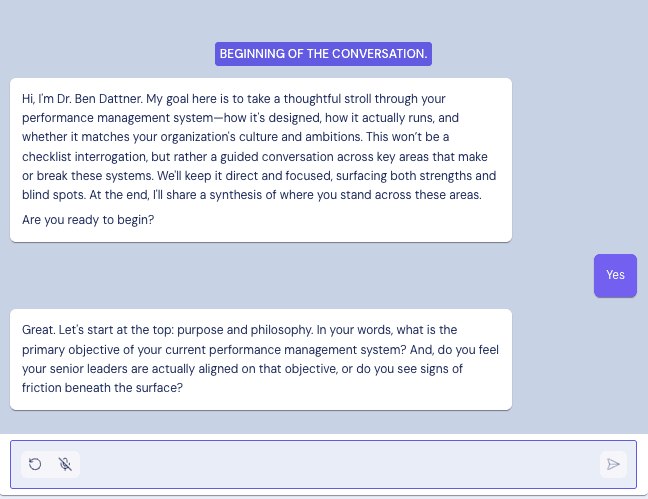
Strategic consensus is truly the only way to create a bespoke system that actually leads to buy-in and results: Those tasked with designing the system and processes should discuss and debate: What questions need to be asked? What foundational design decisions need to be made to get there? How can our company avoid performance management debt by reaching consensus and achieving buy-in now so that issues don’t fester and end up becoming much less effective and much more burdensome later?
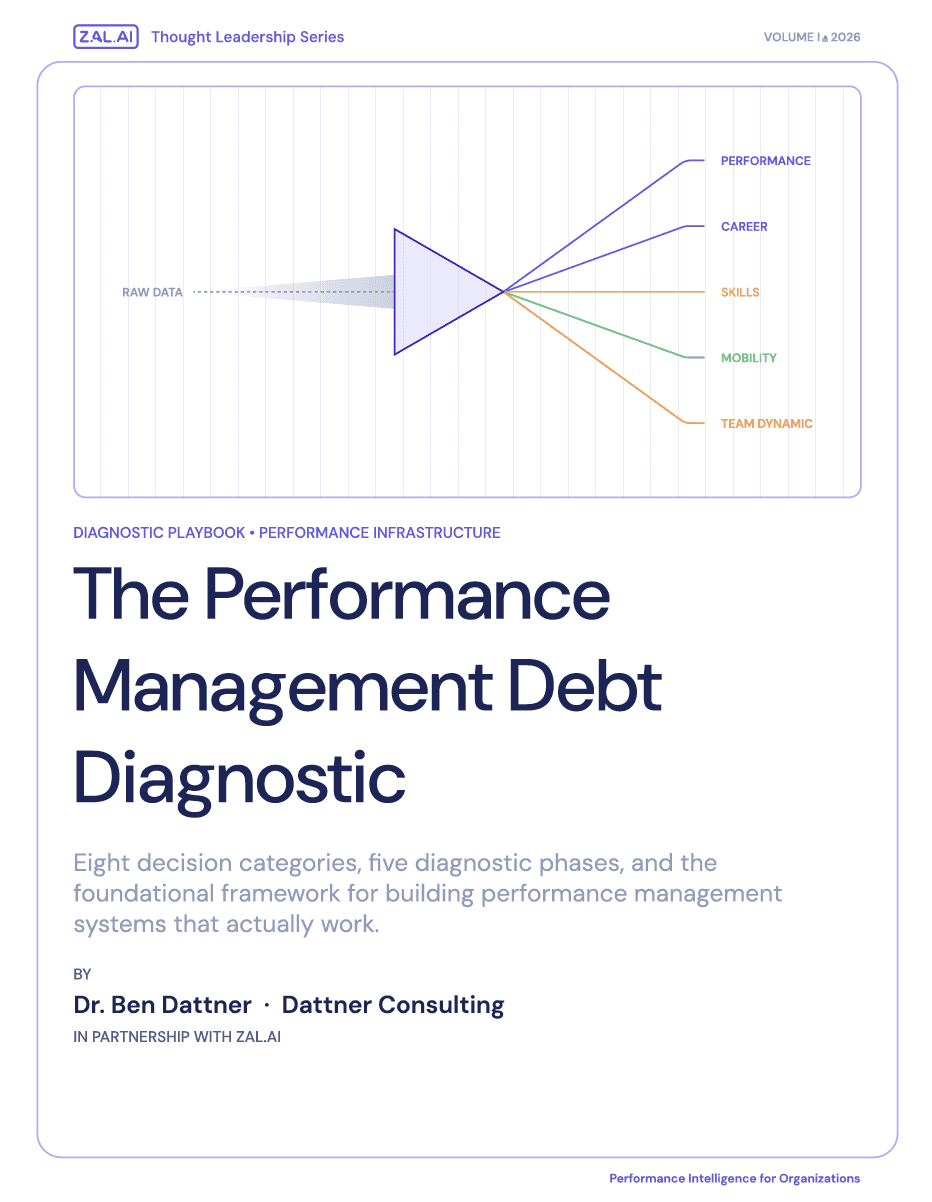
Dr. Dattner has created a categorical, step-by-step diagnostic assessment that can help any organization answer these questions. It can point the way toward a flexible, effective evaluation model that meets your organization where it is today, and aligns your team toward a more successful future.
Hosted by Zal.ai, the strategic design tool breaks the process down into five sequential diagnostic phases, each designed to facilitate dialogue among stakeholders, bring the company’s unifying goals to light, and ensure that those goals are communicated to every employee clearly and consistently.
A responsive and effective system does more than just avoid performance debt, it creates alignment, the kind that fuels new levels of achievement. As Dr. Dattner says,
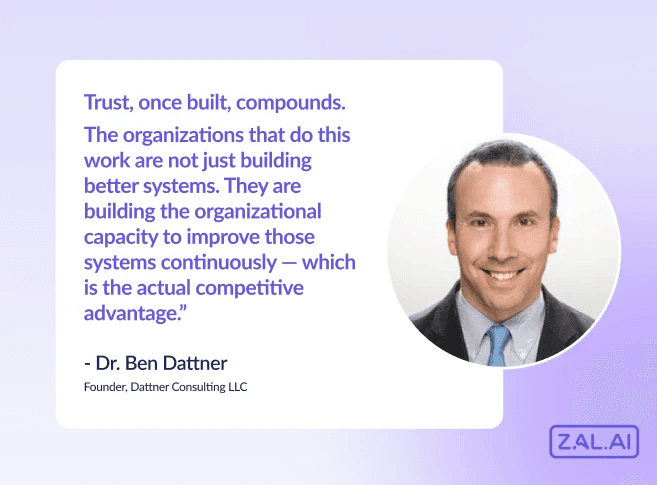
“Trust, once built, compounds. The organizations that do this work are not just building better systems. They are building the organizational capacity to improve those systems continuously — which is the actual competitive advantage.”
If you build your performance management system right, you will only need to design it once now and will not need to redesign it again in the future.