Top Performance Management Systems with Native OKR Integration for 2026
Goal setting often lives in a vacuum, detached from daily performance. These 7 platforms bridge the gap by integrating native OKRs directly into the employee review cycle.

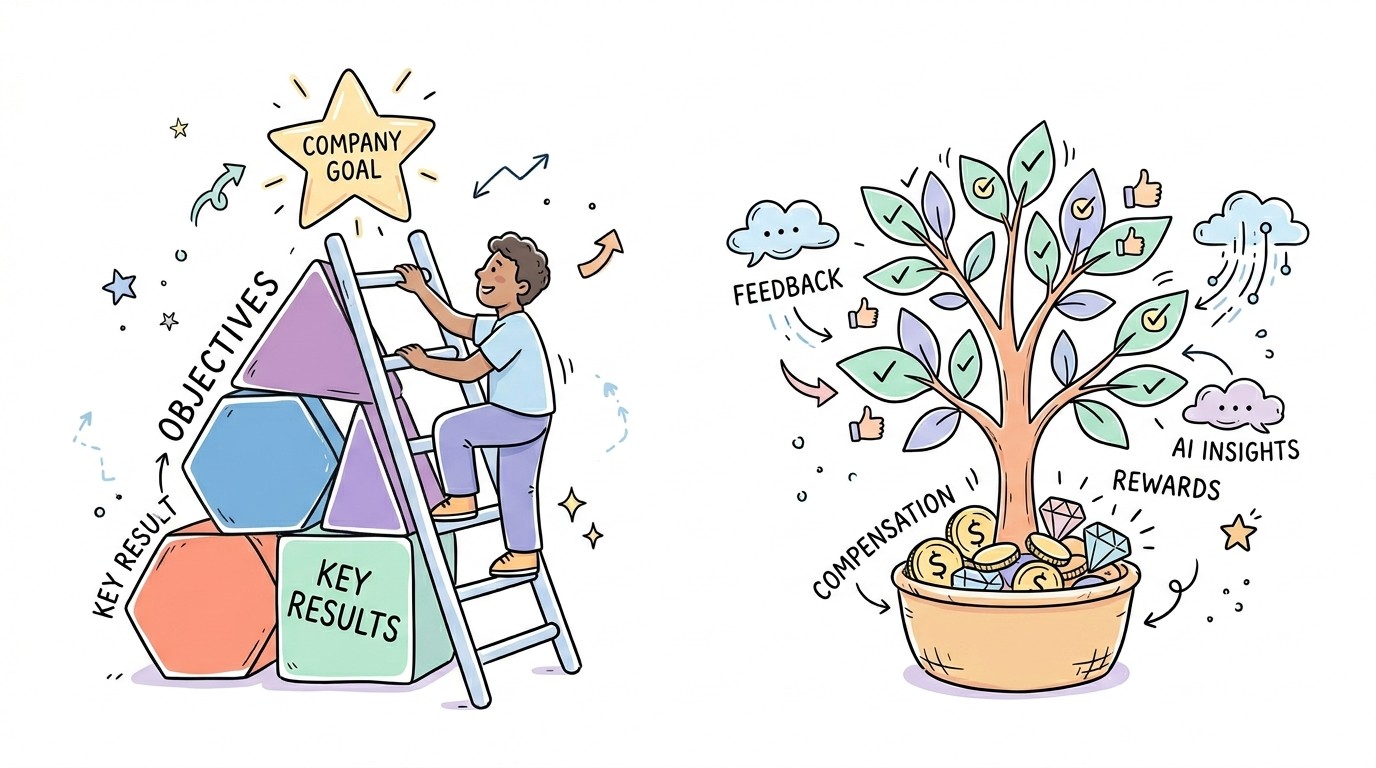
Annual performance reviews are dead, but most companies are still dragging the corpse through their quarterly calendars. The highest-impact shift for 2026 is moving toward structured, continuous feedback that actually mirrors how people work day-to-day.
88% of HR leaders agree that AI has fundamentally rewired how we evaluate performance this year. If your goal-setting happens in a spreadsheet and your reviews happen in a separate HRIS, you are creating a friction point that kills employee engagement.
Most teams feel the sting of 'set and forget' goals that have zero relevance by month three. OKR software serves as the connective tissue between high-level vision and the tasks your team completes before lunch.
Performance At A Glance: Key Takeaways
Selecting the right tool depends entirely on your existing ecosystem and the complexity of your alignment needs. High-performing teams in 2026 prioritize systems that bridge the gap between individual output and strategic results.
Best for Compensation: Lattice for linking pay directly to goal attainment.
Best for Managers: 15Five for building better coaching habits.
Best for Enterprise: Betterworks for AI-native scale.
Best for Microsoft Teams: Teamflect for native integration.
Best for International: Leapsome for multi-language support and learning.
Here's a walkthrough that covers the key steps:
1. Lattice: The Best For Compensation-Driven Performance
Lattice has cemented its position as the go-to platform for mid-market companies that want a rigorous connection between performance and pay. It operates as a native system of record, meaning it handles everything from your organizational chart to your complex compensation cycles.
Description: Lattice uses a structured approach to cascading OKRs, ensuring every department stays aligned with the CEO's primary objectives. The platform is designed to make the transition from goal-setting to performance auditing feel like a single, continuous motion.
Why It Fits: The standout feature is the 'Grow' module, which maps an employee’s OKR progress directly to their promotion track and career ladder. This transparency solves the 'what do I need to do to get promoted' question once and for all.
Tradeoff: Because it is so feature-rich and data-heavy, the initial setup can feel overwhelming for smaller startups without a dedicated HR operations person. It requires a significant time investment to configure the logic for compensation cycles properly.
Tip: Start by syncing your HRIS data first to ensure your reporting lines are accurate before you begin cascading your first set of OKRs.
Implementation: To get the most out of Lattice, you should enable the automated sync between goal progress and performance review drafts. This ensures that when a manager sits down to write a review, 70% of the achievement data is already pre-populated from the OKR dashboard.
2. 15Five: The Best For Manager Effectiveness
15Five is built on the philosophy that the manager-employee relationship is the single biggest lever for performance. It prioritizes the weekly rhythm of work over the rigid annual appraisal, making it ideal for agile teams.
Description: The platform centers on the 'Check-in'—a weekly ritual where employees update their OKR progress and share how they are feeling. It turns performance management into a lightweight habit rather than a heavy administrative burden.
Why It Fits: The High Five recognition module creates a culture of peer-to-peer appreciation that ties back to core values. This engagement data gives HR a real-time pulse on team health before burnout becomes a retention issue.
Tradeoff: It is less powerful for companies that need deep, complex compensation modeling compared to enterprise-grade tools. If you have thousands of employees with highly variable pay structures, you might find the reporting limits frustrating.
Rule: Never let a weekly check-in go more than 48 hours without a manager comment to maintain the feedback loop's integrity.
Implementation: Success with 15Five requires setting up the Slack integration immediately. This allows team members to update their OKRs and send recognition without ever leaving their primary communication channel.
3. Betterworks: The Best For AI-Native Enterprise Scale
Betterworks is an AI-native platform designed specifically for large-scale enterprises that already have a primary HRIS like Workday or SAP. It doesn't try to replace your system of record; it acts as a powerful enablement layer on top of it.
Description: The platform is heavily influenced by John Doerr’s OKR methodology, focusing on transparency and continuous conversation across massive hierarchies. It excels at visualizing how a single developer's task contributes to a billion-dollar corporate goal.
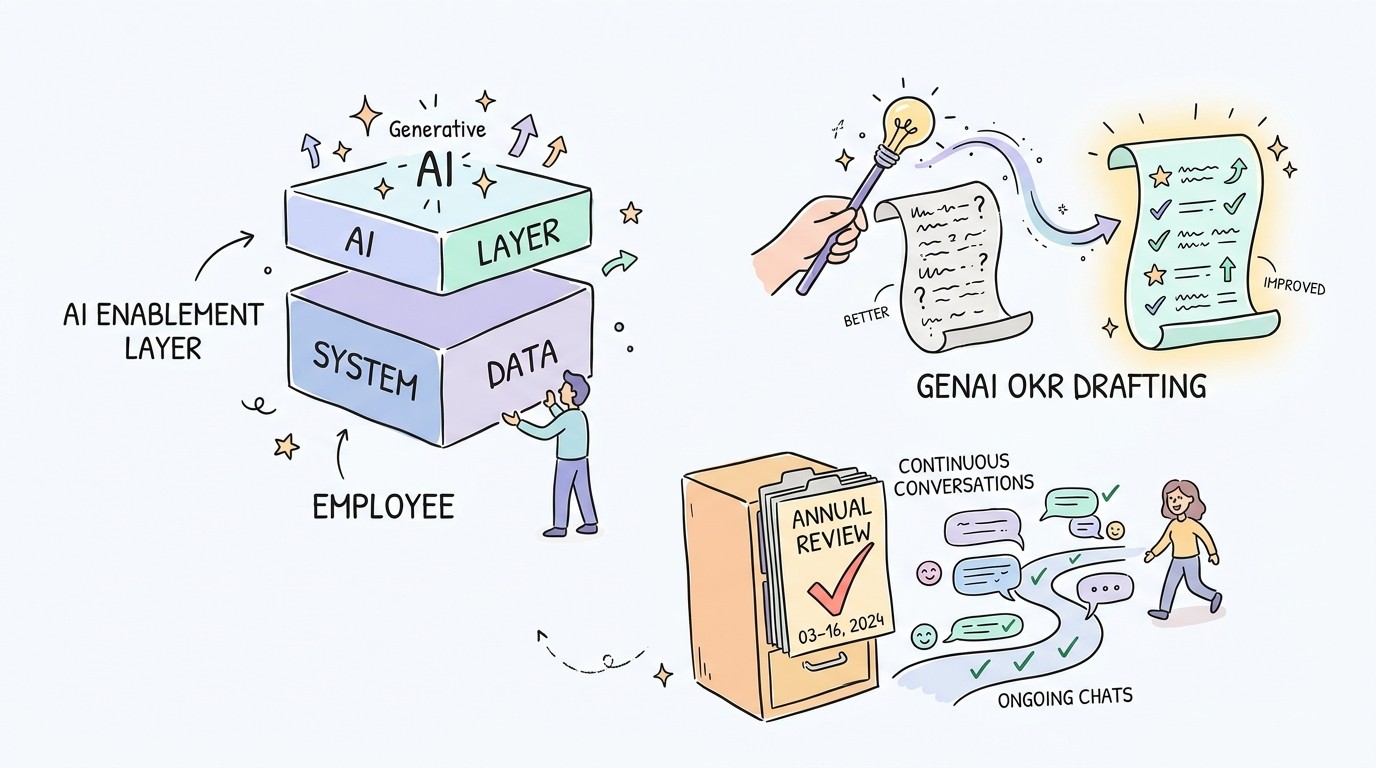
Why It Fits: Betterworks uses generative AI to help managers draft higher-quality key results in real-time. This eliminates the 'blank page' problem and ensures that every goal follows the SMART criteria without requiring manual HR auditing.
Tradeoff: As an overlay system, it requires robust integration maintenance to ensure data flows correctly from your core HRIS. It is generally too expensive and complex for teams with fewer than 500 employees.
Implementation: Large organizations should deploy the Betterworks 'University' resources to train managers on the difference between outputs and outcomes before rolling out the AI goal-writing assistant. Focus on the 'Conversation' module to replace the traditional year-end review with quarterly performance snapshots.
4. Teamflect: The Best For Microsoft 365 Users
For organizations that have fully committed to the Microsoft ecosystem, Teamflect is the most logical choice for performance management. Since Microsoft discontinued Viva Goals, this tool has become the primary alternative for keeping work inside the Teams interface.
Description: Teamflect lives entirely inside Microsoft Teams, Outlook, and Calendar. It turns your existing 1:1 meeting invites into active performance hubs where you can see OKR progress right next to the video call window.
Why It Fits: It eliminates 'tool fatigue' because employees don't have to log into a separate website to update their goals. The friction-to-adoption ratio is the lowest of any tool on this list for Microsoft-centric companies.
Tradeoff: It is strictly tethered to the Microsoft stack, so if your company uses a mix of Slack, Google Workspace, and Teams, you will face significant functionality gaps.
Tip: Use the automated 1:1 agenda templates to ensure that at least one OKR update is discussed in every weekly sync.
Implementation: To deploy Teamflect, your IT admin simply needs to pin the app to the Microsoft Teams sidebar for all users. From there, you can import your existing departmental structure directly from Azure AD.
5. Leapsome: The Best For European Growth Teams
Leapsome is the preferred choice for rapidly growing international companies, particularly those with a strong presence in Europe. It balances a clean user interface with the rigorous compliance standards required for global operations.
Description: This platform combines performance reviews, OKRs, and learning management into a single unified experience. It is built to support the complexity of multi-language teams and diverse legal requirements for data privacy.
Why It Fits: The integrated learning library allows managers to assign specific training modules based on performance gaps identified during the OKR cycle. If a key result is missed due to a skill deficiency, the solution is built right into the same workflow.
Tradeoff: The sheer breadth of the platform—covering reviews, surveys, goals, and learning—can lead to under-utilization of specific modules if not rolled out with a clear strategy.
Implementation: Start by configuring the GDPR-compliant hosting settings and selecting your primary languages. Use the 360-degree feedback templates to build a culture of multi-directional growth that moves beyond simple top-down management.
6. Profit.co: The Best For Feature-Rich Customization
Profit.co is the 'power user' tool of the OKR world, designed for companies that need granular control over their metrics. If your performance is tied to complex KPIs and data points, this is likely your best fit.
Description: The platform provides an extensive suite of OKR Quality Scoring Tools to ensure that your goals are actually measurable. It serves as the connective tissue between the high-level executive vision and the daily tasks of the individual contributor.
Why It Fits: It offers incredible customization for OKR hierarchies, allowing for matrixed reporting and cross-functional goal sharing. The platform also includes a robust 'Task' module that links individual to-dos directly to their parent Key Results.
Tradeoff: The user interface is significantly more complex than competitors like 15Five or Teamflect. Non-technical users may struggle with the steep learning curve required to master the advanced reporting features.
Implementation: Focus on using the 'OKR Authoring' wizard during the first month. This guided experience helps teams build the habit of writing quantifiable results rather than vague aspirations.
7. PerformYard: The Best For High Form Flexibility
PerformYard stands out in the market for its focus on flexibility and simple goal tracking. It is designed for HR leaders who have a very specific review process and need a tool that adapts to them, rather than the other way around.
Description: The software excels at highly configurable review forms that can handle everything from simple annual check-ins to complex 360-degree reviews. It makes the transition to OKRs easy by allowing goals to be tracked alongside traditional performance metrics.
Why It Fits: It provides a clean, focused experience that doesn't overwhelm users with unnecessary features. The ability to sync goal attainment data directly into formal review cycles ensures that reviews are always based on objective facts.
Tradeoff: It lacks some of the advanced AI-driven coaching features found in Betterworks or the deep compensation logic of Lattice. It is a tool for execution, not necessarily for automated strategic insights.
Implementation: Map out your current paper-based or spreadsheet-based review forms before you start the digital migration. PerformYard’s strength is its ability to replicate your existing successful processes while adding the automation of a digital OKR tracker.
Choosing Your Stack: Performance System Decision Guide
Choosing the right stack involves weighing your company's size against the depth of integration you need with your existing tools. Smaller, more agile teams often value speed and simplicity, while larger organizations require strict data silos and AI assistance.
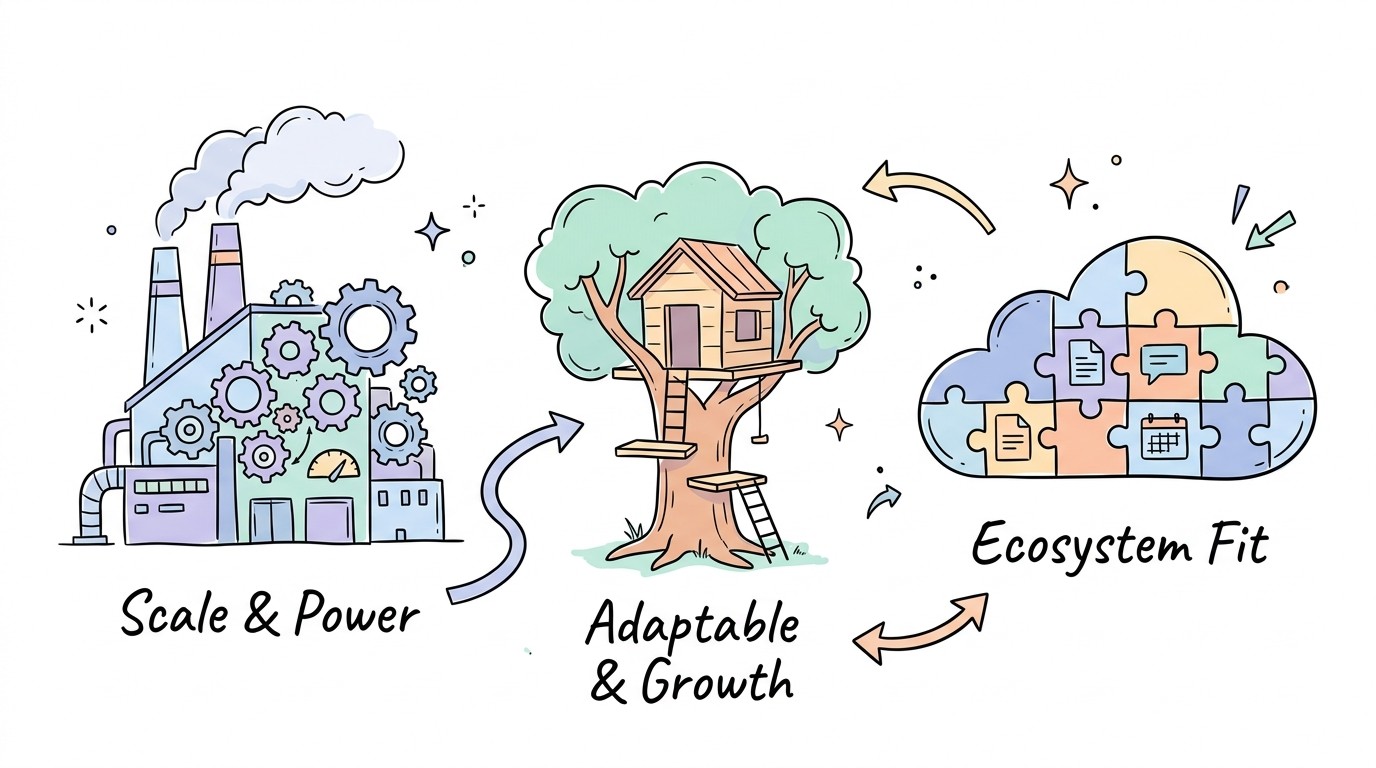
If your team lives in Microsoft Teams, prioritize Teamflect for native adoption.
If you need to connect performance data to complex pay cycles, choose Lattice.
If you are a large enterprise with an existing HCM like Workday, use Betterworks as an enablement layer.
If your priority is manager coaching and culture, 15Five is the preferred tool.
Feature | Lattice | 15Five | Betterworks | Teamflect | Leapsome | Profit.co | PerformYard |
|---|---|---|---|---|---|---|---|
Best For******* | Mid-Market | Manager Coaching | Enterprise | MS 365 Users | International | Complex KPIs | High Flexibility |
Core Strength******* | Compensation | Weekly Check-ins | AI Goal Writing | Teams Native | Integrated Learning | KPI Scoring | Custom Forms |
Complexity******* | High | Low | Very High | Very Low | Medium | High | Medium |
How To Implement OKR-Driven Performance Reviews
Implementing an integrated performance system requires more than just a software license. It demands a shift in how your leadership views the relationship between strategy and individual effort.
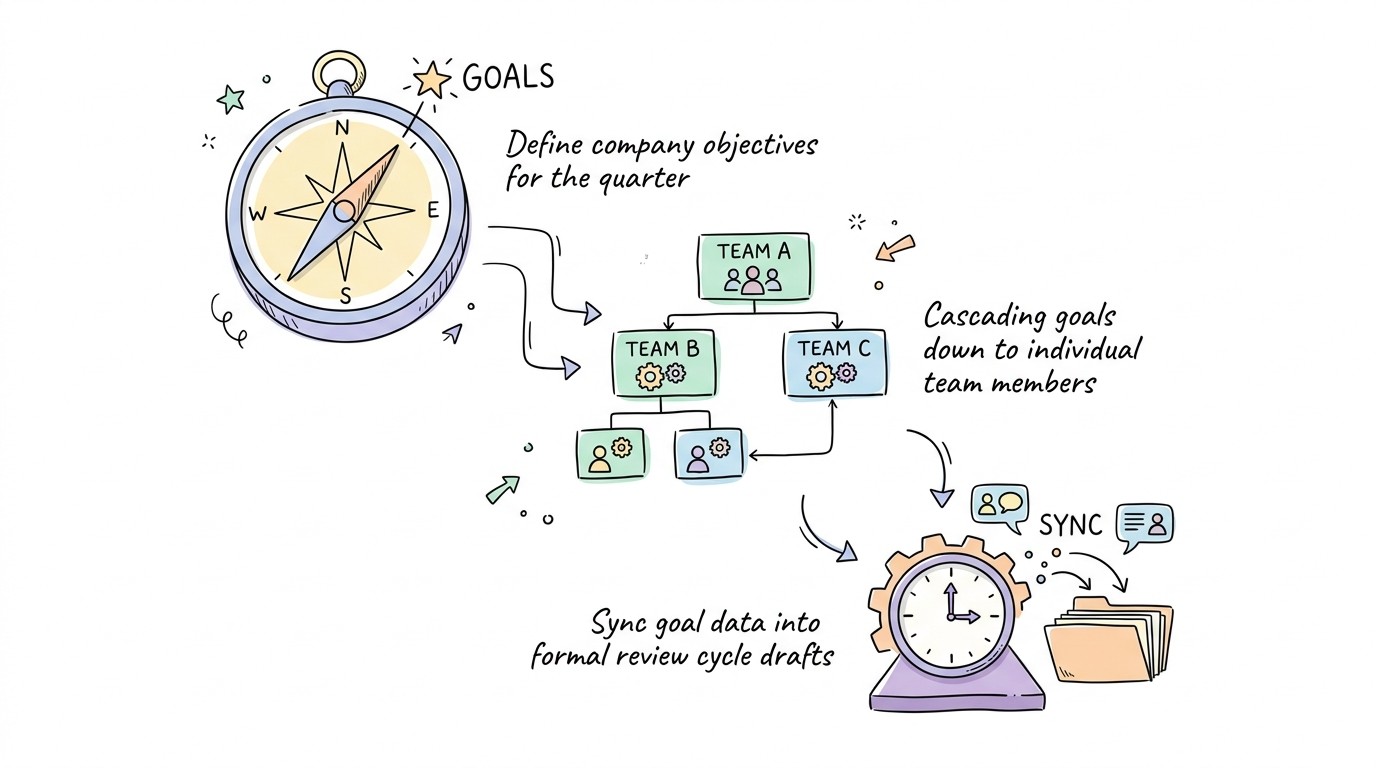
Define company-wide strategic objectives for the upcoming quarter.
Cascade these goals down to departments and individual team members.
Schedule automated weekly check-ins to update progress metrics.
Conduct continuous feedback sessions using structured 1:1 agenda templates.
Sync goal attainment data into formal performance review cycles automatically.
Consider the case of an HR manager at a growing tech firm who noticed that while everyone set OKRs, nobody looked at them during reviews. By the time bonus season arrived, the 'attainment' data was a mess of forgotten promises and subjective memory.
The shift to a native system allowed them to automate the data sync, resulting in reviews that were 100% based on verified metrics. This removed the bias from the promotion process and saved the manager twenty hours of manual data entry per cycle.
Ensure individual OKRs map directly to a parent team objective.
Verify that key results are quantifiable, like percentages or counts.
Check that OKR data appears automatically in the employee's review draft.
Pitfall: Avoid tying compensation directly to 'stretch' OKRs, as this often discourages employees from setting ambitious goals to avoid missing their bonus.
Common Questions On Performance And OKRs
Do OKRs replace traditional performance reviews?
No, they supplement them by providing objective data. OKRs track the 'what' of the work, while reviews often cover the 'how'—including behaviors, cultural fit, and soft skills.
How often should OKRs be updated in these systems?
Ideally, updates should happen weekly or bi-weekly. Automated reminders within platforms like 15Five or Teamflect help build this habit so that data is never stale during a 1:1 meeting.
Can I use these tools for remote teams?
Yes, these systems are essential for remote work because they provide visibility into progress without micromanagement. They act as the central source of truth for what everyone is working on.
Is AI safe to use for performance evaluations?
In 2026, AI is mostly used to assist with drafting and summarization. Humans still make the final decisions, but AI ensures the data used for those decisions is accurate and well-structured.
The Connective Tissue Of Modern Work
The most successful companies in 2026 treat their performance management system as a living ecosystem, not a digital filing cabinet. Focus on goal quality over goal quantity to avoid overwhelming your staff with busy work that doesn't move the needle.
Prioritize platforms that integrate natively with the tools your team already uses, whether that is Slack, Microsoft Teams, or a specific HRIS. When you remove the friction of updating goals, you increase the likelihood that those goals will actually be achieved.
Start by auditing your current review cycle and identifying where the data gap exists. Then, select a tool that bridges that gap and move toward a culture of continuous alignment.