The Strategic ROI of Unified Performance Management Software
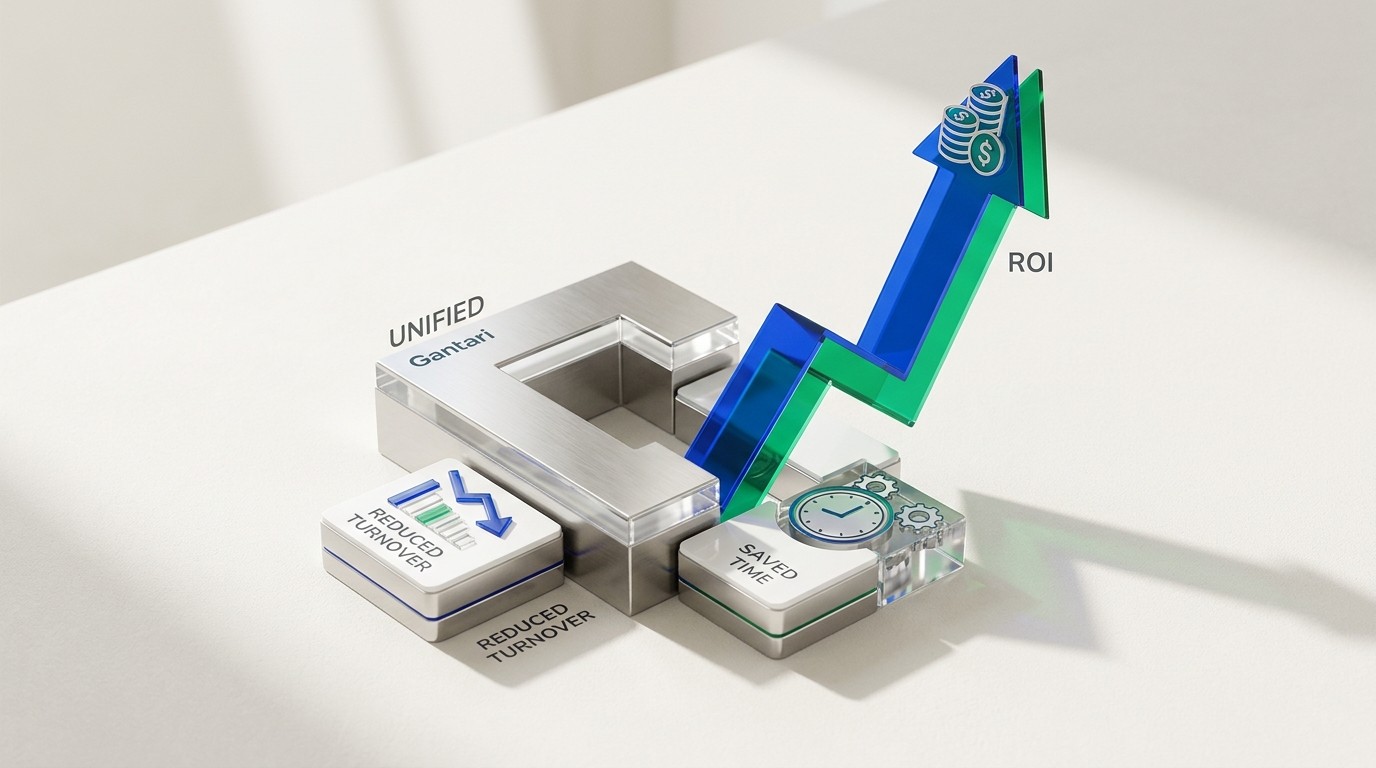
Annual reviews are a productivity drain. Modern performance management software transforms HR from a cost center into a profit driver with an average 330% return on investment.

Your annual performance review is likely a $100,000 hallucination. Most organizations pour hundreds of hours into backward-looking spreadsheets that offer zero predictive value for future growth.
Here is the thing: knowledge workers spend up to 12 hours a week chasing data across disparate systems. Fragmented tools create a data tax that quietly drains your bottom line while your best talent feels ignored.
Manual reviews are not just boring; they are expensive. When feedback is disconnected from daily work, you are essentially ghosting your employees' potential and paying for the privilege.
That is it. If you cannot see performance in real-time, you are managing by looking in the rearview mirror while driving at full speed.
ROI at a Glance: Why the Switch Matters
330% average three-year ROI for unified platforms
Switching to an integrated system is not just an HR upgrade; it is a financial imperative. The numbers suggest that the transition pays for itself almost immediately through efficiency and retention.
Payback Period: Most organizations see a full return on investment in less than 6 months.
Turnover Impact: Companies using structured feedback systems see a 14.9% reduction in employee churn.
Profitability Boost: Data-driven performance management leads to 23% higher profitability on average.
The 5 Pillars of Performance Management ROI
1. Reduction in Turnover Costs
High turnover is a silent killer of corporate margins. A 2% reduction in churn for a 200-person company can save up to $340,000 annually by avoiding recruiting and onboarding costs.
Key Features: Real-time sentiment tracking and automated stay interviews.
Verdict: Essential for high-growth firms where talent replacement costs are astronomical.
Implementation: Connect your performance data to a retention dashboard to flag high-risk high-performers before they leave.
2. Manager Administrative Time Reclaimed
Managers often dread review season because it involves manual data entry and document hunting. Modern software reduces time spent on these reviews by 80% through workflow automation.

Key Features: Automated reminders and pre-filled review templates.
Verdict: Best for scaling teams that need managers focused on coaching rather than paperwork.
Implementation: Map out your current review workflow and replace every manual email or spreadsheet update with a triggered system notification.
3. Unified Data Accuracy
Siloed systems are breeding grounds for human error. Integrated platforms reduce data entry mistakes by 31% by syncing information across HRIS and performance modules.
Key Features: Bi-directional sync and single source of truth reporting.
Verdict: A mandatory requirement for compliance-heavy industries and large enterprises.
Implementation: Use an API-first approach to ensure your payroll and performance data speak the same language daily.
4. Goal Alignment and Achievement
When goals are visible and linked across departments, productivity sky-rockets. Companies that master goal alignment achieve a 60% improvement in overall team performance.
Key Features: OKR tracking and visual goal cascading maps.
Verdict: High-impact for remote and hybrid teams where transparency is often lacking.
Implementation: Set up a transparent OKR board where every employee can see how their individual tasks move the company needle.
5. AI-Driven Efficiency
Artificial intelligence is the next frontier for performance ROI. AI adoption leaders expect 2x higher returns in the coming years compared to those stuck in manual processes.
Key Features: Automated feedback summaries and predictive performance trends.
Verdict: Best for forward-thinking tech teams looking to gain a competitive edge.
Implementation: Deploy AI writing assistants to help managers draft constructive feedback in half the time.
Unified Platforms vs. Point Solutions: The Financial Gap
The financial gap between unified clouds and fragmented point solutions is wider than most CFOs realize. Integrated HR systems lead to 73% faster time-to-hire than siloed stacks.
Point solutions require upwards of 12 hours a week for manual data reconciliation. This hidden labor cost often negates any initial savings from cheaper, standalone licenses.

Feature | Unified Platform | Point Solutions |
|---|---|---|
Licensing Costs | 40-60% lower total cost | Multiple high-cost subscriptions |
Data Sync | Real-time automated sync | 12+ hours/week manual work |
Time-to-Hire | 73% faster than average | Slower due to siloed data |
Data Accuracy | 31% fewer entry errors | High risk of manual mistakes |
According to a Forrester TEI Study on Unified People Cloud, the consolidated approach simplifies the tech stack while maximizing output per employee. The real cost of a cheap tool is the expensive manual labor required to keep it running.
How to Calculate Your Specific ROI Baseline
Building a business case for performance software requires moving beyond gut feelings. You need hard numbers that prove the investment will pay for itself through reclaimed hours and saved talent.
Rule: Always use conservative estimates for turnover costs to ensure your ROI case remains bulletproof during executive review.
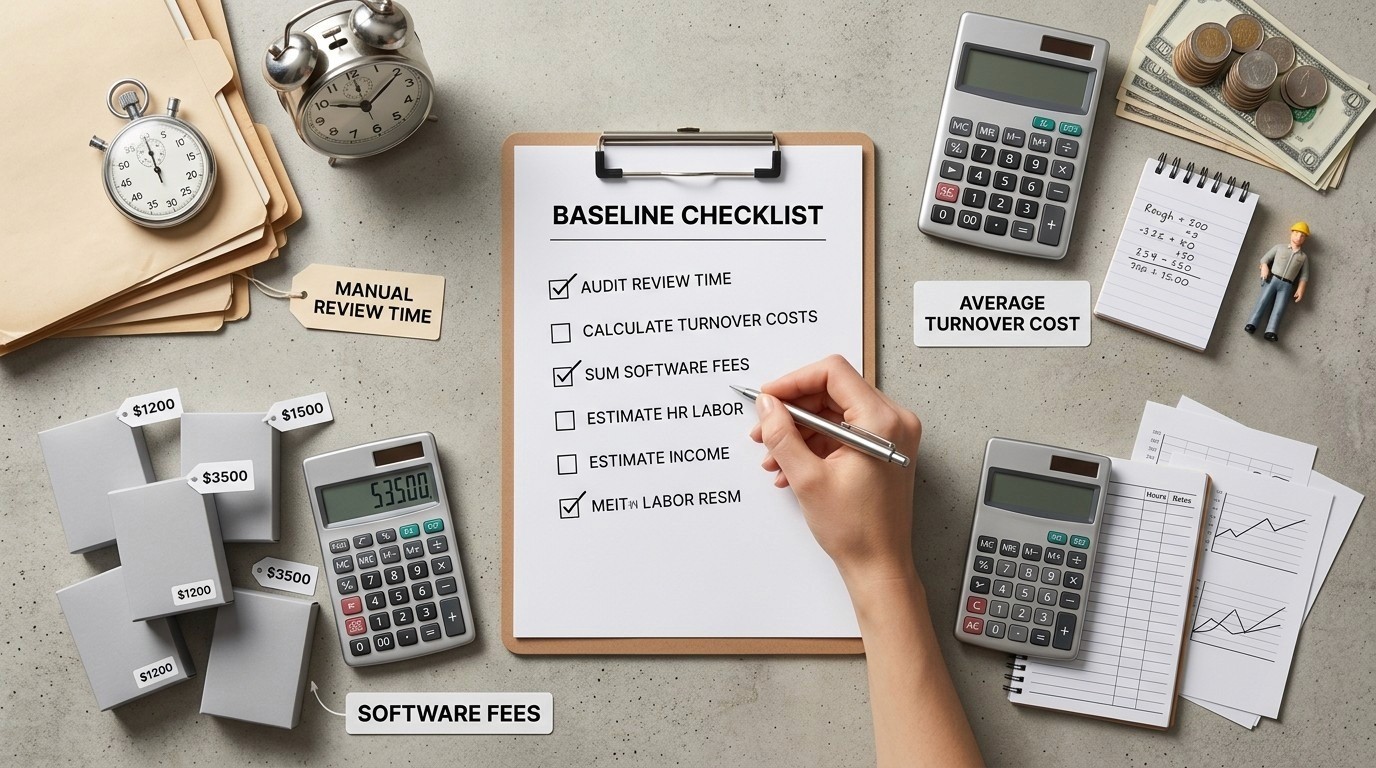
The ROI Baseline Checklist
Audit the current hours managers spend on manual reviews each quarter.
Calculate the average cost of turnover for one mid-level employee.
Sum up all current software licensing fees across HR and performance tools.
Estimate the hourly rate of HR staff managing manual data reconciliation.
Once you have these inputs, you can calculate the financial impact. For instance, if a 200-person company reduces turnover by just 2% through better feedback, the savings often exceed $300,000.
Establish Baseline: Use your audit to define exactly how much time is being wasted right now.
Quantify Costs: Include the software license, implementation fees (typically $1,500 to $3,000), and training time.
Measure Impact: Use the Peoplebox Performance ROI Framework to track changes in goal completion post-launch.
Calculate Financials: Assign a dollar value to the time saved and the turnover avoided.
Apply Formula: Use the standard calculation:
(Total Benefits - Total Costs) / Total Coststo get your percentage.
Consider a mid-sized marketing agency that spent 40 hours a month just chasing review forms. After automating, they reclaimed that time for client work, which directly increased their billable capacity by 15% in the first quarter.
Common ROI Pitfalls to Avoid
One of the biggest mistakes is focusing exclusively on backward-looking metrics. If you only look at last year's results, you miss the leading indicators like feedback frequency that actually drive growth.
Pitfall: Building a numbers-only culture can alienate high performers who value qualitative coaching over rigid metrics.
Software alone cannot fix a broken culture. If you implement a unified system without getting manager buy-in first, you will likely see low adoption rates that tank your expected ROI.
Manager adoption is the bridge between a software expense and a strategic asset. Ensure your team understands that the tool is meant to save them time, not just add another task to their plate.
Performance ROI: Frequently Asked Questions
How long does it take to see a positive ROI?
Most organizations reach the break-even point within 6 months. This is driven by immediate time savings for HR and managers during the first automated review cycle.
Will employees actually use a unified system?
Adoption rates are generally higher for unified systems because they reduce the number of logins. When performance is integrated with daily tools, it becomes a natural part of the workflow.
Do we need an HRIS before starting?
While an HRIS helps with data sync, it is not a strict prerequisite. Many platforms can function as a standalone source of truth for performance and engagement data.
Turning People Strategy into a Profit Center
Performance management is no longer an HR elective; it is core business infrastructure. Moving from manual spreadsheets to a unified system turns your people strategy into a measurable profit center.
Data-driven organizations consistently see 23% higher profitability by aligning individual efforts with corporate goals. The cost of waiting is simply too high in a competitive talent market.
Stop chasing data and start driving performance. Your bottom line will thank you.