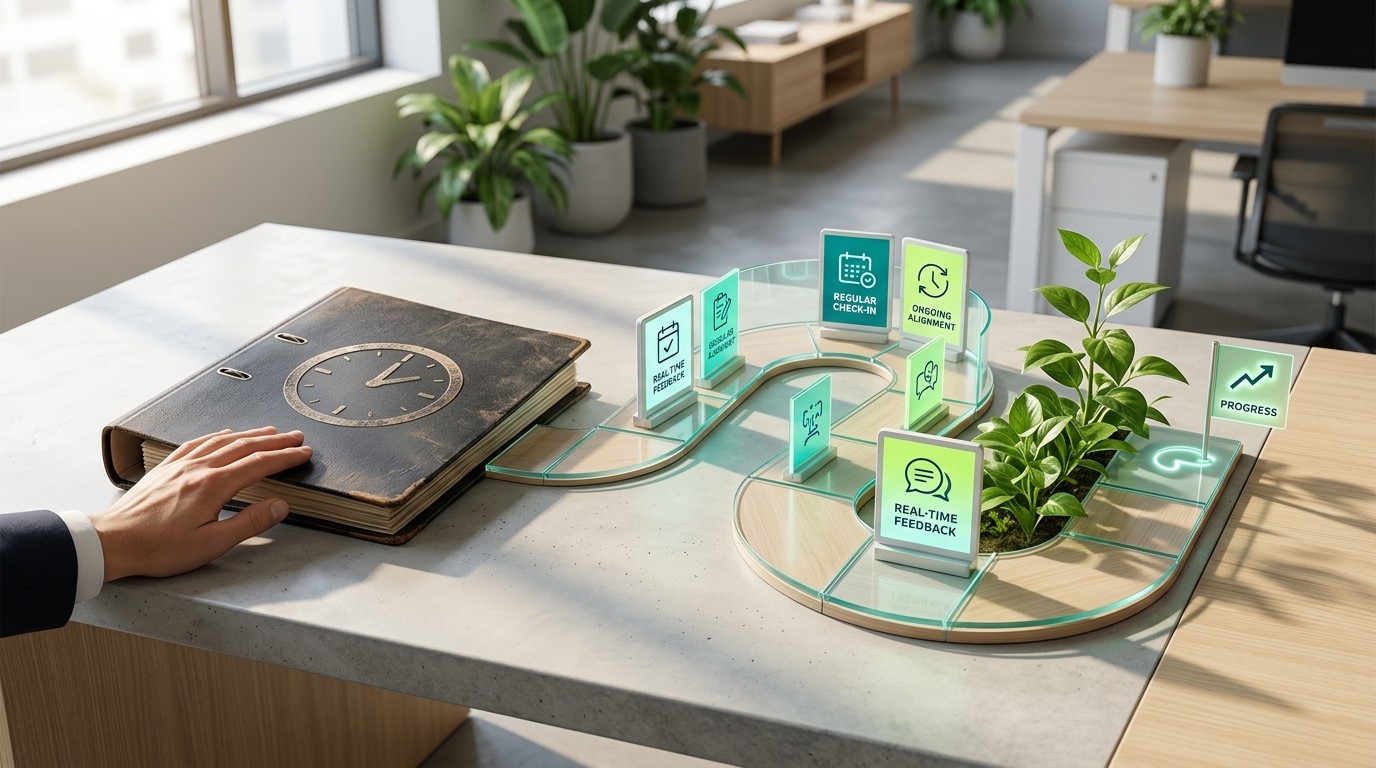
Moving to Continuous Feedback: A Step-by-Step Migration Guide for HR Leaders

Traditional annual reviews are broken. This guide provides a strategic roadmap for HR leaders to migrate to continuous performance management that actually drives growth.

on

Traditional annual reviews are a corporate autopsy performed on performance that died months ago. Research from Deloitte reveals that 95% of HR leaders are dissatisfied with these legacy systems. They take hours of manual labor and often result in nothing more than frustrated employees and biased data. Feedback loses its power when it sits on a shelf for three hundred days. Real growth occurs when feedback is delivered within 48 to 72 hours of an event. Anything later feels like a correction of a person's character rather than a coaching moment for their behavior. It is time to retire the high-stakes drama of the appraisal season.

The TL;DR on the Continuous Shift

Moving to continuous performance management is not just a trend but a strategic necessity for retention. By shifting from a judge-like evaluator to a mentor-style coach, you can unlock significant productivity gains. This playbook outlines the four phases to modernize your feedback culture.

  • Boost Motivation: Employees receiving daily feedback are 3.6x more likely to be highly motivated.

  • Improve Performance: Organizations see a 26% average improvement with real-time feedback loops.

  • Phase 1: Lay the foundation with leadership buy-in.

  • Phase 2: Design a structured feedback architecture.

  • Phase 3: Train managers to deliver constructive coaching.

  • Phase 4: Scale through a departmental pilot.

Why the Switch is Non-Negotiable in 2026

The business case for continuous feedback is written in the data of the modern workforce. Gartner reports a 26% average performance improvement in organizations that adopt real-time feedback loops. This shift moves the focus from documenting past failures to fueling future growth through consistent touchpoints. Traditional models are often too slow to catch mistakes before they become expensive habits.

Consider the impact on employee experience and retention. HR professionals using continuous performance management report a 50% higher satisfaction rate with their internal systems. This matters because younger generations like Gen Z and Millennials demand immediate transparency and regular developmental support. Without it, they are far more likely to seek opportunities elsewhere.

80% of employees prefer immediate feedback over a year-end review.


Why the Switch is Non-Negotiable in 2026

Many organizations suffer when they wait for a scheduled date to address a clear issue. For example, a senior developer might spend six months using a suboptimal workflow that slows down the entire team. Because the annual review was still months away, the manager stayed silent, and the team missed three major shipping deadlines. A culture of continuous feedback according to Gallup would have corrected that behavior in week one.

Phase 1: Laying the Foundation for Real-Time Feedback

Transitioning to a new system requires a solid foundation before you touch a single software tool. You must first identify the specific limitations of your current annual system like recency bias or extreme manager stress. Presenting data on productivity gains and employee retention is essential to align your executive team with the new vision. Without their public support, the shift will feel like an optional HR project rather than a cultural mandate.

Next, assess whether your current culture can support open and two-way dialogue. Some departments may be ready for radical transparency while others might require more hand-holding through the transition. Developing a 12-month migration roadmap allows you to set realistic milestones and manage expectations across the organization. This preparation ensures that the move to continuous feedback is seen as a benefit rather than an administrative burden.


Phase 1: Laying the Foundation for Real-Time Feedback
  • Identify current system pain points like bias and employee dread.

  • Secure executive buy-in by presenting ROI and retention data.

  • Audit organizational readiness for honest two-way communication.

  • Draft a 12-month migration roadmap with clear quarterly milestones.

  • Define the core goals for the new performance management strategy.

Phase 2: Designing Your New Feedback Architecture

Design your feedback architecture by defining the specific cadence for manager check-ins. Whether you choose weekly or monthly touchpoints, the goal is to create low-stress and frequent interactions. Connecting these conversations to short-term agile goals like OKRs keeps the focus on high-impact work. This ensures that every conversation has a clear purpose and helps the employee move closer to their targets.

Structure the feedback loop to include 360-degree inputs so employees hear from peers and cross-functional partners. This provides a more holistic view of performance and reduces the impact of any single manager's bias. You should also decide which tools will house these conversations whether it is a dedicated platform or an integration with your existing HRMS. A clear framework makes the process repeatable and predictable for everyone involved.

Rule: Always ask for permission before delivering feedback by using a micro-yes like, "Do you have five minutes to discuss how that meeting went?"

The Micro-Yes technique is vital because it reduces the brain's natural threat response to criticism. When an employee gives permission to receive feedback, they are more likely to listen and apply the coaching. This small step shifts the power dynamic from a top-down mandate to a collaborative growth session.

Phase 3: Transforming Managers into Performance Coaches

The success of this transition rests entirely on the ability of your managers to act as coaches. You must standardize feedback templates using the SBI model which stands for Situation, Behavior, and Impact. This model removes ambiguity by forcing the giver to cite specific events and the resulting consequences. Training managers on this specific language prevents feedback from feeling like a personal attack on an employee's character.

Managers should also aim for a 5:1 ratio of positive-to-constructive feedback to maintain psychological safety. High-performing teams are built on a foundation of recognition and the constructive pieces land better when the employee feels valued. Encourage managers to move away from the judge role and adopt a mentor mindset that focuses on future behavior. You can find deep strategies for this in the Lattice Guide to Continuous Performance Management.


Phase 3: Transforming Managers into Performance Coaches

Example

# Feedback Template: SBI Model

Situation: During the client presentation on Tuesday morning.
Behavior: You interrupted the lead engineer three times while they were explaining the technical specs.
Impact: It made the team look uncoordinated and the client questioned our internal communication.
Suggestion: In the next meeting, wait for the engineer to pause before adding your insights

# Feedback Template: SBI Model

Situation: During the client presentation on Tuesday morning.
Behavior: You interrupted the lead engineer three times while they were explaining the technical specs.
Impact: It made the team look uncoordinated and the client questioned our internal communication.
Suggestion: In the next meeting, wait for the engineer to pause before adding your insights

# Feedback Template: SBI Model

Situation: During the client presentation on Tuesday morning.
Behavior: You interrupted the lead engineer three times while they were explaining the technical specs.
Impact: It made the team look uncoordinated and the client questioned our internal communication.
Suggestion: In the next meeting, wait for the engineer to pause before adding your insights

Avoid the common sandwich trap where a manager hides a critique between two compliments. This often confuses the recipient and makes the praise feel insincere or manipulative. Clear and direct communication is the kindest path to improvement when it is delivered with genuine developmental intent.

Phase 4: Launching the Pilot and Iterating

Before rolling the new system out to the entire company, you should run a departmental pilot. Select one agile department that is open to experimentation to gather qualitative insights and test your framework. This group acts as a proving ground for your templates and software choices. Their feedback will help you refine the process and identify any technical friction points before the full-scale launch.

During the pilot, track adoption rates and engagement scores to measure success. Are managers actually meeting with their teams or are they just checking boxes? Use the insights from this pilot to build internal case studies that show the rest of the company the benefits of the shift. This creates a sense of momentum and social proof that makes the full rollout much smoother.

  • If the culture is highly resistant, use a hybrid model that keeps annual reviews for pay decisions.

  • If turnover is high among younger staff, accelerate the shift to weekly check-ins immediately.

  • If tracking and documentation are falling behind, prioritize HRMS software integration over manual processes.

The 2026 Continuous Feedback Tech Stack

Selecting the right software is critical for making continuous feedback a frictionless part of the daily workflow. These tools help centralize documentation and keep development goals visible for both managers and employees.

Workleap

This platform focuses on employee engagement and real-time feedback loops to simplify the manager's job. It allows for quick pulse surveys and structured check-ins. Best for: Companies prioritizing employee sentiment alongside performance data. Tradeoff: It may feel less robust for organizations requiring complex and multi-layered appraisal workflows. Workleap

Lattice

Lattice is a comprehensive suite that connects performance reviews with goals and career growth paths. It is highly customizable for different team needs. Best for: High-growth teams that want to integrate OKRs with feedback. Tradeoff: The sheer number of features can be overwhelming for smaller teams without dedicated HR admins. Lattice

Culture Amp

This tool is known for its heavy focus on science-backed engagement surveys and deep culture analytics. It provides actionable insights based on employee feedback trends. Best for: Data-driven organizations that want to solve culture problems at scale. Tradeoff: It can be more expensive than simpler check-in tools. Culture Amp

15Five

15Five centers on the weekly check-in process to build high-performing teams through better communication. It emphasizes manager coaching and employee appreciation. Best for: Mid-sized companies looking for a structured way to improve manager-employee relationships. Tradeoff: Its focus is narrower compared to full-scale HRMS suites. 15Five

Betterworks

Betterworks specializes in goal alignment and continuous performance management for large enterprises. It helps maintain visibility across massive organizational structures. Best for: Large enterprises with complex goal-setting requirements. Tradeoff: The setup process is extensive and requires significant time investment. Betterworks

Tip: Ensure your chosen tool integrates directly with Slack or Microsoft Teams to keep feedback within the existing workflow.

Annual vs. Continuous: A Side-by-Side Breakdown

The transition from annual to continuous feedback represents a fundamental shift in how your organization views employee development. Use this table to compare the tools mentioned and understand the core conceptual differences.

Tool

Best For

Pros

Price Range

Workleap

Employee Sentiment

Pulse survey integration

Mid-range

Lattice

High-growth teams

Deep OKR integration

Premium

Culture Amp

Culture analytics

Scientific engagement data

Premium

15Five

Manager coaching

Structured check-ins

Mid-range

Betterworks

Enterprise scale

Massive goal alignment

Enterprise

Legacy annual reviews focus on a backward-looking autopsy of the past twelve months. In contrast, continuous feedback provides a forward-looking roadmap for future growth and real-time correction. This approach lowers employee stress by removing the high-stakes drama of a single yearly event.

Continuous Feedback FAQs

Is the annual review completely dead?

Many organizations still use a hybrid approach where annual summaries handle pay and promotion decisions. Continuous feedback replaces the daily coaching gap while the annual summary aggregates documented progress throughout the year.

How do you keep feedback from feeling personal?

The key is focusing strictly on observed behavior and its impact rather than character traits. Asking a Micro-Yes question before sharing helps the recipient prepare mentally for the conversation and reduces defensiveness.

How do you handle pay and promotions without a formal annual summary?

By using a continuous performance management system, you maintain a digital paper trail of every win and improvement. This data makes compensation cycles more objective and less reliant on a manager's memory of the last month.

What if managers resist the extra work?

Continuous feedback actually saves time in the long run by preventing small issues from turning into major crises. Emphasize that short and frequent check-ins are more efficient than the weeks of preparation required for a traditional review.

Your New Performance Culture Awaits

The move toward continuous feedback is the single most effective way to modernize your performance culture. Stop treating performance like a yearly event and start treating it like a daily conversation. You will see the results in your retention rates and your bottom line. Audit your current process today to find the first department ready for a pilot launch.

Explore More Articles