Managing Decentralized Talent: Best Performance Systems for Remote and Hybrid Teams
Performance management in 2026 has shifted from annual reviews to continuous, AI-augmented dialogues. This guide covers the best systems and rituals for managing global, decentralized talent.

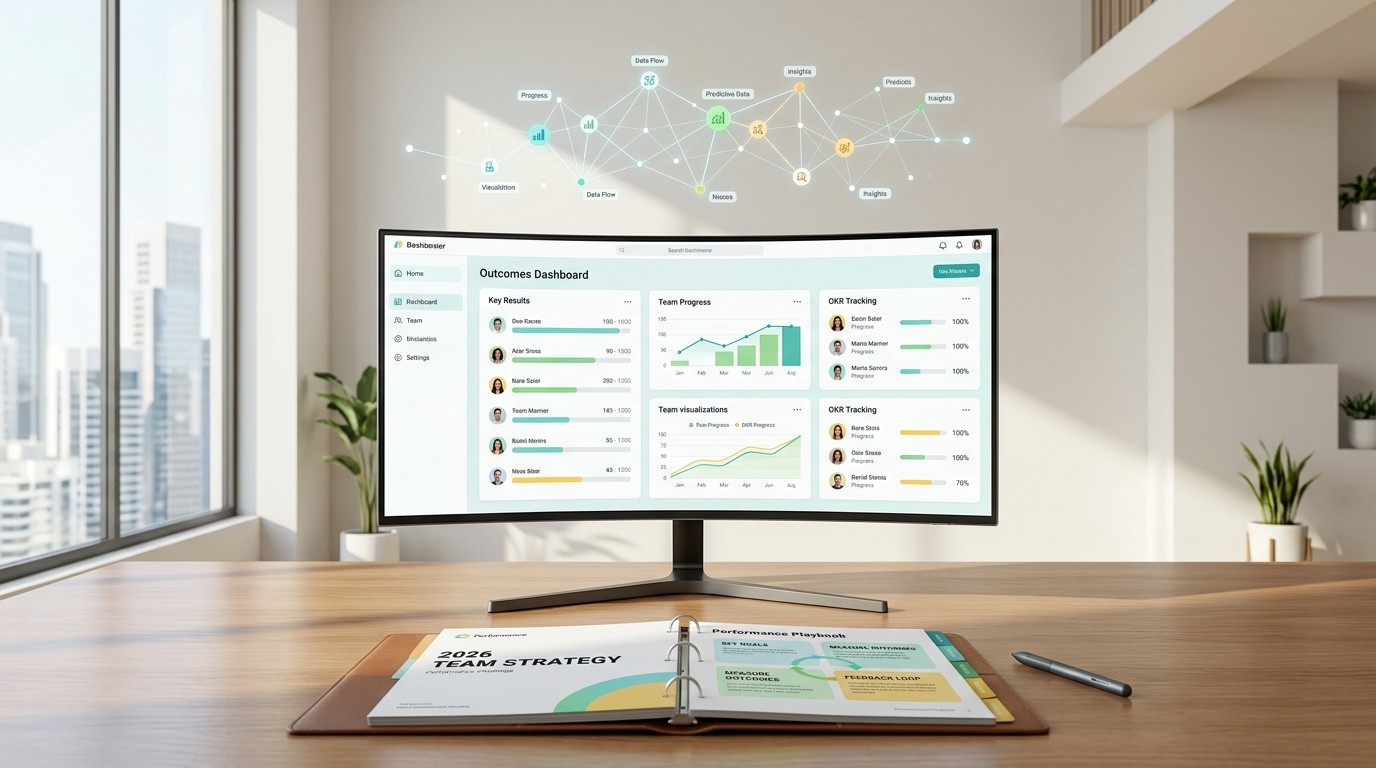
Relying on physical presence as a proxy for productivity is a terminal mistake for modern leaders. In a decentralized world, the manager who demands a green status dot on Slack is usually the one presiding over a stagnant team. The connection between visible activity and actual business value has finally severed. Most traditional performance systems were built for factory floors where output was tied to a machine. Today, high-performance work is about cognitive impact and creative problem-solving. The managers who fail to adapt are losing their best talent to companies that value results over optical alignment. You cannot manage a remote team using the same tools you used in 2019. The game has changed from surveillance to enablement. If you do not have a system that tracks outcomes automatically, you are essentially flying a plane with no instruments. Modern talent demands a framework that respects their autonomy while providing crystal-clear expectations and real-time coaching.
The 2026 Performance Playbook: Key Takeaways
Performance management is no longer a static yearly review, it is a continuous, AI-driven dialogue that powers growth. High-performing decentralized teams are shifting toward outcome-based models to drive measurable business impact. Here are the core insights for the 2026 landscape.
Outcome-based management models lead to a 23% productivity gain compared to traditional input-based methods.
A staggering 90% of HR leaders confirm that AI has fundamentally redefined what high performance looks like.
Hybrid teams that correctly implement these performance frameworks see a 33% drop in employee turnover.
80% of employees now use AI daily, making it the primary driver of workforce efficiency.
How Has Performance Management Changed in 2026?
The modern workplace in 2026 operates on a different rhythm than the traditional nine-to-five. Outcome-Based Performance Management is the foundation of this shift, evaluating success through quantifiable deliverables and strategic impact rather than hours logged. This model eliminates the need for invasive surveillance and replaces it with trust-backed accountability. We are also seeing the rise of Microshifting, where employees work in short, non-linear blocks tailored to their personal peak productivity windows. This flexibility requires managers to move from a role of criticism to one of coaching. The focus is no longer on identifying what went wrong in the past, but on enabling what can go right in the future. 80% of users now integrate AI into these workflows to handle the administrative heavy lifting of performance tracking.
Stat Box
23% higher productivity in teams using outcome-based frameworks.
How to Build an Outcome-Based System for Distributed Teams
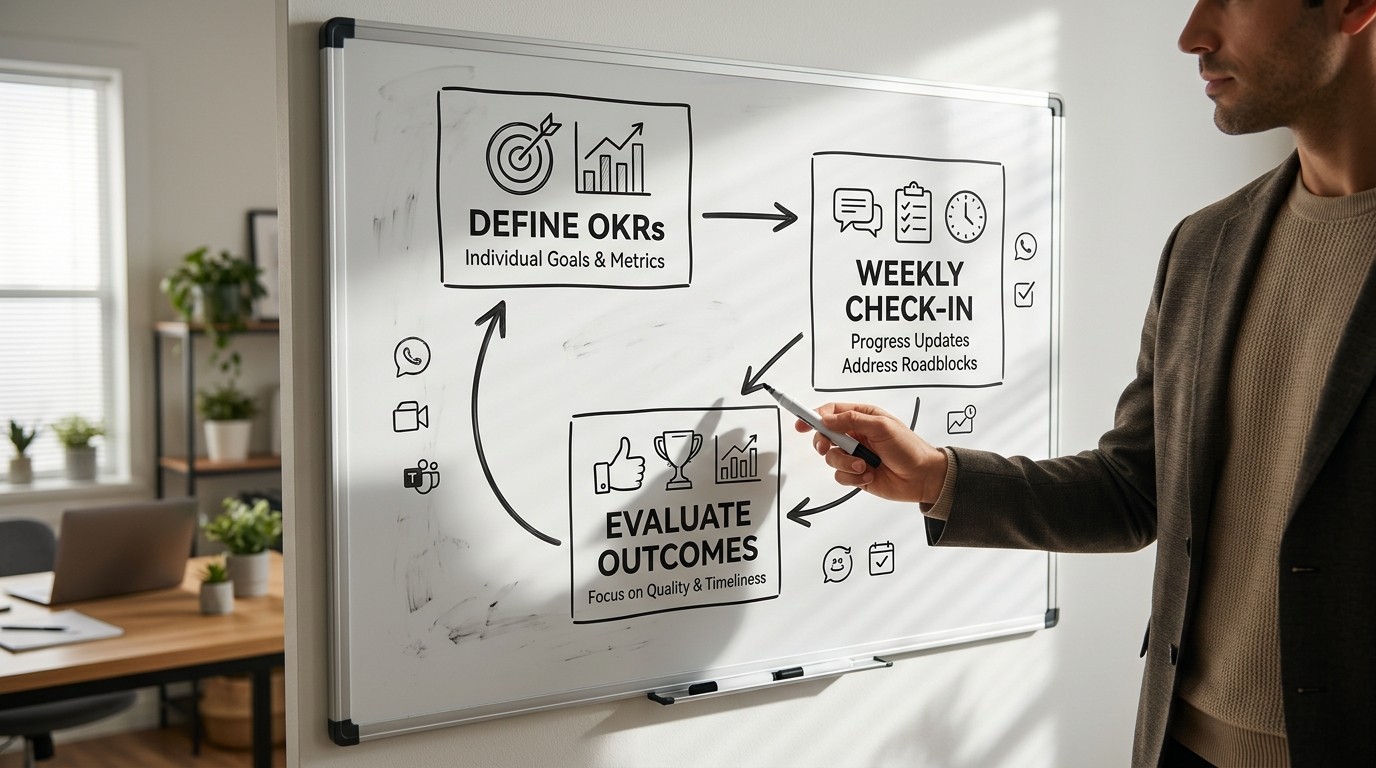
Transitioning to an outcome-based system requires a total shift in how you define work. Start by building a framework that relies on data rather than observation. This ensures that every team member knows exactly what success looks like without needing a manager to hover over their shoulder. Teams that integrate performance metrics directly into their project management tools see significantly higher alignment. You must focus on the quality and timeliness of deliverables as your primary source of truth.
Implementation Steps
Define clear, measurable OKRs and KPIs at the individual and team levels.
Establish a continuous feedback cadence using weekly or bi-weekly digital check-ins.
Shift evaluation metrics from input hours to output quality and timeliness.
Train managers in Remote Performance Leadership with a focus on coaching.
Integrate performance tools directly into Slack, Teams, or Asana.
Conduct regular pulse surveys to monitor engagement and prevent burnout.
The Result of Clarity
A project lead at a global software house recently shifted their team to weekly asynchronous check-ins. By moving away from monitoring active status, they identified a high-potential developer who was burning out due to excessive night work. They adjusted the workload three weeks before a major release, saving the project from a critical delay. This level of insight is only possible when you focus on the human behind the output.
Implementation Checklist
Audit existing KPIs for input-based bias.
Schedule recurring 1:1 check-ins in a shared calendar.
Connect your OKR platform to your primary project management tool.
Distribute a digital coaching guide to all people managers.
Set up an automated pulse survey for remote employee sentiment.
Tip: Start by piloting OKRs with a single department to refine your data inputs before rolling them out company-wide.
The 5 Best Performance Management Systems for 2026
Betterworks NextGen
Betterworks NextGen is a powerhouse for enterprise-level performance enablement. It focuses on turning managers into effective coaches through its Manager Command Center. This tool provides automated performance summaries that distill months of work into actionable insights. It is designed to handle the complexity of organizations with over 1,000 employees.
Key Capabilities
Manager Command Center for talent calibration.
Automated performance summaries using AI synthesis.
Deep OKR tracking across multiple departments.
The Tradeoff The platform has a significant learning curve and may feel overly complex for small startups with simple needs.
Implementation Connect your HRIS to Betterworks and use their internal wizard to cascade company-level OKRs down to specific teams.
15Five AMAYA
15Five has evolved into a coaching-first platform with its AI agent, AMAYA. It uses team data to provide real-time recommendations to managers, helping them have more meaningful conversations. This system excels at maintaining engagement in remote-first environments where human connection is hard to scale.
Key Capabilities
AI coaching recommendations for people managers.
Weekly high-five features for peer recognition.
Robust engagement and pulse survey tools.
The Tradeoff While excellent for engagement, its OKR tracking is less granular than specialized enterprise tools.
Implementation Install the 15Five Slack integration to allow employees to submit their weekly check-ins without leaving their workspace.
Peoplebox.ai Nova
Peoplebox.ai is an all-in-one platform that brings performance reviews, OKRs, and 1:1s into a single interface. Its AI assistant, Nova, automates the tedious parts of performance reviews by synthesizing feedback and progress data. It is the ideal choice for high-growth tech companies that need speed and automation.
Key Capabilities
Automated feedback summaries for quarterly reviews.
Real-time OKR updates linked to project data.
AI-driven calibration for fair performance ratings.
The Tradeoff Its interface can become cluttered if you try to use every feature simultaneously.
Implementation Sync Peoplebox with Jira or Asana so that OKR progress updates automatically as tasks are completed.
Teamflect
Teamflect is the premier choice for organizations built entirely on the Microsoft ecosystem. It lives natively inside Microsoft Teams, making it feel like a part of the daily workflow. It eliminates the friction of switching between different apps just to log a performance update.
Key Capabilities
Native integration with Microsoft Teams and Outlook.
1:1 meeting templates with integrated note-taking.
Automated recognition and reward features.
The Tradeoff If your team uses Slack or Google Workspace, Teamflect is not a viable option as it is Microsoft-exclusive.
Implementation Add the Teamflect app directly from the Microsoft Teams App Store and map it to your existing Outlook calendar.
Deel HR
Deel is widely known for global payroll, but its HR and performance suite is built specifically for distributed workforces. It unifies performance management with global compliance and localized benefits. This is the best solution for companies hiring across dozens of different countries.
Key Capabilities
Global talent management with localized legal compliance.
Integrated performance reviews for contractors and employees.
Centralized dashboard for worldwide workforce analytics.
The Tradeoff Its performance features are more recent and may lack the depth of dedicated tools like Betterworks.
Implementation Import your global roster into Deel and use the performance module to set unified standards for all regions.
Side-by-Side: Choosing the Right System for Your Size
Selecting the right system depends on your existing tech stack and the size of your workforce. An enterprise with thousands of employees has different needs than a global remote-first startup. The most effective platform is the one your managers actually use every week.
Comparison Table
Tool | Best For | Primary Integration | AI Capability |
|---|---|---|---|
Betterworks | Enterprise depth | HRIS / Workday | High (Summaries) |
15Five | SMB / Engagement | Slack | High (Coaching) |
Peoplebox.ai | High-Growth Tech | Jira / Asana | High (Calibration) |
Teamflect | Microsoft Users | MS Teams | Moderate (Insights) |
Deel HR | Global Operations | Global Payroll | Moderate (Compliance) |
Decision Rules
If you use Microsoft 365, prioritize Teamflect for native workflow integration.
If you manage 1,000+ employees, select Betterworks for its talent calibration depth.
If you are remote-first and global, use Deel HR for compliance and performance unity.
If you are transitioning from manual reviews, start with 15Five for lightweight check-ins.
The AI Advantage: Manager Command Centers and Automated Insights
AI has moved beyond simple automation to become a strategic partner for remote managers. In 2026, Manager Command Centers are the standard for high-performing teams. These platforms synthesize massive amounts of data from Slack, Jira, and email to provide a draft narrative of an employee's work. This prevents the recency bias that often plagues annual reviews in fast-moving remote environments. Managers can now see a holistic view of contributions that might otherwise go unnoticed.
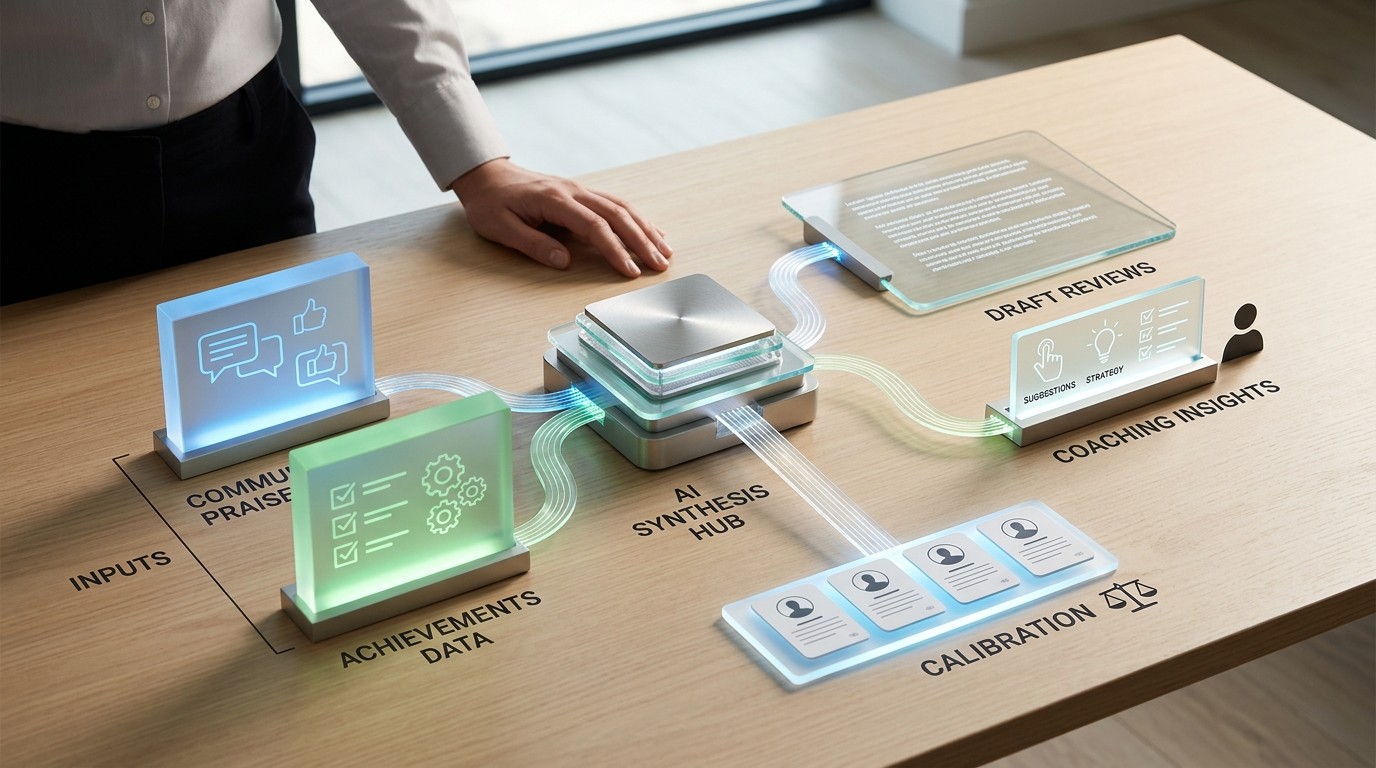
Automated insights also provide real-time coaching recommendations. If a team member's engagement scores drop, the AI can suggest specific talking points for the next 1:1 meeting. This level of support turns every manager into a high-level coach regardless of their previous experience. The goal is to calibrate performance fairly across the entire organization using hard data rather than gut feelings.
Rule: AI should assist the review process, but a human manager must always make the final performance determination to maintain trust.
Common Mistakes in Remote Performance Management
The biggest threat to a fair remote culture is visibility bias. This occurs when managers subconsciously favor employees they see more often in person or those who are more vocal in synchronous meetings. Focusing on butts-in-seats metrics is a guaranteed way to drive away your high-performing quiet achievers. If your system rewards the person who replies fastest to every Slack message, you are measuring availability, not impact.
Another common error is relying on the annual review. In a decentralized, high-velocity world, a performance conversation that happens once every twelve months is obsolete by the time the meeting ends. Remote work requires a constant loop of feedback to prevent drift and misalignment.
Pitfall: Do not use active status indicators as a performance metric. They encourage performative presence over actual output.
Frequently Asked Questions
How do we measure remote performance accurately?
You should focus on outcome-based metrics like OKRs and KPIs that are tied to specific deliverables. By tracking the quality and timeliness of work in project management tools, you get an objective view of performance that does not rely on physical presence.
Is tracking active status reliable for productivity?
No, tracking green dots on Slack or Teams is a poor indicator of work. It encourages employees to stay online without being productive, leading to burnout and performative work rather than genuine impact.
How does AI help managers in remote teams?
AI synthesizes work data from various platforms to create performance summaries and coaching tips. This helps managers identify trends, celebrate wins, and address burnout risks before they become major problems.
What is Microshifting in 2026?
Microshifting is a trend where employees work in non-linear, focused blocks throughout the day. It allows them to align work with their personal energy peaks, which often results in higher quality output than a standard eight-hour block.
Future-Proofing Your Performance Strategy
Transitioning to a modern performance system is not just about software, it is about culture. By embracing outcome-based management and AI-augmented coaching, you create an environment where talent can thrive regardless of their physical location. The right platform transforms performance from a tedious annual chore into a continuous engine for growth. Your goal should be a 90% manager completion rate for regular check-ins to ensure no one is left behind. When you prioritize clear expectations and data-driven feedback, productivity and retention will naturally follow. Start by auditing your current metrics and choosing a tool that fits your team's unique rhythm. The future of work is decentralized, but your performance strategy must be unified.