How AI-Driven Performance Review Software Automates Goal Tracking in 2026
Performance management has the potential to become a flexible, adaptable, and efficient process used for company success with AI-assisted software.

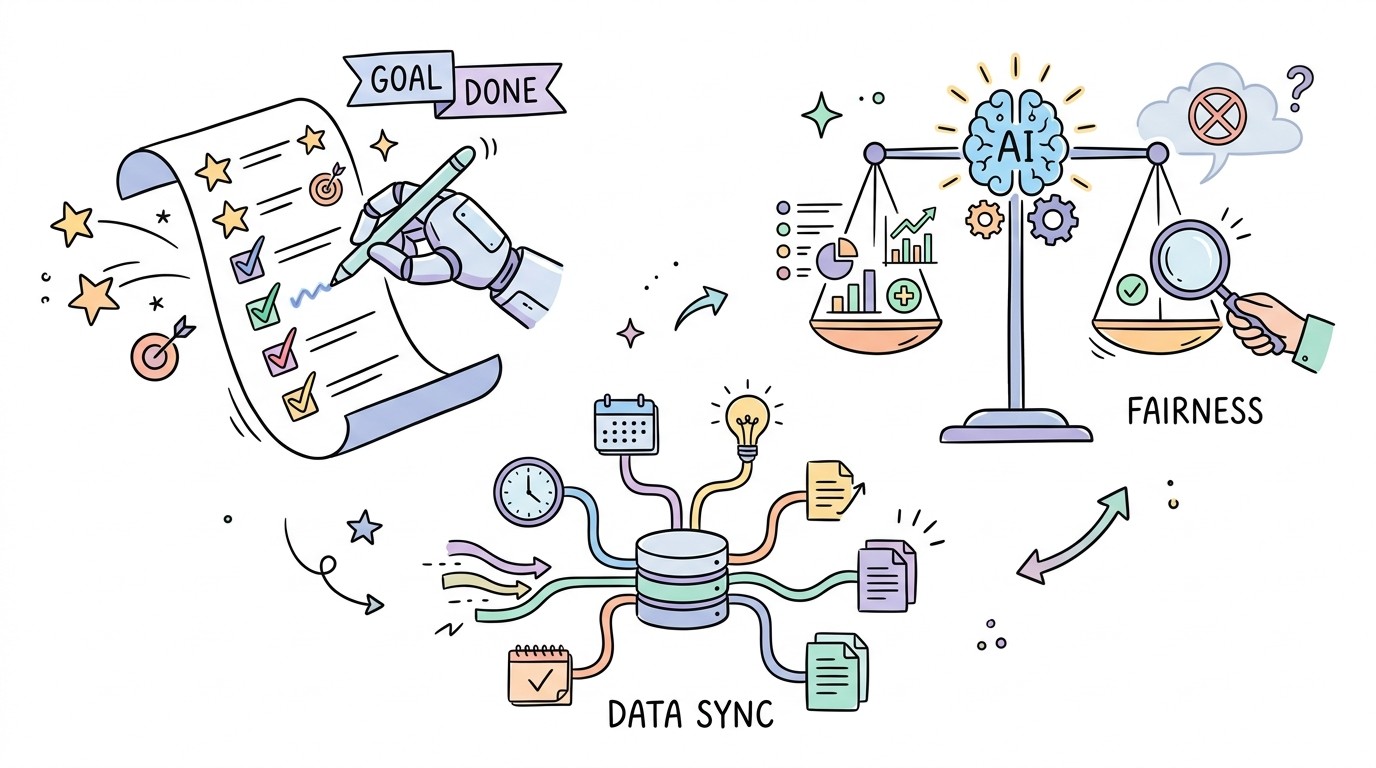
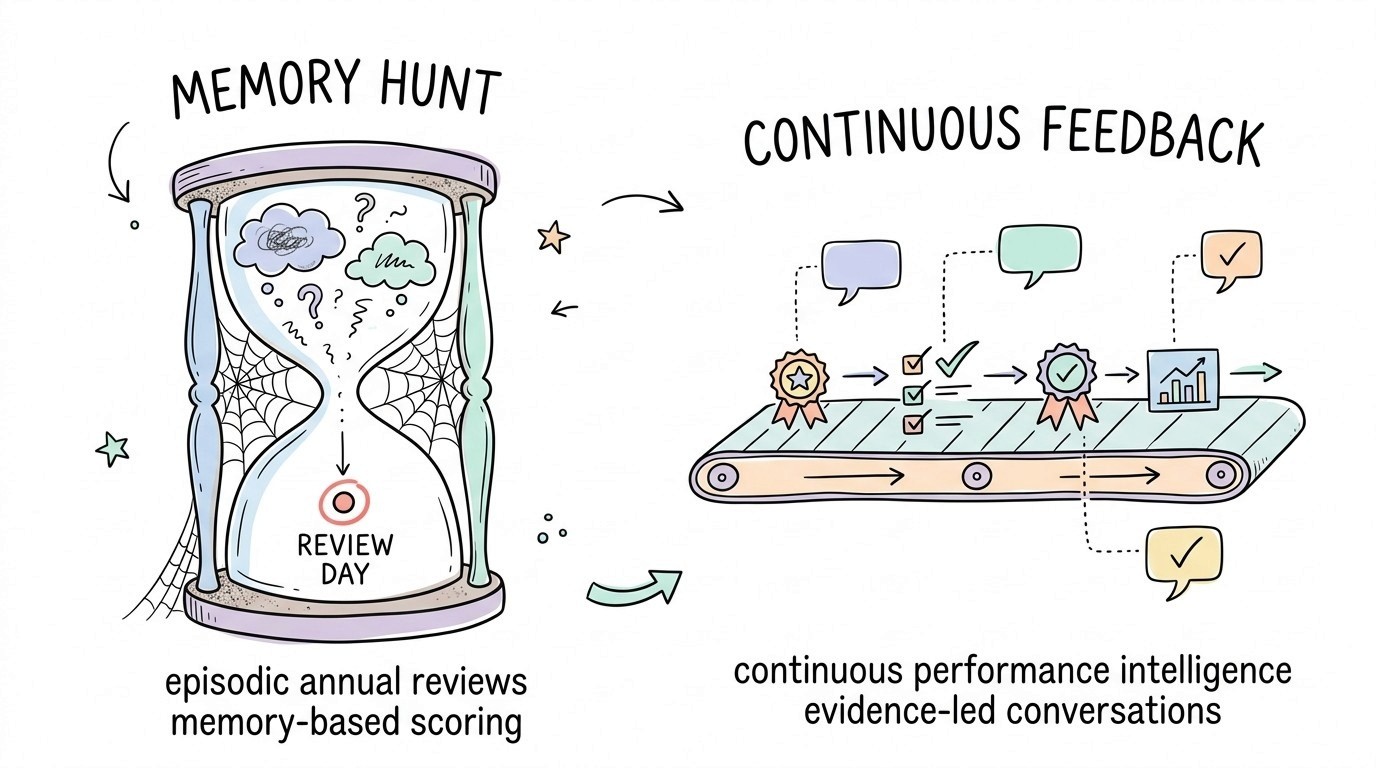
Performance reviews no longer need to be a year-end post-mortem. In 2026, companies can use AI-driven software to automate real-time goal tracking and narrative drafting to accurately evaluate employees and communicate feedback. At Zal.ai, our platform shifts the focus from scoring the past to enabling the future through continuous, evidence-led real-time conversations.
Enabling Continuous Intelligence: Automating Progress Updates
Once adopted, the AI functions as an intelligence layer of knowledge retention. It captures achievements the moment they happen, which effectively kills the recency bias that plagues manual reviews.
For example, a product manager who hit her launch milestones in Q1 struggles with a minor bug in Q4. In a traditional system, her manager might focus on the recent bug; however, the AI surfaces her early-year wins to ensure a balanced narrative.
The system monitors the OKR lifecycle 24/7.
It flags stalled objectives three months before the deadline.
Predictive analytics correlate engineering velocity with sales targets to forecast success.
Ensure all key results are measurable via connected data sources.
Define 'at-risk' thresholds for automated manager alerts.
Audit the system weekly to confirm that data pulls are accurate.
Use AI summaries to prepare for weekly 1:1 coaching sessions.
Automate Narrative Drafting With NLP
Drafting reviews used to take hours of digging through old emails and messages. Now, Zal.ai’s Natural Language Processing (NLP) aggregates these multisource signals into a coherent narrative in seconds.
This speed allows the manager to focus on quality, giving them the opportunity to focus on using the review to coach their employee to success rather than spending all their time gathering evaluation metrics. When receiving an AI drafted review, managers are asked to review the AI-generated feedback for specific evidence, shape the narrative to include their personal experience, and confirm that the sentiment analysis aligns with their intended coaching tone. This draft must never be treated as a final document as it is crucial to always maintain a human-in-the-loop approach to verify context and nuance.
Algorithms are excellent at processing data but they cannot always sense personal hardships or team dynamics that might impact output. The final rating must always belong to the manager, with the AI serving only as the primary researcher.
The 2026 Difference: Traditional vs. AI-Driven Reviews
Feature | Traditional Reviews | AI-Driven Performance (2026) |
Frequency | Annual or Bi-annual | Continuous / Real-time |
Data Source | Manager memory and manual notes | Performance Data |
Bias Risk | High (Recency and affinity bias) | Low (Evidence-led and NLP-audited) |
Goal Tracking | Static (Checked once a quarter) | Dynamic (Proactive risk detection) |
Drafting Time | 2-4 hours per employee | 15-30 minutes per employee |
The Future Of Performance Is Real-Time
AI in performance management is no longer a futuristic concept; it is the current standard for high-growth teams. By shifting to an intelligence-led model, you move away from mere evaluation and toward proactive growth.
The fastest wins come from automating synthesis and surfacing risk before it turns into attrition. Let our AI system build the narrative of your team's success. Audit your current review cycle and identify the manual bottlenecks today.