From Judge to Coach: How 2026 HR Tech is Training Managers to Give Better Feedback
Discover how 2026 performance software uses AI co-pilots and real-time sentiment analysis to help managers become high-performance coaches.

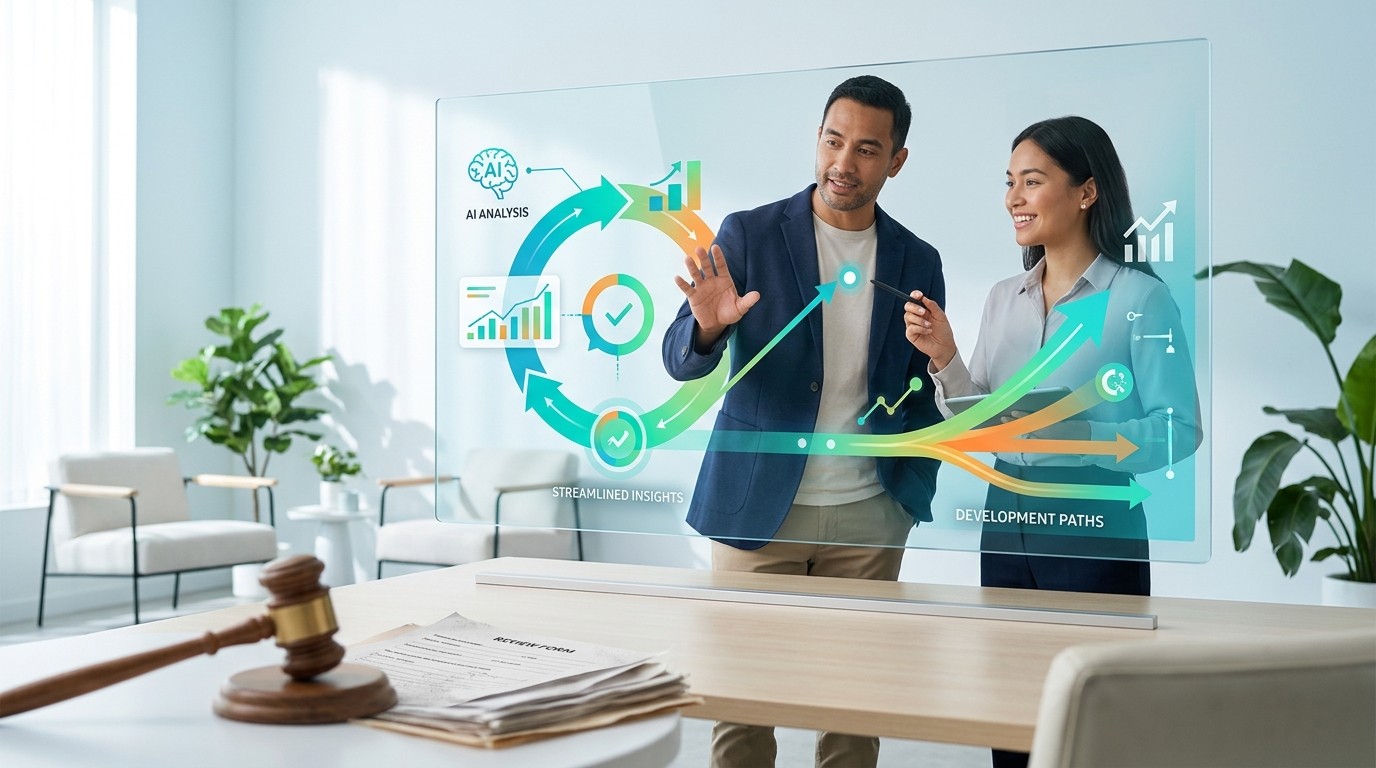
The annual performance review is a corporate relic. Modern HR strategy should revolve around continuous feedback instead of one retrospective autopsy. If you are still judging an employee's entire year of work in a single hour, you are failing them and your bottom line. In today’s workplace, HR software doesn’t have to just be a data storage vault for ratings; it can be the HR department’s assistant, a manager enablement engine designed to drive growth and development rather than impede them.
Today’s HR softwares can be Manager Coaching Tools
Zal.ai boasts AI-augmented features that support bosses into becoming developmental guides for their teams. These tools provide real-time behavioral nudges and sentiment analysis to ensure conversations are productive. Instead of guessing how a team is feeling, leaders can use our system to surface engagement risks. Our assistant moves the needle from retrospective evaluation to proactive growth.
Phase 1: Goal Alignment
Linking individual OKRs to top-level company goals provides the context needed for every feedback conversation. Zal.ai encourages weekly check-ins to keep progress from slipping through the cracks. It helps connect performance software to communication channels, maps individual OKRs to executive-level objectives, enables behavioral nudges for meeting completion, and synchronizes calendar data to detect meeting fatigue.
Phase 2: Mastering The AI-Assisted 1:1
The AI-assisted 1:1 begins before the manager even enters the room. Zal.ai can synthesize performance data, so the manager can use real time analysis to highlight recent accomplishments and be prepared to discuss growth in a concrete way. During the meeting, real-time feedback ensures the manager stays in coach mode.
Here's a walkthrough that covers the key steps:
Phase 3: Auditing Feedback For Bias And Quality
Quality control is the final step in the coaching cycle. The Zal.ai assistant can audit feedback for hidden biases or overly critical language for the coach to review after a feedback conversation. This helps verify if the sentiment of manager feedback is actually shifting toward constructive growth. Tracking regrettable attrition among high-performers reveals the true impact of your coaching tech. Our AI isn’t a replacement for reading the room, but a co-pilot to help verify that you are reading it correctly and thoroughly.
The ROI Of The Enabled Manager
Coaching is no longer an optional, it is a data-driven requirement for high-performance teams. The transition from judge to coach is the only way to retain top talent in an AI-enable workplace.
Frequently Asked Questions
How is AI changing performance reviews?
AI shifts the focus from writing reviews to summarizing continuous feedback. It removes the blank page problem by drafting summaries and suggesting bias-free phrasing based on months of data.
Does AI replace the manager?
Zal.ai is manager led, and AI-assisted. It surfaces patterns—like engagement risks or skills gaps—that a human might miss, allowing the manager to focus on the human connection.
How does this impact goal attainment?
Companies using continuous coaching models are 50% more likely to exceed their goals. The real-time alignment of individual OKRs with company objectives keeps everyone focused on the right work.