Evidence-Based Performance Reviews: Using Data to Drive Career Growth
Traditional performance reviews are broken—98% of HR leaders agree. This guide shows you how to replace subjective intuition with evidence-based data to transform evaluations into career-launching engines.


According to Gallup, 98% of CHROs admit their current performance management systems do not work effectively. The issue may lie in the fact that performance evaluations must delicately balance subjectivity and objectivity. While employees want performance evaluations that take personal relationships and other unevaluatable human aspects of work into account, they are also looking for a data-backed development roadmap free of bias. On first glance, achieving this precise balance might seem impossible, but the key lies in making the performance appraisal an efficient, data-driven process.
The Bottom Line: Data-Driven Success
Moving to an evidence-based model transforms the review from a stressful audit into a strategic growth engine. The gameplan:.
Replace bias with quantifiable KPIs and behavioral data.
Transition from backward-looking evaluations to proactive performance enablement.
Drive 4.2x better business outcomes by prioritizing data-driven employee growth.
What Exactly Are Evidence-Based Performance Reviews?
Evidence-based reviews are systematic evaluations that swap subjective intuition for research-backed frameworks. They focus on what can be measured such as sales figures, project completion rates, and specific behavioral incidents.
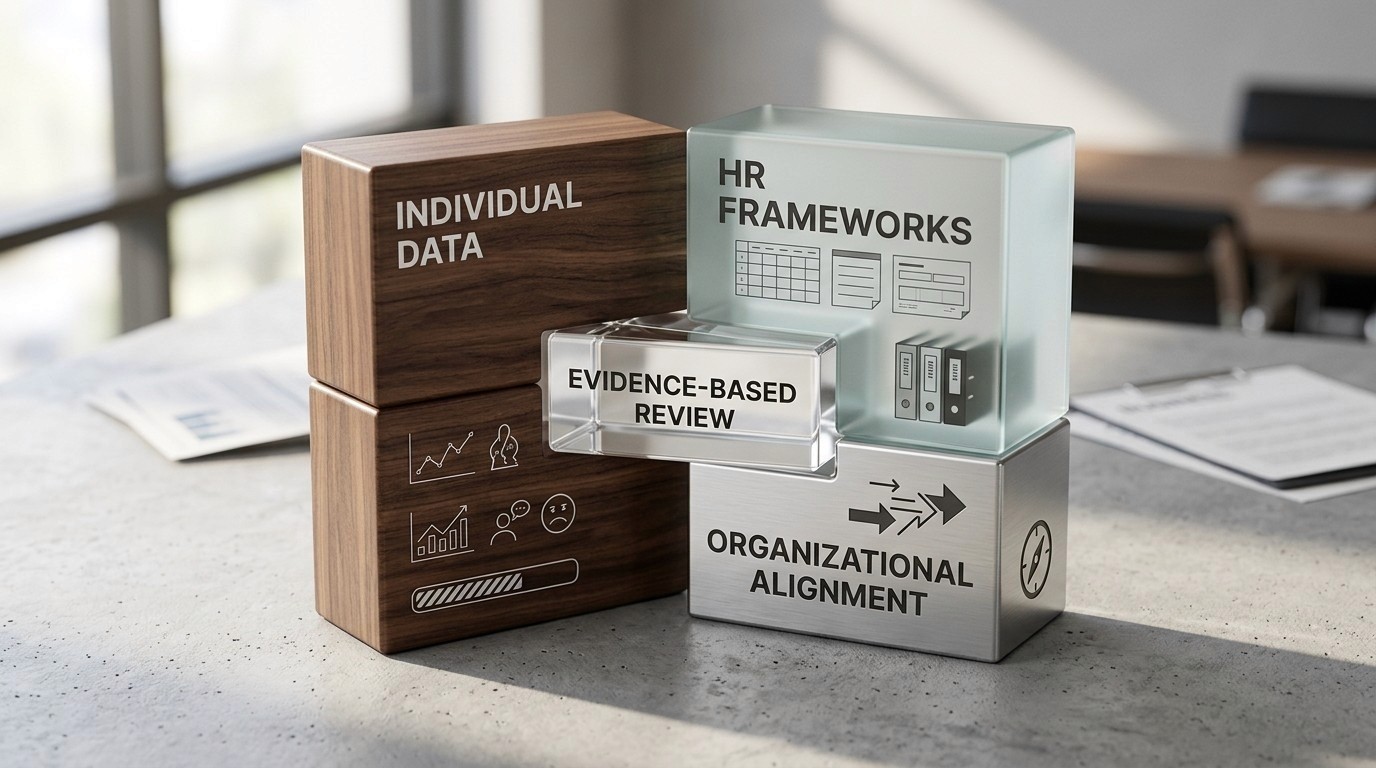
You must align the individual efforts with HR frameworks and the overall organizational strategy to see real results. This approach ensures every piece of feedback is anchored in a verifiable metric.
The Business Case for Ditching the Annual Review
Gallup research shows that companies with highly engaged employees outperform their peers in earnings per share by 147 percent. The annual review does nothing to increase or maintain employee engagement because it is stagnant and relies too heavily on manager subjectivity. Evidence-based performance reviews have the potential to bring objective validity to the process.
Here is a walkthrough that covers the key steps:
Step 1: Gather Your Ground Truth Data
Before you sit down with an employee, you need a foundation of objective truth. This preparation phase prevents the common trap of recency bias where you only remember what happened in the last three weeks.
Gather objective data including sales figures and previous review notes.
Verify that job descriptions are current and reflect the actual work being done.
Audit your notes for subjective language before the meeting begins.
Step 2: Make Sure You Have Multi-Source Feedback Data
A single perspective is a biased perspective. Use multi-source tools to build a 360-degree view of performance that includes peers, subordinates, and the employee themselves.
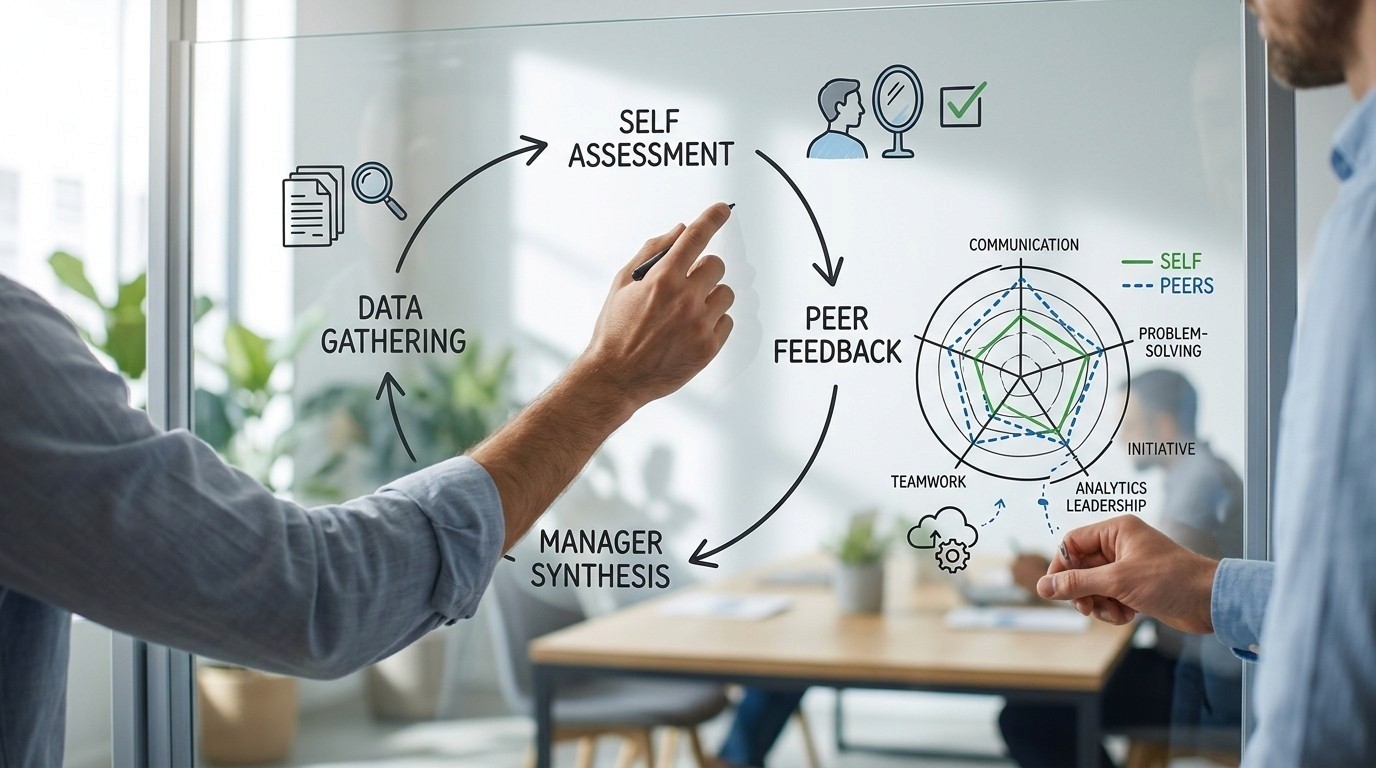
Require a self-assessment to encourage accountability and self-reflection. When employees evaluate their own work against the same criteria you use, misalignments become visible immediately. Peer and client feedback can also diversify and bolster the evaluation.
Use 360-degree radar charts to compare self-perceptions against peer feedback.
Standardize the evaluation scales across all roles to ensure fairness.
Provide a platform for peers to share specific behavioral examples rather than vague praise.
Step 3: Conduct Meaningful Dialogue
The actual conversation should be a two-way dialogue focused on the future where insights are posed in ways that encourage collaboration rather than pass judgement. Relying on the varied data that you’ve collected rather than your own opinion can help validate your claims and keep performance conversations from becoming antagonistic. To ensure this, it is helpful to focus on five core metrics that clearly relate back to performance and achieving company goals:
Productivity and Efficiency: This covers raw output like sales numbers or project volume. Any purely objective statistics about performance are relevant here.
Quality of Work: This measures the accuracy and reliability of the output of the employee work, informed by the multi-source feedback you’ve collected.
Collaboration and Teamwork: This evaluates how well an individual supports the collective goal. 360 peer feedback is especially valuable here.
Learning and Development: This tracks the acquisition of new skills and certifications, and helps keep the conversation focused on employee development.
Goal Achievement: Monitoring the concrete and actionable goals set during feedback conversations can help ground performance reviews.
Step 3: Following-up to Secure a Growth Plan
A review without a follow-up is just a conversation. You must secure a concrete growth plan that identifies exactly what the employee needs to do to reach the next level.
Does the employee understand the specific requirements for their next promotion?
Have you identified the specific training resources needed to hit the new goals?
Is there a scheduled date for the next follow-up check-in?
Enabling Performance
Performance management is not about checking boxes or filling out HR forms. It is about taking charge of career development and providing the tools your team needs to succeed.
If you find yourself sharing feedback for the very first time during an annual review, you have a management problem. Start small by auditing your current review forms and requiring evidence for every rating you give. Focus on enablement, and the results will follow.