Enterprise Performance Software: Managing Cascading Goals and 360 Reviews
Is your strategy getting lost in translation? Discover how modern EPM software uses cascading goals and 360 reviews to turn executive vision into individual reality.

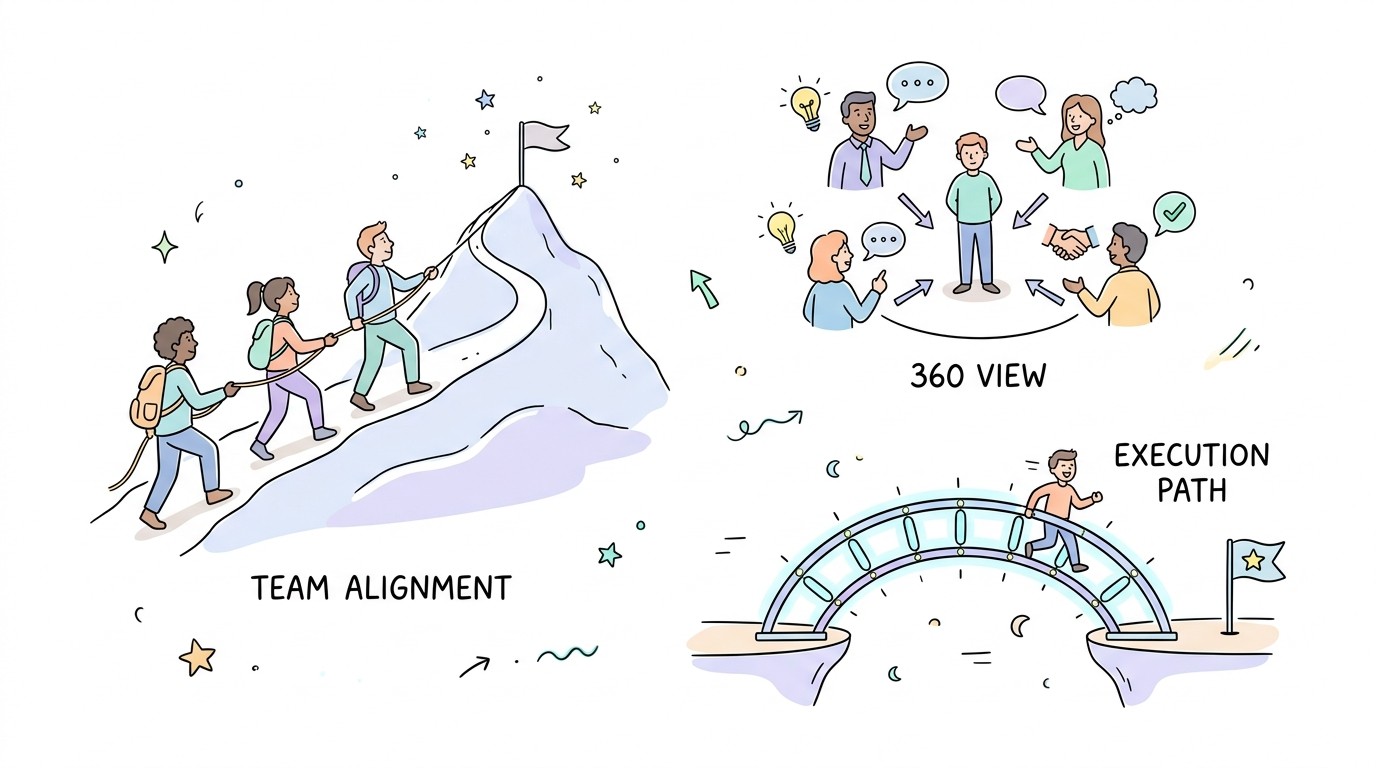
Strategy can sometimes feel like it never reaches the employee level of an organization. You can have the most brilliant five-year plan on the market, but if your front-line staff can't see their part in it, the plan is useless. Execution gaps ruin the point of the process and turn a high-level vision into nothing more than an expense.
Many organizations now use enterprise performance management software cascading goals to close these gaps and keep everyone on the same page. Traditional feedback systems often rely on a single manager's narrow view but to separate yourself in the current field, you need an approach that links every small task to the big company win.
The 2026 Performance Playbook At A Glance
Modern performance management is no longer about one meeting a year. It is about a constant conversation that connects individual work to what the company actually values.
Regular check-ins make performance 14% better compared to annual reviews.
88% of HR leaders agree AI has changed how we define high performance.
Enterprise Performance Management (EPM) softwares link people metrics right to financial results.
What Are Cascading Goals And Why Do They Matter?
Cascading goals are a system that breaks big plans into clear, measurable tasks for everyone. Think of it like a waterfall where the CEO's vision flows down into department priorities and finally into individual SMART goals. This lets every worker see exactly why their job matters.

There is a significant difference between cascading goals and aligning goals. Cascading is a traditional top-down flow where goals are broken into smaller bits. Aligning is more about working together, letting individuals set goals that help the company vision from the bottom up.
If a CEO sets a revenue goal of $200M, the Sales VP turns this into 'Close 50 new big deals.' A rep then translates this into 'Get 200 leads.' Every person knows exactly how their Monday morning task helps hit that $200M target.
How To Build A Transparent Goal Cascade In Your EPM
Building a cascade means moving away from manual spreadsheets. Tracking things by hand leads to old data and makes the process feel like a chore instead of a strategy. Zal.ai is a manager-led, AI-assisted platform to make sure everyone can see what is happening in real time.
Implementation Steps
Pick 3 to 5 clear company goals at the executive level.
Turn these company goals into department and team priorities.
Work with employees to set SMART goals that fit the team's needs.
Set up your software so everyone can see their own dashboards.
Check goals every three months to keep up with business changes.
Implementing 360-Degree Reviews For A Full View
If a manager's feedback is a single light, a 360-degree review is like lighting up the whole stadium. This feedback style gathers notes from coworkers, direct reports, and even people outside the company.
To do this right, you have to pick a varied group of people to give feedback. This stops "friendship bias" and shows what the employee actually does every day.
Start by picking the skills you want to measure.
Let employees pick their own reviewers, with manager approval.
Keep a mix of written comments and number ratings.
Use the results for growth rather than just deciding pay.
Which Implementation Pitfalls Should You Avoid?
The biggest trap is thinking the cascade is a one-time thing. Goals that don't change are worse than having no goals because they give you a false sense of security.
Avoid vague top goals that make cascading impossible.
Do not skip manager training. They must be coaches, not just judges.
Stop focusing only on yearly reviews and start doing regular check-ins.
According to this 2026 Performance Management Report, companies with one system for the whole office are much more successful. When you let different teams use different systems, you create silos. Those silos turn into gaps that swallow your strategy whole.
From Strategy To Action
Moving to a better EPM strategy is a big change in how a company works. You have to move from the yearly 'spotlight' to 'stadium lighting.' Being open is the bridge between the boss's vision and what people actually do.
When every employee can see their work on a dashboard, they naturally take more responsibility. You no longer have to wonder if the work matters. It clearly does. Now, take the first step and check how visible your goals really are.