The Merits of Continuous Feedback
Traditional annual reviews are failing 95% of managers. In 2026, the winning strategy isn't choosing one over the other—it's building a hybrid model that blends real-time coaching with formal capstones.

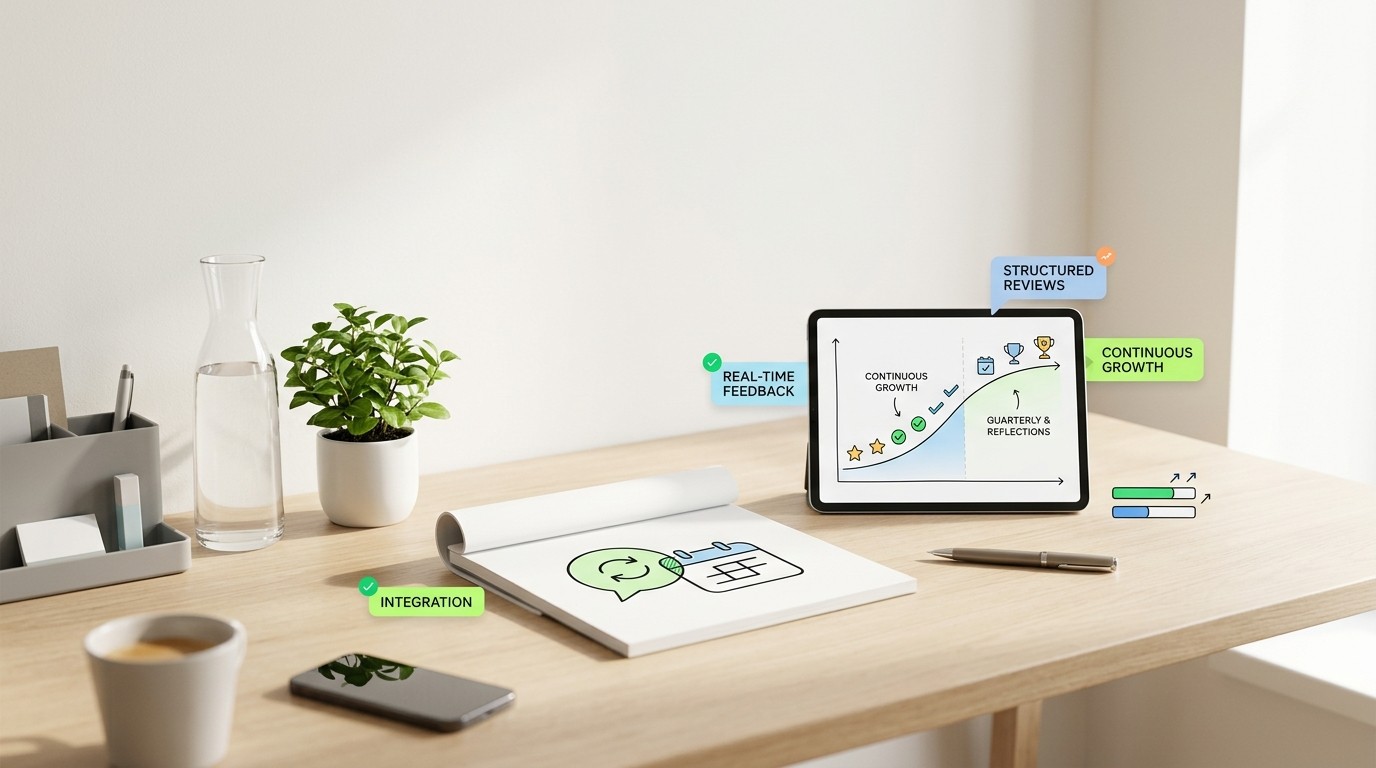
Your current method of performance evaluation is broken. According to SHRM, 95% of managers are dissatisfied with traditional annual reviews because they move too slowly for today's market. Business goals are more effervescent than ever, and waiting a whole year to fix a problem is a massive competitive disadvantage.
Key Takeaways: Performance Management that Fits Today’s Workplace
As job security becomes more and more precarious, workers are interested in positions that prioritize their personal development, and it is imperative to create performance management systems that meet this standard. Gallup says that only 2% of HR leaders think their current setup actually works toward this goal. While the answer is multifaceted, it starts with creating a workplace performance culture by making continuous feedback conversations a pillar of performance evaluations.
Creating a Continuous Feedback Culture
A Zippia Study states that 85% of employees take more initiative when they receive regular feedback at work.
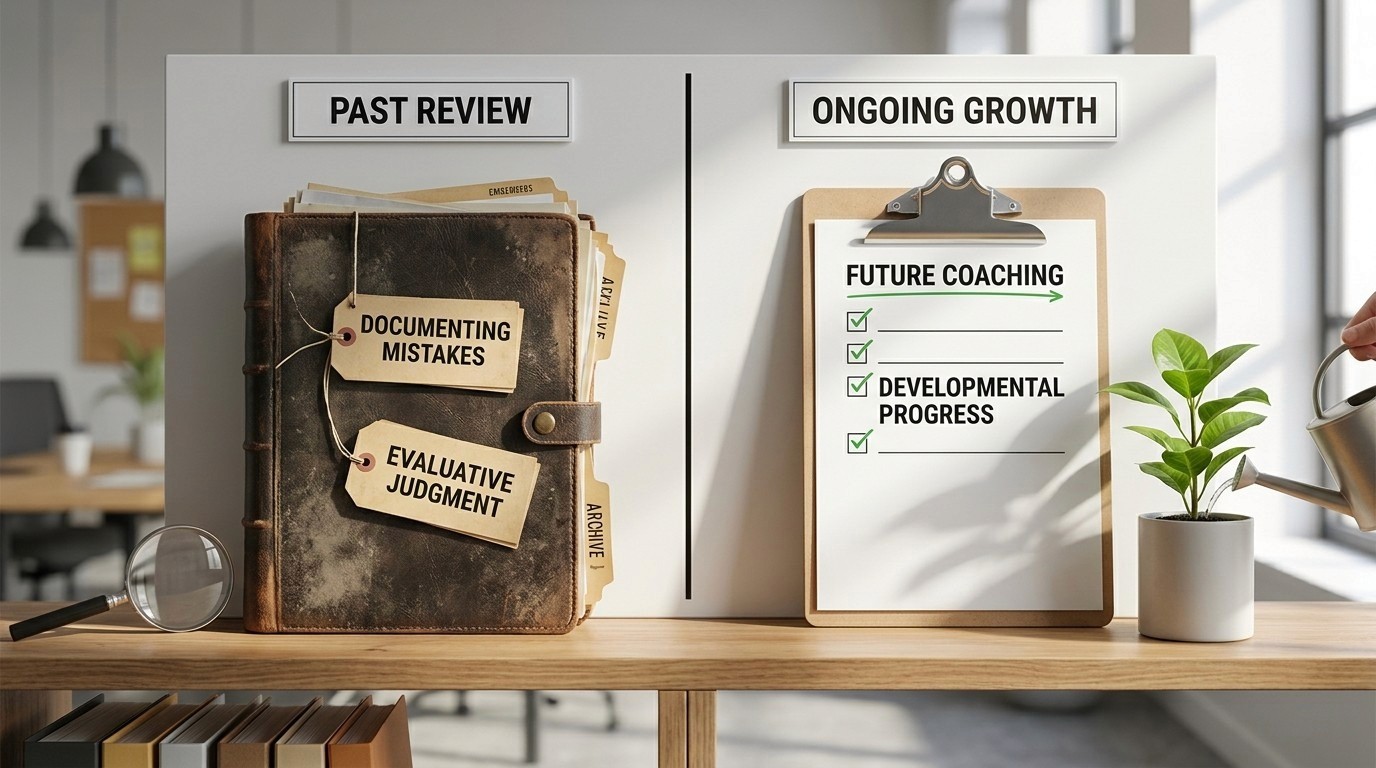
While annual reviews focus on evaluating past performance, continuous feedback has the potential to drive future performance. This is because feedback conversations can build atop one another, and be hyper-specific to tasks at hand if they are happening regularly. A weekly 15-minute sync is significantly more effective than a three-hour annual marathon.
Because of this, Zal.ai recommends that companies implement a hybrid performance model, one where yearly reviews are preserved for pay raises and HR records, but real, day-to-day performance is discussed constantly through weekly feedback check-ins. In this way, performance conversations are decoupled from compensation conversations, reducing the anxiety and potential for conflict when discussing the employee’s development.
The Manager as Performance Coach
Transitioning to this kind of culture allows managers to focus on coaching their employees rather than solely evaluating them. Creating the space for rich employee-manager dialogue builds personal trust, which leads to more alignment across the board. When the only time an employee receives feedback is when it is connected to their compensation, both manager and employee are not free to discuss growth candidly, and collaboratively. This encourages an antagonistic culture across management levels, and incentivizes employees to value performative acts that increase visibility above learning how to be more effective in their roles.
In continuous feedback cultures, the employee-manager relationship is unburdened by these factors because the employee is assured that their manager is scrutinizing their work in an attempt to help them grow first and foremost, and for performance evaluation only after. If the manager is allowed to become a performance coach, the manager and employee both work in tandem to achieve company goals, creating output that is solely intended to further the company as a whole.
Performance Management FAQ
Why do we still need annual reviews?
Annual reviews give you an official record for legal stuff and pay changes. They act as a final summary of all the regular feedback from the year. They finish the whole process.
How often should managers provide feedback?
Checking in once a week or every two weeks is the way to go now. These should be quick and focus on what's in the way right now. Doing it regularly matters more than how long it takes.
Does continuous feedback cause stress?
If you do it right, it actually makes people less stressed. Employees are given constant reminders of where they stand, and the best paths of action to improve moving forward.
Frequency Beats Intensity: The Future is Real-Time
Moving to real-time feedback isn't optional anymore. Adobe cut the number of people quitting by 30% after they traded old rankings for regular check-ins. This shows that when you focus on growth instead of just judging, people stay. Feeling safe to speak up is the biggest sign a team will succeed.
Stop waiting until December to fix problems happening right now. Start by making your 1-on-1 meetings consistent this week. The future of performance happens in real time.