All-in-One HRIS vs. Dedicated Performance Software for Goal Management
Choosing the right stack for performance management is no longer just about 'features'—it's about whether you want a system of record or a system of growth. We break down the 2026 landscape to help you choose the winner for your workforce.

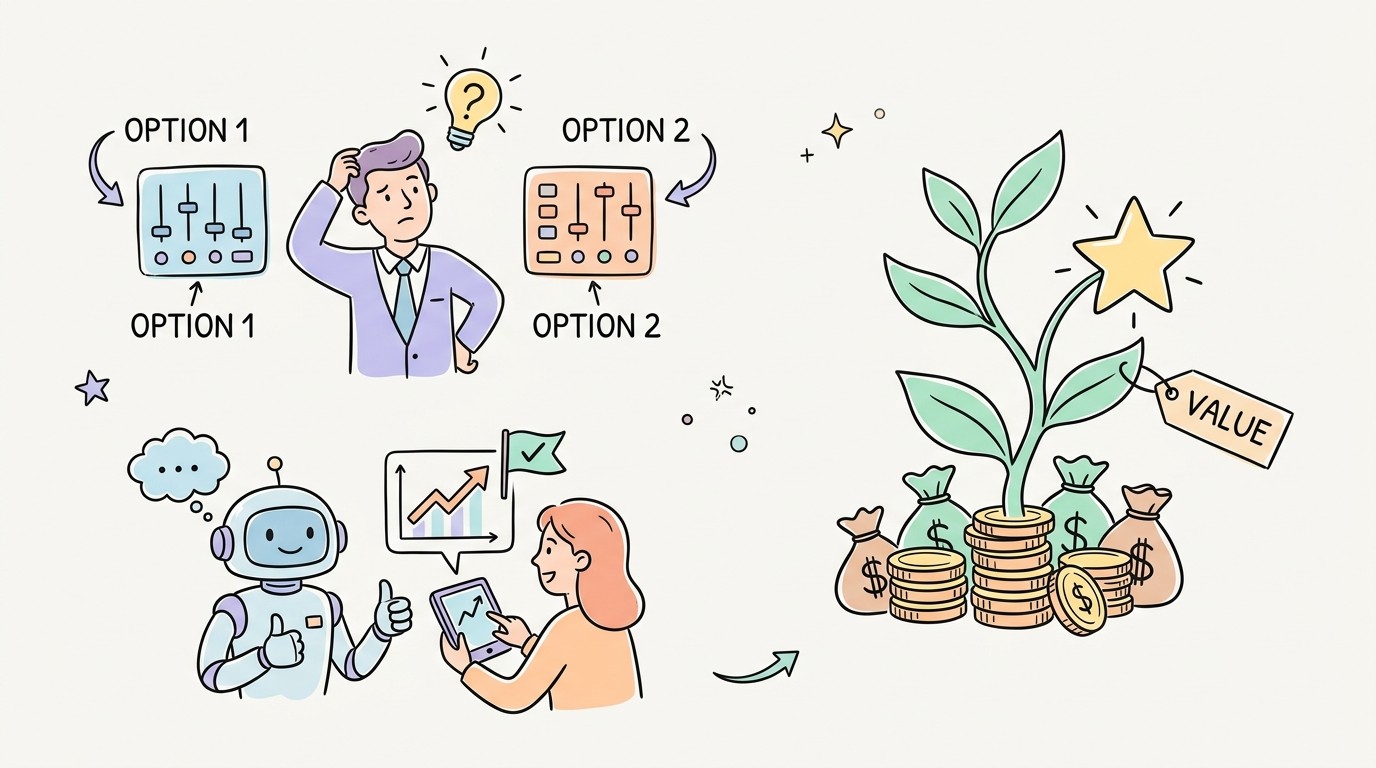
Managing performance via spreadsheets is a legacy habit that kills growth. Many organizations find themselves stuck between generic HR tools and specialized platforms that promise the world.
If you treat your performance reviews like a compliance checklist, you are missing the point. Generic HRIS modules often fail to inspire real progress.
Most managers view annual reviews as a tax on their time rather than a coaching opportunity. The friction between administrative duty and cultural growth is where the system breaks.
A bad tool Choice actually makes your culture more rigid. This choice determines whether your team merely tracks tasks or builds a high-performance engine for the future.
The Bottom Line Up Front
Deciding between an HRIS and dedicated software comes down to your primary goal. Use an HRIS for administrative simplicity and one unified login for all payroll and benefits data.
Structured performance management drives a 34 percent increase in employee retention. This matters because talent stability is the foundation of long-term growth.
Choose dedicated software if you need to run complex OKRs or deep 360-degree feedback cycles. Ninety percent of HR leaders believe AI has redefined high performance in 2026.
Why Performance Management Changed Forever In 2026
The landscape of work changed when AI tools became standard across every department. It is no longer enough to track whether an employee showed up or finished a task list.
Forty-two percent of organizations have updated their processes to reflect AI-augmented work. Performance systems now focus on the quality of output and the depth of coaching rather than manual entry.
42% of organizations have updated processes for AI-augmented work.
Modern platforms use AI to summarize feedback and provide managers with real-time coaching prompts. This shift turns HR from a record-keeper into a strategic partner for the executive team.
You can find more details on this transition in the Betterworks 2026 State of Performance Enablement Report. Here is a walkthrough that covers the key steps for modern systems:
High-performance cultures rely on these data-driven insights to stay competitive. The tech you choose must support these frequent, AI-assisted conversations to be effective.
Option A: The Case For The All-In-One HRIS
An all-in-one HRIS like BambooHR serves as your single source of truth for all employee data. This approach keeps payroll, benefits, and performance under one digital roof.
Bundled modules typically lower your total software spend through consolidated licensing. You avoid the headache of managing multiple vendor contracts and security audits.
Employees enjoy a consistent user interface across every HR task they perform. One login reduces the friction of adoption for teams that already use the core system.
However, these platforms often lack depth in specialized areas like goal cascading. The performance module might feel like a basic add-on rather than a purpose-built growth tool.
Tip: Use an integrated HRIS module if your primary goal is documenting reviews for compliance or annual compensation adjustments.
Option B: The Power Of Dedicated Performance Best-Of-Breed
Dedicated platforms focus exclusively on the employee experience and growth cycle. Tools like Lattice or 15Five prioritize high manager adoption through intuitive, specialized workflows.
Best-of-breed software offers superior functionality for OKRs and growth plans. These tools are designed to facilitate continuous feedback rather than just annual record-keeping.
You can expect faster innovation cycles as these vendors focus on a single problem space. This specialization allows for more creative features like automated AI feedback summaries.
The catch is the technical requirement for API integration with your core HRIS. You must ensure employee records sync perfectly to avoid manual data entry errors across two systems.
Rule: If your culture relies on quarterly OKRs and frequent 360-degree feedback, choose a dedicated platform over a generic module.
The 2026 Selection Framework: Which Path Is Yours?
Choosing the right path requires looking at your headcount and your cultural objectives. Small teams often find that their core HR system provides enough tracking for their needs.
If you have fewer than 150 employees, an integrated HRIS add-on is usually sufficient. The administrative overhead of a second platform often outweighs the benefits of extra features.
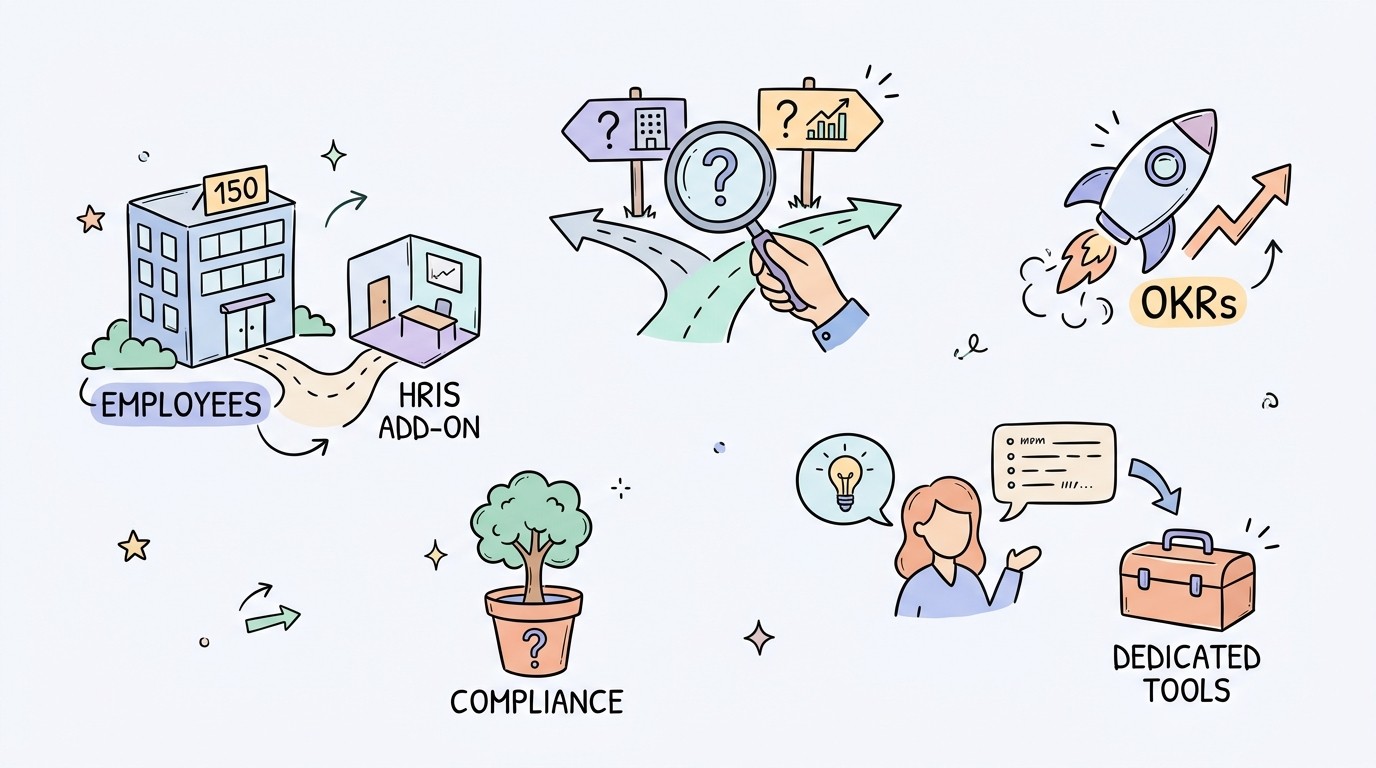
Larger organizations with complex hierarchies need more robust goal-tracking capabilities. Dedicated tools with AI prompts are the right choice if your managers struggle with feedback quality.
If you need to drive a high-performance culture or use OKRs, opt for a dedicated platform.
If performance management is primarily for documentation, use an all-in-one HRIS module.
If you prioritize IT and HR automation above all else, stay within an integrated suite.
If your workforce is remote and needs frequent alignment, choose a tool with deep Slack or Teams integrations.
Top 7 HRIS And Performance Platforms To Watch
The market is split between massive suites and agile, focused platforms. Each serves a different profile depending on your technical maturity and growth stage.
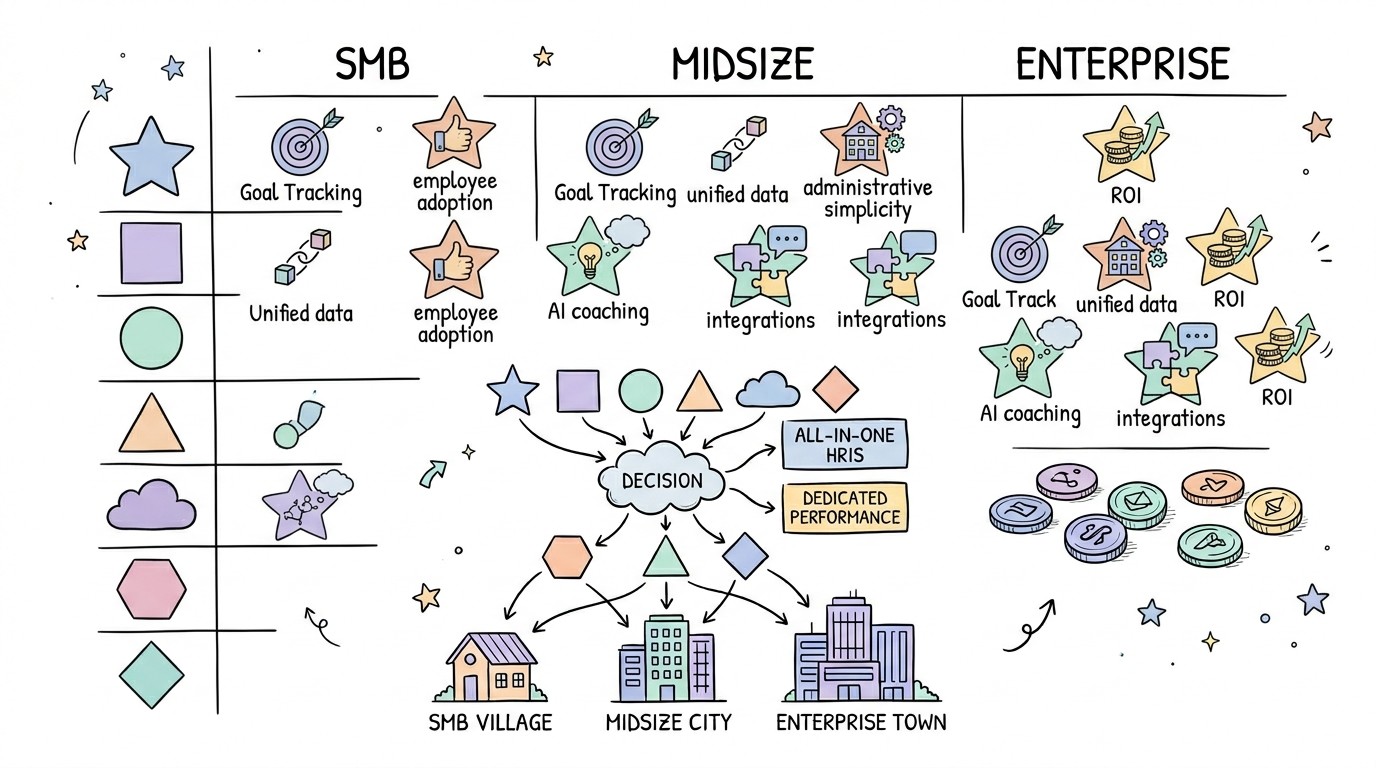
The Focus: Enterprise-grade unified data where ratings flow directly into pay and succession planning.
Core Features: Massive data scale, deep reporting, and seamless ties to global payroll.
Implementation Note: Requires significant IT configuration to align with global business processes.
The Tradeoff: High cost and a complex interface can lead to low employee engagement.
The Focus: Ideal for small businesses needing simple performance tracking as an add-on to core records.
Core Features: Clean interface, easy review scheduling, and simple self-assessments.
Implementation Note: Can be toggled on within minutes if you already use BambooHR for core HR.
The Tradeoff: Lacks advanced goal-cascading features for complex organizational structures.
The Focus: A leader in people success with robust OKRs and growth plans for high-growth companies.
Core Features: Engagement surveys, performance reviews, and detailed analytics.
Implementation Note: Syncs with most major HRIS platforms via pre-built API connectors.
The Tradeoff: The pricing and modules can become expensive as you add engagement and compensation features.
The Focus: Combines a social, culture-first interface with OKRs and global performance visibility.
Core Features: Visual org charts, social feeds, and flexible review templates.
Implementation Note: Best suited for mid-market companies that want a modern, non-corporate feel.
The Tradeoff: Performance modules are good but not as deep as specialized OKR tools.
The Focus: Enterprise-level continuous performance enablement and AI-driven manager command centers.
Core Features: Real-time goal tracking and strategic alignment across thousands of employees.
Implementation Note: Designed for organizations moving away from annual reviews toward continuous coaching.
The Tradeoff: Requires a strong internal commitment to a specific performance philosophy.
The Focus: Best for automation-first companies that want to trigger reviews based on employee milestones.
Core Features: Modular performance add-ons and powerful workflow automation tools.
Implementation Note: Setup is highly automated through their unified employee data graph.
The Tradeoff: The performance module is newer and may lack the psychology-backed depth of niche rivals.
The Focus: Psychology-backed platform emphasizing weekly check-ins and holistic manager coaching.
Core Features: Weekly check-ins, high-five recognition, and manager training programs.
Implementation Note: Focuses heavily on the habit of feedback rather than just the software setup.
The Tradeoff: The high-frequency nature of the tool requires significant manager buy-in to work.
Example
A scaling tech startup uses HiBob as their core HRIS to manage global payroll but integrates Lattice for their detailed OKR tracking. This allows HR to maintain a single system of record while giving teams a specialized tool that actually improves their daily output.
The Migration Playbook: Moving From Spreadsheets To Software
Successful implementation starts with a clear understanding of your current process gaps. You cannot fix a broken culture by simply installing new software.
Conduct a needs assessment involving HR, payroll, and department leads before picking a tool. This ensures the software supports your actual workflow rather than forcing you into theirs.
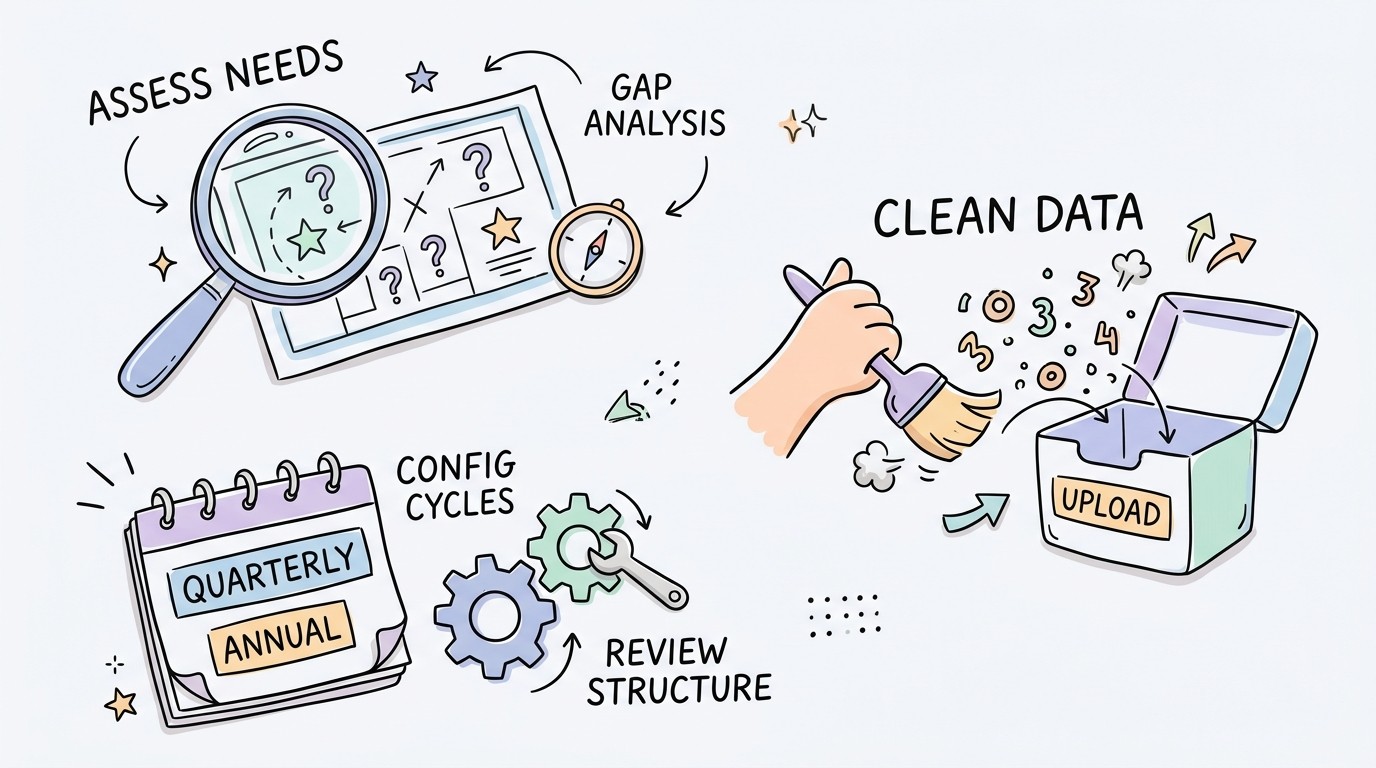
Conduct a needs assessment with all major stakeholders.
Clean and audit historical data to prevent importing bad records.
Configure review cycles that match your culture (quarterly vs annual).
Establish goal-setting frameworks like OKRs or SMART goals within the system.
Enable integrations with tools like Slack or Microsoft Teams.
Train managers on the difference between administrative compliance and coaching feedback.
Migration requires a systematic approach to data integrity. Historical goal data is often messy and requires manual auditing before it enters the new system.
Pitfall: Treating implementation as a software installation rather than a process redesign leads to low adoption and poor data quality.
Consider the experience of an enterprise that migrates to Workday. They often find that over-customizing review cycles too early makes future system upgrades nearly impossible. Keep your initial setup as close to the software's standard best practices as you can.
Final Scorecard: Integrated vs. Specialized
This table compares the fundamental differences between the two primary paths for managing performance and goals in 2026.
Criteria | All-in-One HRIS | Dedicated Performance Software |
|---|---|---|
Best For******* | Admin efficiency and SMBs | High-performance culture and OKRs |
Primary Value******* | Single source of truth | Employee growth and engagement |
Cost******* | Lower (bundled) | Higher (separate licensing) |
Goal Tracking******* | Basic task completion | Advanced OKR cascading |
AI Features******* | Basic summaries | Proactive coaching prompts |
Integration******* | Native (No setup) | API-based (Required) |
All-in-one systems prioritize the HR department's needs for clean data. Specialized systems prioritize the manager's need for better team output.
Goal Management & HRIS: Common Questions
Are OKRs better than KPIs for performance management?
OKRs focus on ambitious, qualitative objectives and measurable key results to drive growth. KPIs are better for measuring the steady-state health of a process. Most modern systems allow you to track both side-by-side.
Is a basic HRIS module enough for a 100-person company?
Usually, yes. At this size, the complexity of managing two systems often outweighs the extra features. Focus on mastering the basics of feedback before adding a specialized tool.
Can I sync performance data back to my payroll system?
Most dedicated tools like Lattice sync with core HRIS platforms to ensure data consistency. This allows performance ratings to influence compensation cycles automatically without manual data entry.
Does AI replace the need for manager feedback?
No. AI is used to summarize feedback and suggest coaching paths, but the human element remains vital. AI simply removes the administrative burden so managers can focus on the conversation.
Building A System That Actually Works
Selecting the right platform is about aligning tech with your actual habits. The best software in the world will fail if your managers do not see the value in the feedback they give.
Focus on tools that fit into the daily workflow of your team. If they spend their day in Slack or Teams, ensure your performance tool lives there too.
Technology is only the vehicle for your performance philosophy. The right platform transforms how performance is built, measured, and coached in real time.
Review your current data and talk to your managers today. Pick the path that removes the most friction from their coaching process.