AI Performance Review Software: What "Human-Led, AI-Aided" Actually Looks Like in Practice
Performance reviews are traditionally broken—relying on fuzzy memories and manual paperwork. The best AI performance review softwares change the game by synthesizing feedback data into actionable drafts without removing the human touch.

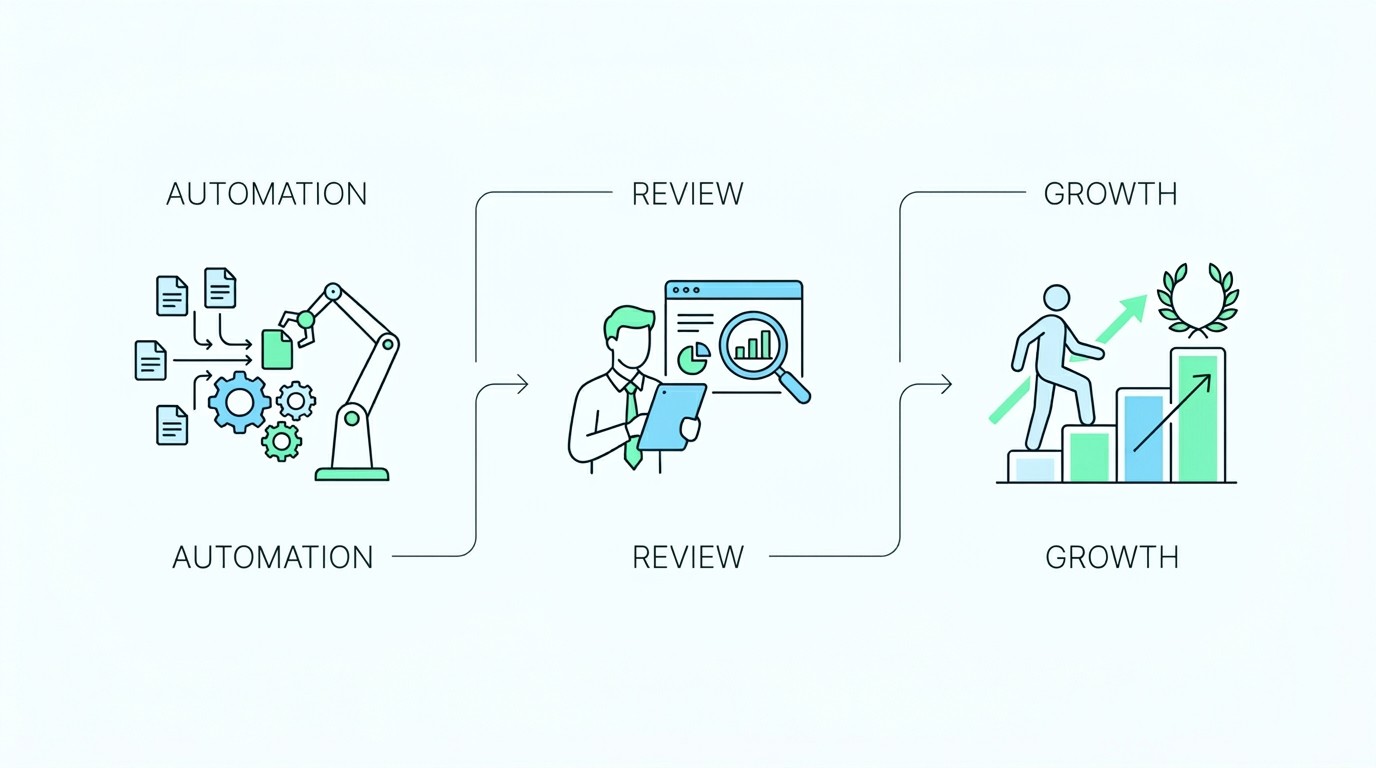
Performance reviews are often a high-stakes memory test that nobody signed up for. Managers spend dozens of hours trying to reconstruct a year of work from scattered Slack messages and half-remembered meetings.
This manual approach creates a massive administrative burden. It also invites recency bias where only the last three weeks of performance actually matter. The solution is not to let AI take over, but to use it as a powerful assistant. We call this the human-led, AI-aided approach to performance management.
By automating the synthesis of data and the first draft of prose, we can finally return the focus to coaching and development where it belongs. This shift saves time and makes feedback more accurate for everyone involved.
The Playbook at a Glance
The core philosophy of modern performance management is simple: AI handles the mechanical work while humans handle the meaning. This playbook ensures you get the efficiency of automation without losing the personal touch of a real leader.
The primary objectives include:
Synthesis: Using AI to aggregate feedback and metrics into structured drafts.
Calibration: Speeding up the process of aligning ratings across teams.
Bias Mitigation: Leveraging Natural Language Processing to flag unfair language.
Coaching: Shifting manager time from writing documents to having meaningful 1:1 conversations.
Human judgment remains the final word in every evaluation and career decision.
5 High-Impact Use Cases for AI in Performance Management
AI is most effective when applied to the specific bottlenecks that slow down People Ops teams and managers. These use cases represent the highest return on investment for mid-sized organizations.
Structural Drafting
Description: Converting bulleted observations and raw notes into organized, professional prose with distinct sections for strengths and growth areas.
Implementation: Feed the system three specific Q1 accomplishments. The tool produces a three-sentence recognition paragraph linking those outcomes directly to business impact.
Tone and Clarity Refinement
Description: Rephrasing vague or overly harsh feedback into professional, actionable coaching that encourages employee development.
Implementation: Use a prompt to transform critical notes into constructive steps. This ensures the message is received without the recipient becoming defensive.
Bias Detection
Description: Scanning review text for gendered language or inconsistent standards across different employee demographics.
Implementation: Run drafts through a Natural Language Processing engine to flag potentially biased phrases before the review is finalized.
Conversation Rehearsal
Description: Using AI as a roleplay partner to prepare for difficult or sensitive feedback sessions with employees.
Implementation: Input the core feedback points and ask the AI to simulate potential employee reactions. This helps managers practice their responses and stay calm.
Human vs. AI: Who Does What?
To implement this effectively, everyone must understand where the machine ends and the person begins. This clarity prevents the process from feeling cold or automated.
A clear division of labor ensures that managers remain the primary owners of their team's growth while using AI to remove the friction of documentation.
Feature | AI Capability | Human Responsibility |
Data Processing******* | Pattern recognition across tools | Providing original observations |
Writing******* | Spelling, grammar, and drafting speed | Tone and relationship context |
Objectivity******* | Flagging bias and inconsistent language | Making the final rating decision |
Planning******* | Suggesting SMART goals | Guiding professional development |
Communication******* | Creating first-draft scripts | Leading the 1:1 coaching talk |
Managers are the drivers of performance, not the passengers. The AI acts as the navigator, providing the data and drafting the route, but the manager still chooses the destination.
Why Zal.ai is the Choice for a Human-Led System
Zal.ai is built specifically to handle the complexities of scaling teams without the overhead of enterprise-legacy systems.
AI-Powered 360 Reviews
Description: A system that uses AI agents to gather peer feedback and guide self-assessments into actionable drafts.
Features: Automated triggers based on tenure or manager changes and real-time synthesis of feedback streams.
Verdict: Ideal for teams that want to cut review admin time by 50% while keeping human feedback at the center.
SMART Goal Tool
Description: An AI-guided coach that helps employees write goals that are specific, measurable, and aligned with company objectives.
Features: Integration with 1:1 meeting notes to track progress continuously rather than once a year.
Verdict: Perfect for organizations looking to bridge the gap between strategy and execution through better goal-setting.
Continuous Feedback & 1:1s
Description: A centralized hub that captures real-time feedback and meeting notes to build a year-round performance narrative.
Features: Slack and Microsoft Teams integrations to capture feedback in the flow of work.
Verdict: The best choice for eliminating recency bias and ensuring no accomplishments are forgotten at year-end.
Common AI Pitfalls to Avoid
Even the best technology fails if the implementation is sloppy. Managers must be trained to recognize the limitations of automated systems to keep the process authentic.
The most common error is the Copy-Paste Trap. Finalizing AI-generated drafts without adding personal nuance or verifying facts leads to a loss of trust from employees. Human oversight is essential to keep AI tools from amplifying existing organizational biases.
Another risk is dehumanizing the process by letting the software decide ratings. Employees are 66% more likely to support AI-assisted reviews when they know a human manager remains the final decision-maker. Always be transparent about how the technology is being used in the background.
The ROI of AI Performance Review Software
Implementing AI in your performance cycles is not just about convenience. It is a strategic move that delivers measurable returns for the business and the People Ops team.
A 40% to 70% reduction in manager time spent on review administration is standard after shifting to an AI-aided model. This allows leadership to focus on high-value activities like talent planning and strategy instead of paperwork.
Calibration becomes significantly more efficient when data is centralized and synthesized. According to research from Gartner, organizations using generative AI in HR see a major boost in the speed of decision-making. This means you can finalize your entire performance cycle weeks earlier than usual.
75% of employees support AI-generated drafts with human review
Significant reduction in recency bias through continuous tracking
Improved consistency in feedback tone across different departments
Faster identification of high-potential talent for promotion
Moving From Paperwork to Coaching
AI performance review software is a productivity tool for writing, not a replacement for human judgment. It allows you to move away from the stress of episodic, annual paperwork and toward a model of continuous growth.
By automating the administrative heavy lifting, you empower your managers to be better coaches. They can stop hunting for data and start having the conversations that actually move the needle for your business.
This is the future of performance management: data-driven, evidence-based, and human-centered. It is time to let the machine handle the draft so your leaders can handle the leadership.
Ready to see how human-led, AI-aided performance works? Explore how Zal.ai can simplify your next review cycle.