A Guide to the One-on-One Check-in
Use these curated one-on-one questions to transform your weekly check-ins into high-impact coaching sessions that drive retention and performance.


Most of today’s HR leaders will recommend that every manager have frequent check-ins with their direct reports. While this is crucial for meaningful performance management in today’s workplace, it is only effective if the check-in is focused on having a direct, meaningful, and actionable feedback conversation.
Real productivity is built on alignment and trust, and the feedback conversation is your tool to get there.
The importance of One-on-One Success
Great one-on-ones are the backbone of a healthy team culture. Research from Gallup shows that employees who have regular check-ins with their managers are 67% less likely to be disengaged during their daily work.
Focus on these three core principles for immediate impact:
Prioritize coaching and long-term career development over tactical project updates.
Maintain a 70/30 talking ratio where the employee speaks for the majority of the time.
Schedule a consistent cadence, such as weekly or bi-weekly, to build psychological safety.
High-performing teams use these sessions to clear blockers and align on vision. In this way, even a thrity-minute meeting can be transformative if it focuses on the right outcomes.
The 10-10-10 Rule for Better Check-ins
A structured meeting prevents the conversation from wandering into useless territory. The 10-10-10 framework ensures you cover the immediate needs of the employee while still leaving room for future planning and growth.
In the 10-10-10 framework, the first ten minutes belong entirely to the employee. They should drive the agenda and bring up the topics that matter most to them without your interference. This allows them to surface concerns that might otherwise stay hidden under the pressure of your own priorities.
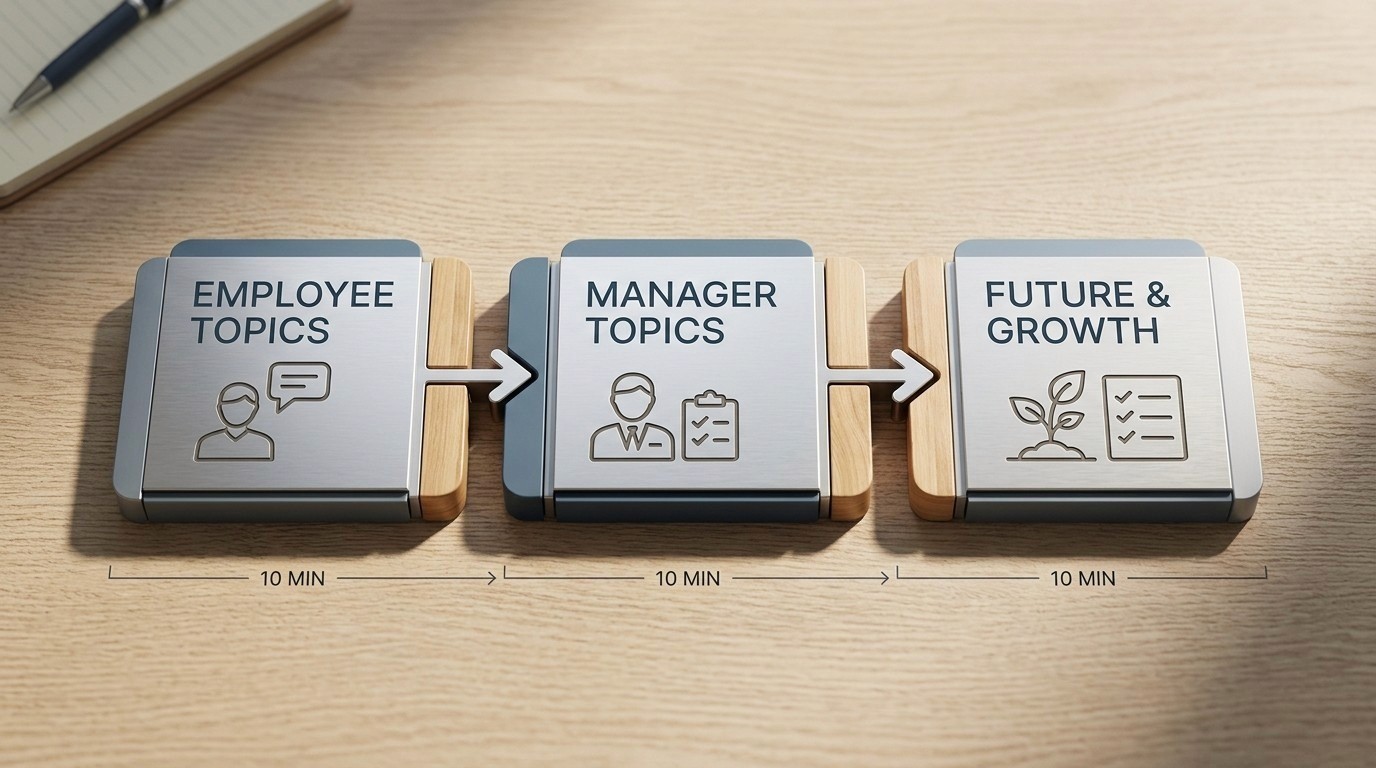
The second ten minutes are for your agenda items. Use this time to align on expectations and provide the necessary context for upcoming shifts in strategy. In the “Alignment and Priorities” section of the article, you will find a list of recommended questions that may help employees and managers bridge any communication gaps.
The final ten minutes are dedicated to career development and documenting specific action items for the following week. In the “Growth and Career Development” section of this article, you will find some suggested questions that will help you create a future-facing rapport with your employee.
Alignment and Priorities
Alignment ensures that the work being done actually matters to the business. You must bridge the gap between their daily tasks and the company's broader objectives to maintain momentum.
What are your top three priorities this week?
Are there any parts of your job where you feel stuck?
How can we be more efficient?
Are our current team goals resonating with you?
What part of your routine is the least productive and what can we do instead?
What part of your routine is the most challenging and how can I support you?
Growth and Career Development
Retention is directly tied to career progression. If you are not talking about their future, they will likely start looking for it elsewhere.
What skills would you like to develop this quarter?
What part of your job are you enjoying the most?
What are some points of interest for you lately?
Do you feel challenged enough in your current role?
Are there any projects you would like to own?
Are there any skills you would like to focus on improving?
Review-Based Questions for Holistic Feedback
While the 10-10-10 rule will help a manager develop a strong trust-based rapport with their employees on frequent check-ins, it is important that managers create space to receive feedback from their employees on their own working relationship and company direction. The following sections provide a list of suggestions on how to broach receiving feedback in a productive fashion.
Upward Feedback
These questions help actively create the space for employees to communicate critically without fear of retribution.
Do you feel that you have the autonomy to complete this task efficiently?
Do you have all the tools to complete the task at hand?
How can I be more helpful to you in finishing this task?
How can I support you better here in the future?
How can I better support your work-life balance?
Productivity and Team Culture
The environment your team works in is often the biggest hurdle to their success. Use these questions to identify systemic issues and cultural friction before they become permanent problems.
Are there any parts of our team process that feel frustrating?
Do you have the tools you need to be successful here?
Do you feel that the expectations of your role are clear and actionable?
Is there anyone on the team you’d like to shout out to me?
Do you feel that the company’s overall goals are clear? Do you have any questions or concerns about how your role fits those larger goals?
Transform Your Check-ins Today
Great leadership is not about having all the answers but about asking the right questions. When you stop treating one-on-ones as a chore and start viewing them as your most powerful leverage point, the team's performance will follow. You do not need to be a perfect coach overnight. Just start small by picking three new questions from this list to use in your sessions next week.
Focus on the person, remove their blockers, and give them a vision for their future. That is how you turn a standard check-in into an engine for growth. The time you spend listening is the most valuable work you will do all day.