7 Best Career Pathing Software Tools for Modern HR Teams in 2026
Retention is the new recruiting. Discover the 7 best career pathing software platforms designed to transform your workforce into a dynamic career lattice through AI-driven growth.


The traditional corporate ladder is a relic of a bygone era. Organizations prioritizing lateral and diagonal movement are winning the war for talent today.
Companies with structured career pathing frameworks experience 3.2x higher retention rates than those without them. When 74% of employers cannot find the skills they need on the open market, looking inward is no longer optional.
The modern workforce demands a lattice, not a single path to the top.
3.2x higher retention rates in organizations with structured career pathing.
The Bottom Line: Future-Proofing Your Internal Mobility
Internal mobility has become the primary workforce strategy for 55% of organizations heading into 2026. The shift toward Agentic AI allows HR teams to move beyond static spreadsheets into dynamic talent engines.
Selecting the right platform requires balancing technical skill validation with user experience and performance data.
TalentGuard: Best for enterprise-grade competency mapping and readiness intelligence.
Lattice Grow: Best for mid-market teams wanting to link growth to performance reviews.
Fuel50: Best for large organizations building an internal gig economy or talent marketplace.
iMocha: Best for technical teams requiring deep, validated skill assessments.
Zavvy: Best for global teams needing high automation and localized compliance.
1. TalentGuard: The Intelligence-First Choice for Competency Mapping
TalentGuard is designed for complex organizations that need to standardize roles and competencies across a global footprint. It uses 'WorkforceGPT' to autonomously map skills to specific job functions, reducing the manual burden on HR leaders.
The Career Canvas feature provides employees with a visual map of potential lateral and vertical moves.
Best for: Large enterprises with complex, evolving job architectures.
Why it fits: It focuses on 'Readiness Intelligence' to identify who is actually prepared for their next move.
Tradeoff: The initial setup of competency frameworks can be time-consuming for smaller teams.
Setup: Connect your HRIS to TalentGuard and use the AI assistant to ingest existing job descriptions.
Tip: Start with one department to validate your competency levels before rolling it out company-wide to avoid data overwhelm.
2. Fuel50: Building an AI-Driven Talent Marketplace
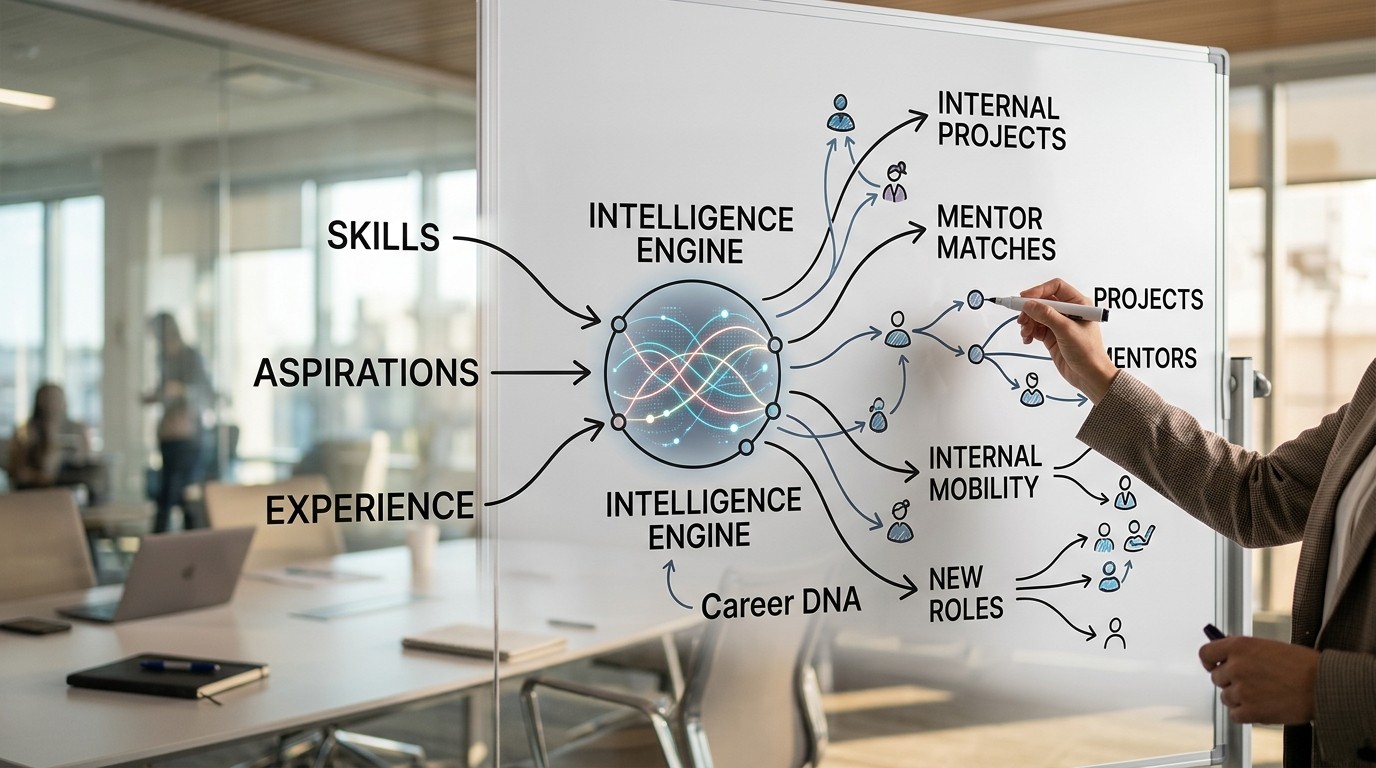
Fuel50 shifts the focus from traditional jobs to a more fluid 'talent marketplace' model. Its 'Career DNA' engine uses AI to analyze employee aspirations, skills, and values to suggest specific opportunities.
This engine connects workers to more than just new titles; it suggests projects, mentors, and learning paths.
Best for: Organizations looking to build an internal gig economy.
Why it fits: It prioritizes the employee's personal goals, which drives higher engagement.
Tradeoff: Requires a highly active internal culture to keep the marketplace 'liquid' with enough projects.
Setup: Integrate Fuel50 with your talent acquisition system to track internal versus external hiring success.
3. Zavvy (by Deel): High-Automation Enablement for Global Teams
Zavvy specializes in 'People Enablement' by automating the most repetitive parts of the career development process. It allows HR to build visual growth plans that integrate directly with recurring feedback loops.
For distributed or global teams, the platform provides a seamless way to maintain consistency across different regions.
Best for: Fast-growing startups and distributed teams using Deel for global payroll.
Why it fits: It turns static career paths into interactive journeys with automated reminders.
Tradeoff: The interface may feel too simplified for enterprises with deeply nested reporting lines.
Setup: Use the Zavvy template library to launch your first career framework in less than a week.
4. Lattice Grow: Unifying Performance and Progression
Lattice Grow bridges the gap between how an employee is performing today and where they want to go tomorrow. By unifying performance reviews with specific career tracks, it ensures that 'growth' is not just a theoretical concept.
Personalized recommendations for growth areas are surfaced by AI, helping managers guide their direct reports more effectively.
Example
A software engineer receives a performance review highlighting strong technical skills but a need for better communication. Lattice Grow automatically suggests a 'Leadership Track' milestone and links it to a relevant soft-skills course, ensuring the next 1:1 focuses on tangible progress toward a promotion.
Best for: Mid-market companies that already use Lattice for performance or engagement.
Why it fits: It eliminates the 'silo' between performance data and career aspirations.
Tradeoff: Highly dependent on managers consistently conducting high-quality reviews.
Setup: Enable the Grow module within your Lattice dashboard and link your existing competency rubrics.
5. Leapsome: The European Standard for All-in-One Growth
Leapsome is the go-to choice for companies that need to balance employee development with strict European regulatory standards. It combines OKRs, learning management, and career growth into a single, cohesive portal.
The platform excels at creating structured, goal-oriented development environments that satisfy both HR and legal requirements.
Best for: Organizations with a heavy European presence prioritizing GDPR and security.
Why it fits: It creates a clear link between company goals (OKRs) and individual development.
Tradeoff: The breadth of features can lead to a steeper learning curve for employees.
Setup: Map your company OKRs in Leapsome first, then align individual growth plans to these strategic pillars.
6. iMocha: The Skills Intelligence Engine for Technical Teams
iMocha provides the data-backed evidence needed to move employees into technical or specialized roles. It utilizes a library of over 3,000 assessments to validate both hard and soft skills with high precision.
The proprietary Skills Ontology maps workforce readiness, showing you exactly where your talent gaps exist.

Best for: Engineering-heavy teams and IT departments undergoing digital transformation.
Why it fits: It removes the guesswork from internal mobility by proving technical competency.
Tradeoff: Less focus on the 'emotional' side of career coaching compared to platforms like Fuel50.
Setup: Define your required technical benchmarks in iMocha and invite employees to take baseline assessments.
7. Phenom: Personalized Talent Experience at Scale
Phenom treats the internal employee experience with the same level of personalization usually reserved for external candidates. It uses AI to automate mobility suggestions and personalizes the internal career site for every individual.
This creates a high-touch feel even in organizations with tens of thousands of employees.
Best for: Large-scale enterprises wanting a unified talent experience platform.
Why it fits: It proactively pushes opportunities to employees before they think about looking elsewhere.
Tradeoff: Can be an expensive investment if you only need basic career mapping.
Setup: Configure the Phenom AI bot to interact with employees on your internal portal to gather skills data.
The 2026 Decision Matrix: Which Software Fits Your Strategy?
Choosing the right software depends on your company size and whether you prioritize technical validation or culture-led growth. Below is a comparison of the top platforms for 2026.
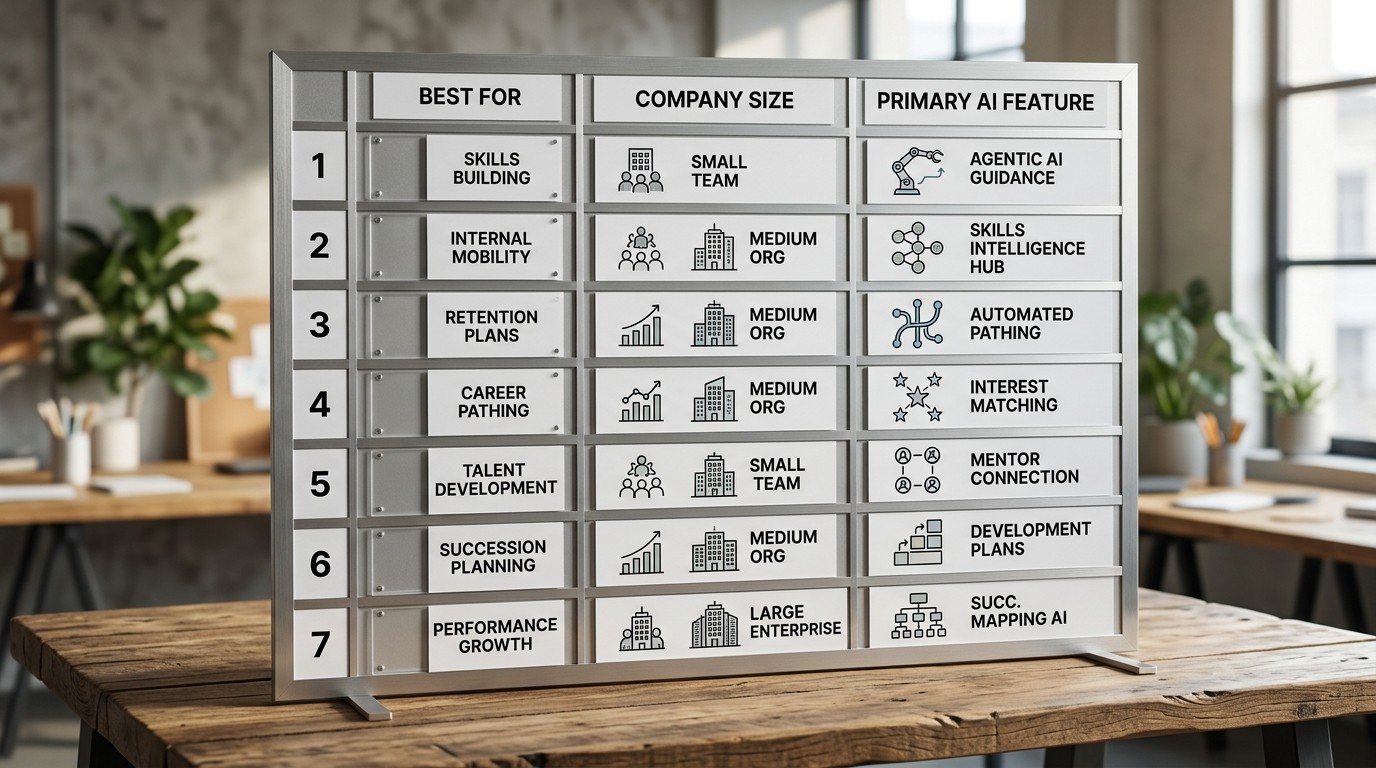
Tool | Best For | Primary AI Feature |
|---|---|---|
TalentGuard | Enterprise Roles | WorkforceGPT Skill Mapping |
Fuel50 | Talent Marketplaces | Career DNA Matching |
Zavvy | Global Automation | Automated Growth Journeys |
Lattice Grow | Performance Integration | AI-Powered Growth Areas |
Leapsome | European Compliance | OKR-Linked Development |
iMocha | Technical Teams | Skills Ontology Validation |
Phenom | Talent Experience | Automated Mobility Sites |
If your workforce is highly technical, then prioritize iMocha for its assessment depth.
If you are an SMB needing rapid deployment, then Zavvy or Lattice are the strongest contenders.
If you operate in the EU, then Leapsome provides the best localized compliance framework.
How to Avoid the Most Common Career Pathing Pitfalls
Implementation often fails not because of the software, but because of a weak cultural foundation. Gartner projects that by late 2026, one-third of recruiting capacity will turn toward internal redeployment, making this shift mandatory for survival.
Success requires more than a tool; it requires a change in how managers view their teams.
Audit your current job architecture. Ensure every role has defined competencies before you upload data to a new platform.
Standardize your skills data. Use an ontology to ensure 'Project Management' means the same thing in Marketing as it does in Sales.
Train managers to stop 'talent hoarding'. Incentivize leaders to move their best people into high-impact internal roles.
Measure mobility metrics. Track how many open positions are filled by internal candidates versus external hires.
Ensure job descriptions are updated and skills-based.
Secure executive buy-in for lateral career moves.
Link development plans to specific compensation or title milestones.
Communicate the benefits of the 'Career Lattice' to all employees.
Pitfall: Building a static career path that does not evolve. If your software does not automatically update skill requirements as the market changes, it will be obsolete in six months.
Turning Your Workforce into Your Greatest Competitive Advantage
Your employees are the most valuable asset you already own. Investing in their growth is the only way to stay competitive in a shrinking talent market.
Career pathing makes your hidden readiness intelligence visible and actionable. It is time to build a culture where mobility is the default.
Start mapping your internal future today.
Frequently Asked Questions About Career Pathing Tech
How does Agentic AI improve career pathing?
Agentic AI moves beyond simple search by proactively identifying opportunities for employees and suggesting specific development steps. It acts as a 24/7 career coach that maps skills to future business needs without manual HR intervention.
Can these tools actually improve employee retention?
Yes, organizations with structured career pathing see 3.2x higher retention rates. As the LinkedIn Workplace Learning Report 2025 notes, 94% of employees stay longer if their development is a priority.
Is it difficult to migrate from spreadsheets to these platforms?
While the initial migration requires auditing your job architecture, most modern platforms use AI to ingest existing data quickly. Starting with a clear skills ontology ensures the transition is smooth and the data remains useful long-term.
What is the difference between a career ladder and a career lattice?
A career ladder focuses exclusively on vertical promotions within a single department. A career lattice encourages lateral and diagonal moves across the company, allowing employees to gain diverse experiences without needing a management title.