7 Affordable Performance Management Tools for SMBs Ditching Yearly Reviews
Annual reviews are a lagging indicator of failure. We have curated the 7 best tools for SMBs to transition to continuous feedback, real-time coaching, and measurable OKRs in 2026.

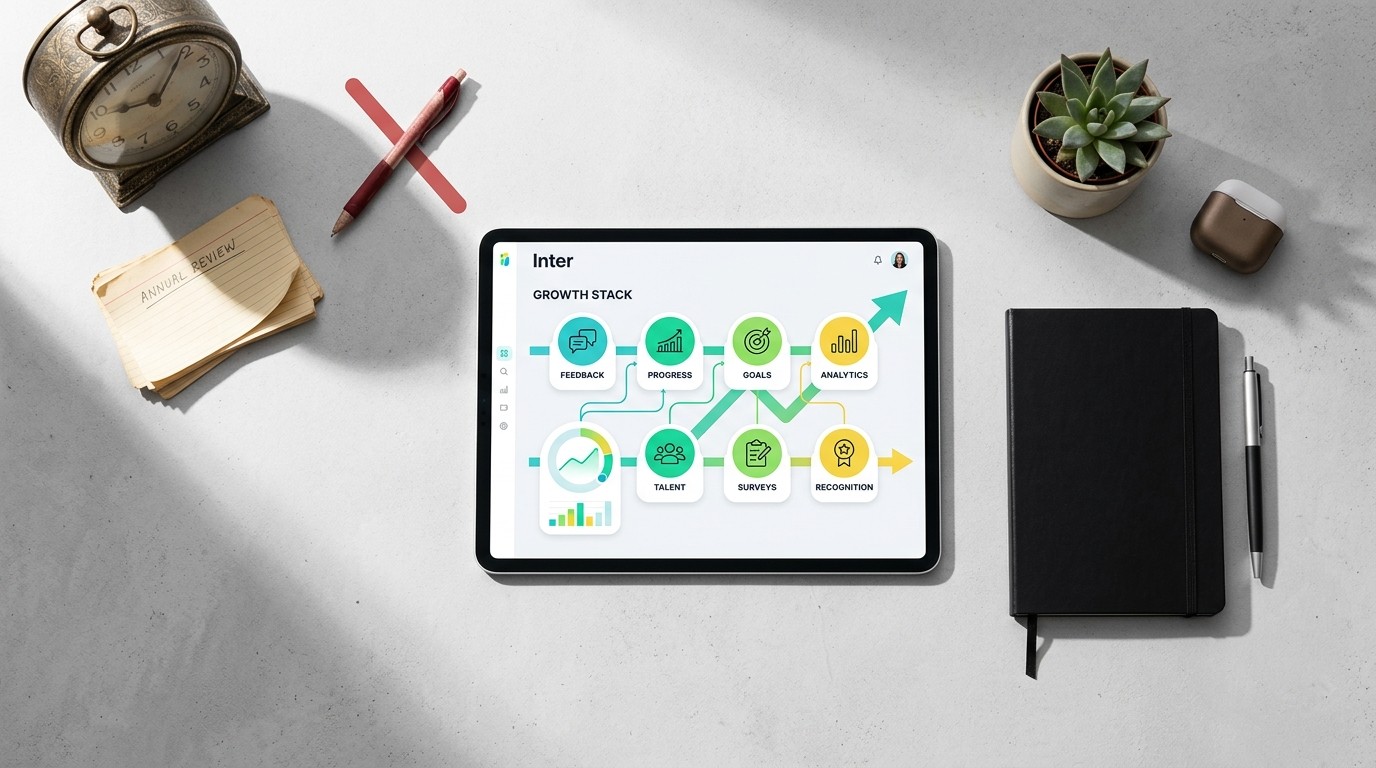
Most performance reviews are a post-mortem on a business that has already suffered. By the time a manager sits down for a yearly chat, the critical errors of Q1 are long forgotten or have already caused permanent damage. Traditional systems create massive administrative debt, often costing a single manager over 200 hours of paperwork per cycle. This is a staggering waste of resources for any small business.
95% of managers are unhappy with traditional performance systems.
Here is the reality: if you only talk about performance once a year, you are not managing it. You are documenting a failure. The goal in 2026 is to move away from these static events toward a model that keeps your team aligned and motivated every single week.
TL;DR: The Best Performance Stack for 2026
The shift to Continuous Performance Management (CPM) is not just a trend. It is a financial strategy. Companies that use real-time feedback loops are 50% more likely to exceed their financial goals because they correct course before the ship hits the iceberg.
Best for Coaching: 15Five focuses on building manager-employee habits.
Best for Speed: Effy AI uses artificial intelligence to launch reviews in under two minutes.
Best for Budget: Small Improvements offers core tools without the enterprise price tag.
Why Small Businesses Are Ditching Yearly Reviews
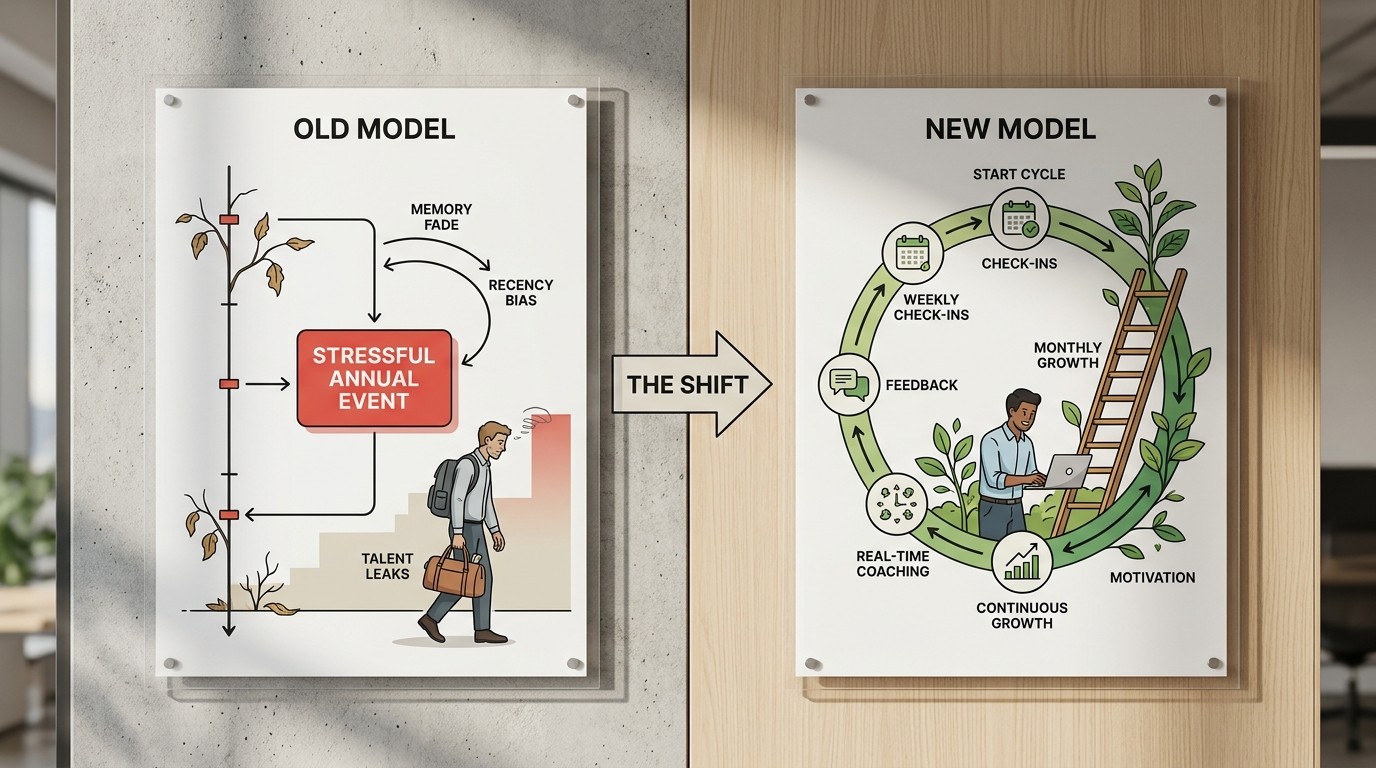
Annual reviews suffer from two major psychological flaws: memory fade and recency bias. Managers tend to evaluate the last two weeks of work rather than the full year because human memory is fallible. This leads to frustrated employees who feel their early-year wins were ignored. Continuous Performance Management (CPM) solves this by making feedback a daily or weekly event rather than a yearly audit.
Consider a manager named Sarah at a small marketing agency. She forgot a junior developer's massive Q1 project success during a December review session. The developer felt undervalued and resigned for a competitor just weeks later. Continuous feedback prevents these talent leaks by capturing every milestone as it happens.
Research shows that employees who receive daily feedback are 3.6x more likely to be motivated than those who only hear from their boss once a year. By moving to a circular loop of check-ins and growth chats, you turn performance into a forward-looking conversation.
Here's a walkthrough that covers the key steps:
The transition requires a tool that fits into your existing workflow, usually via Slack or Microsoft Teams. When the barrier to giving feedback is low, managers actually do it. This results in a team that knows exactly where they stand every day.
1. 15Five: The Continuous Feedback Pioneer
15Five is built on a simple premise: employees spend 15 minutes writing a weekly update, and managers spend 5 minutes reading it. This creates a consistent rhythm that ensures no one is ever surprised by a performance conversation. The tool is designed to facilitate coaching rather than just tracking metrics.
A growing startup team used the 15-minute weekly report to flag rising burnout levels in their engineering department. The CEO spotted a trend of low energy scores and adjusted the workload before any key developers quit. The 15Five habit creates an early warning system that protects your most valuable assets.
Price: Starts at $4/user/month.
Key Features: Weekly check-ins, OKR tracking, and 1-on-1 meeting agendas.
Best For: Small businesses that want to build a culture of open communication.
Tradeoff: It requires a high level of manager commitment to be effective.
Implementation: Connect the tool to your Slack workspace and set a recurring Friday deadline for all employees to submit their 15-minute update.

2. Small Improvements: The High-Value Budget Entry
Small Improvements is the antidote to enterprise software bloat. It provides exactly what a small team needs: simple reviews, 360-degree feedback, and goal tracking. It does not try to be a full HR suite, which keeps the interface clean and the price low.
Simple tools reduce administrative overhead for lean teams that do not have dedicated HR departments. This tool is specifically designed to get out of your way so you can focus on the work itself.
Price: $3 to $5 per user per month.
Key Features: 1:1 meeting templates and lightweight 360 reviews.
Best For: Companies with 20 to 50 employees who need a digital paper trail.
Tradeoff: It lacks the advanced AI features and deep analytics found in more expensive platforms.
Implementation: Start by using their pre-built 1:1 templates to standardize how your managers talk to their direct reports every month.
3. Effy AI: Performance Reviews in 90 Seconds
Effy AI is for the business owner who needed a performance system yesterday. It uses generative AI to build review forms and analyze feedback in about 90 seconds. If you find the idea of drafting review questions exhausting, this is your solution.
Speed is the primary advantage here, as the tool integrates directly into Slack or Microsoft Teams for instant participation. You do not have to force employees to log into a separate, clunky portal.
Price: Competitive freemium tier with paid plans for scale.
Key Features: AI-generated review forms and instant summary reports.
Best For: Fast-moving tech teams and agencies.
Tradeoff: The AI summaries are helpful but still require a human touch to ensure accuracy.
Implementation: Install the Slack app and run an automated pulse survey to get your first baseline of team sentiment within minutes.
4. Lattice: The Scaling Gold Standard
Lattice is often considered the gold standard for companies moving from the startup phase into a more structured growth phase. It combines performance reviews with deep people analytics and robust OKR management. This allows you to see how individual performance impacts your bottom line.
A mid-sized fintech firm grew from 40 to 100 people and quickly lost track of how individual goals mapped to the company mission. By deploying Lattice, every new hire saw exactly how their daily tasks moved the revenue needle. Alignment at scale requires robust analytics that go beyond simple spreadsheets.
Price: Approximately $11 per user per month.
Key Features: Engagement surveys, growth plans, and performance analytics.
Best For: Companies with 50 to 300 employees planning for rapid expansion.
Tradeoff: The price point is significantly higher than entry-level tools.
Implementation: Use the analytics dashboard to identify your top 10% of performers and build specific growth plans to retain them.
5. ThriveSparrow: Engagement-Led Performance
ThriveSparrow takes a holistic approach by blending performance reviews with employee engagement surveys. It assumes that a happy employee is a productive one. The tool uses AI to suggest personalized growth plans based on the feedback received.
Motivation is directly tied to feedback in this system. By measuring employee pulse scores alongside performance metrics, you can identify if a dip in output is due to a skill gap or a cultural issue.
Price: Starts at $5 per user per month.
Key Features: Pulse surveys, AI-driven growth paths, and peer recognition.
Best For: Teams that prioritize company culture as a growth lever.
Tradeoff: The focus on engagement can sometimes distract from hard performance data.
Implementation: Launch a monthly pulse survey to identify the top three cultural blockers preventing your team from hitting their targets.
6. BambooHR: The All-in-One Integrated Solution
If you are tired of managing five different software subscriptions, BambooHR is the logical choice. It is a full HRIS that includes performance management as a core module. This means your performance data lives in the same place as your payroll, benefits, and hiring records.
Integrated data simplifies the review process because you have a single source of truth for every employee. There is no need to sync data between different platforms, which reduces the risk of errors.
Price: $10 to $15 per user per month.
Key Features: Automated review cycles and a centralized employee database.
Best For: Businesses that need a complete HR solution, not just a performance tool.
Tradeoff: The performance module is less flexible than specialized tools like 15Five.
Implementation: Sync your existing employee list and turn on the automated review reminders to keep managers on schedule without manual follow-up.
7. Profit.co: The OKR Specialist
Profit.co is for the data-obsessed manager. It is primarily an OKR (Objectives and Key Results) tool that has expanded into performance management. It allows you to connect every single review question to a specific, measurable business goal.
Measurability is the core focus of this platform. It is one of the most affordable ways to implement a high-level OKR strategy in a small company without breaking the budget.
Price: Starts as low as $1 per user per month.
Key Features: Deep OKR management and task tracking.
Best For: Engineering or sales teams that live and die by the numbers.
Tradeoff: The interface can be overwhelming for users who are not familiar with the OKR framework.
Implementation: Define your top three company goals for the quarter and require every employee to link at least one personal OKR to them.
Which Tool Fits Your 2026 Growth Goals?
Choosing the right tool depends on whether you prioritize price, speed, or deep analytical features.
Tool | Price (from) | Best For | Top Benefit |
|---|---|---|---|
15Five | $4/user | Manager Coaching | Weekly Habit Loop |
Small Improvements | $3/user | Budget Value | Low Admin Debt |
Effy AI | Free/Custom | Setup Speed | AI-Generated Forms |
Lattice | $11/user | Scaling Teams | Deep People Analytics |
ThriveSparrow | $5/user | Engagement | Pulse + Performance |
BambooHR | $10/user | All-in-One | Integrated HR Database |
Profit.co | $1/user | OKR Specialists | Goal-Linked Reviews |
If you need a full HR database and performance in one place, choose BambooHR.
If you prioritize weekly habits and manager coaching, choose 15Five.
If you use Microsoft Teams or Slack for everything, choose Effy AI.
How to Transition Without the Chaos
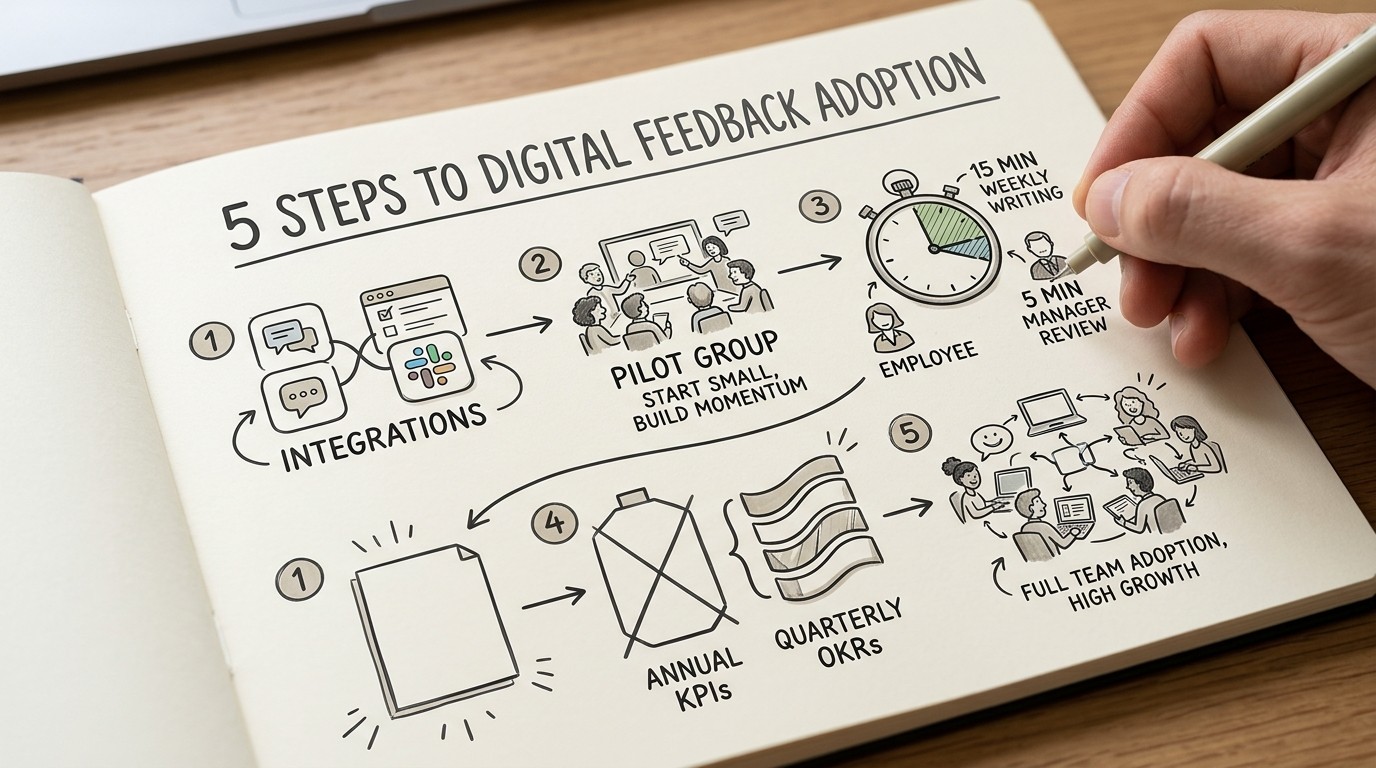
Transitioning from an annual review cycle to a continuous feedback model does not have to be a chaotic event. The goal is to build a habit of small, frequent interactions rather than one massive, stressful meeting. Start small and focus on building trust between managers and their teams.
An HR lead at a retail firm once tried to launch a complex performance system overnight and faced a total revolt from the staff. They pivoted to a simple Slack-integrated recognition tool first to build a positive feedback habit. Phased implementation wins over forced adoption every single time.
Select a tool that has native integration with Slack or Microsoft Teams.
Establish a 15-minute weekly writing habit for all employees.
Replace vague annual KPIs with 3 to 5 quarterly OKRs.
Schedule monthly 30-minute growth chats focused on the future.
Use public recognition channels to normalize giving feedback daily.
Ditch the Dead Weight of Annual Reviews
Annual reviews are dead because they fail to capture the speed of modern business. Top performers do not want to wait 12 months for a promotion or a raise; they want to know where they stand today. Moving to a continuous feedback model is an investment in your company's financial future.
Can we still do a formal annual review for raises?
You can, but it should be a summary of conversations that happened all year. There should be no surprises during a compensation discussion if you are using a continuous feedback tool.
Do these tools work for remote teams?
Yes, they are actually essential for remote work. Without the physical office, these digital check-ins become the primary way to maintain alignment and visibility.
How do I get managers to actually use the tool?
Choose a tool that integrates with their existing workflow. If they can give feedback inside Slack or Teams, they are much more likely to maintain the habit.
Pick a tool that your managers will actually log into every week and start building a high-growth culture today.